We have all experienced it: you are wrestling with a brutal problem—a plot hole in your narrative, a crippling bug in your codebase, or the eternal enigma of why fitted sheets exist. You analyze, you stress, and you make zero progress. Then, out of nowhere—while taking a shower, making tea, or taking a stroll—BOOM. A sudden breakthrough. The answer flashes into your mind like a sudden bolt of lightning.
Researchers call this an insight or an "Aha!" moment. Unlike logical, step-by-step thinking—where you patiently grind through a problem bit by bit—an insight feels instantaneous, complete, and strangely undeniable. You don't see the gears turning; the complete idea just lands in your lap.
While science attributes this to predictable brain states and neat neurological stages, the reality is that creative triggers aren't one-size-fits-all. What works in a lab doesn't always align with how real creators operate. Here is how lightbulb moments actually happen, why popular research gets it slightly wrong, and how you can harness your personal brain chemistry to start producing original work every single day.
The Anatomy of an "Aha!": What the Science Says
Neuroscientists have spent decades dissecting creative breakthroughs. In 1926, social psychologist Graham Wallas outlined the classic four stages of creativity:
Preparation: Deep research, gathering data, and trying traditional solutions until you hit an absolute dead end.
Incubation: Stepping back from the problem and letting your subconscious quietly take the wheel.
Illumination: The sudden "Aha!" moment where disparate pieces click together.
Verification: Returning to structured logic to test, build, and refine the idea in the real world.
When you hit that wall during Preparation, your mind gets stuck in fake, self-imposed rules—what psychologists call artificial constraints. To break free, your brain needs to re-organize its internal data.
┌────────────────┐     ┌────────────────┐     ┌────────────────┐     ┌────────────────┐
│  PREPARATION   │ ──► │   INCUBATION   │ ──► │  ILLUMINATION  │ ──► │  VERIFICATION  │
│  (Hit a Wall)  │     │  (Step Away)   │     │  ("Aha!" Flash)│     │  (Build/Test)  │
└────────────────┘     └────────────────┘     └────────────────┘     └────────────────┘
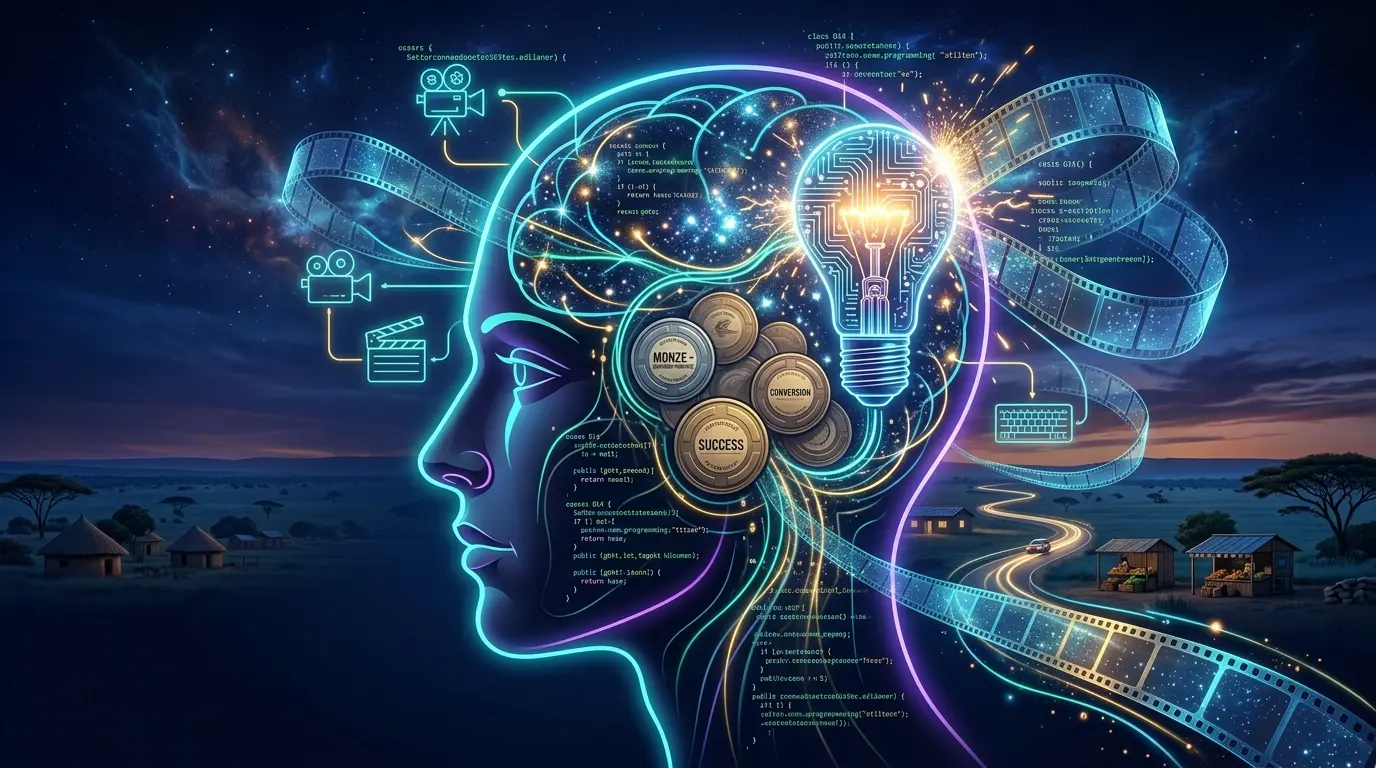
Neuroscientists Mark Beeman and John Kounios tracked brain activity during these breakthroughs and found that right before an insight occurs, the brain undergoes a "brain blink". Visual regions produce a surge of low-frequency alpha waves, temporarily shutting out external distractions. A fraction of a second later, a burst of high-frequency gamma waves fires in the right temporal lobe—the exact moment distant, subconscious ideas tie together and pop into awareness.
To make this happen, two normally opposing brain networks have to hold hands and collaborate:
The Default Mode Network (DMN): Active during daydreaming and imagination.
The Executive Control Network (ECN): Active during focused, goal-directed task execution.
During an insight, the DMN generates loose, creative combinations, while the ECN simultaneously evaluates them to pick out the winner.
The Famous "N1" Trick (And Why It Might Fail You)
If you have ever read about creative history, you have probably heard of the N1 sleep protocol. Famous innovators like Thomas Edison, Salvador Dalí, and Albert Einstein famously leveraged micro-naps to catch creative ideas. They would sit comfortably, holding an object—like a steel spoon or a heavy ball—over a metal pan. As they drifted into Stage N1 sleep (the twilight zone between waking and sleeping), their muscles would relax, dropping the object with a loud clatter. The noise woke them instantly, allowing them to capture fleeting hypnagogic insights before deep sleep wiped their memory bank.
Modern research backs this up. A study at the Paris Brain Institute showed that participants who spent just a few moments in stage N1 sleep were three times more likely to discover hidden shortcuts to complex problems than those who stayed awake.
It sounds brilliant on paper—until you actually try it in real life.
Imagine sitting in your living room, holding a heavy soup spoon over a skillet, waiting to catch a flash of brilliance. You drift off, the spoon drops with a horrific crash, you jump out of your skin, knock over your coffee, and now you don't have a genius screenplay idea—you just have a heart rate of 180 BPM and a stained rug.
The truth is, while the scientific principle of hypnagogia is solid, the execution doesn't fit everyone.
The Reality: Custom Brain Patterns & The Sleep Struggle
Science likes standardized protocols, but human brains are delightfully stubborn. The N1 spoon trick assumes everyone transitions into sleep the same way. But for many people, creative wiring operates on a completely different frequency.
Take the experience of living with an hyperactive mind. For some creators, the brain doesn't neatly slip into a 2-minute N1 window. Instead, the moment eyes close at night, the mind launches a free-form search engine coupled with hyper-vivid imagination.
This twilight state doesn't last two minutes; it stretches between 30 minutes to several hours. During this prolonged period, you are fully aware of your surroundings with your eyes closed, yet your brain is operating in full-blown creative overdrive.
The downside? You struggle with sleep. The default mode of your brain treats bedtime like a late-night writers' room. Falling asleep at 3 AM becomes standard procedure.
To survive the work week, many end up "cheating" this stage. Keeping the brain occupied by watching TV shows on a phone until total physical fatigue hits makes it possible to fall asleep in 20 minutes or less.
Is it textbook sleep hygiene? Absolutely not. Your doctor would likely throw a handbook at you. But is it an optimal window for creativity? Unquestionably.
When you accept how your mind actually works, that extended pre-sleep window stops feeling like insomnia and starts acting as a creative supercollider. It’s how a screenwriter winds up with 8 to 10 fully realized movie outlines—complete with vivid, fully staged scenes—or how a software developer maps out intricate new application features and system architectures before firing up an IDE.

Triggers That Actually Work (Beyond the Lab)
While micro-naps might be hit-or-miss depending on your neurology, other triggers mapped out by research are genuinely universal:
1. The Power of Walking
A study from Stanford University revealed that walking boosts creative idea generation by an average of 60%. Interestingly, the study found that physical movement itself—not the scenery—drives the flow. People walking on an indoor treadmill facing a blank wall were just as creative as those walking outside in nature. The physical act of movement primes your nervous system for broad, divergent thinking.
2. External Media as a Subconscious Catalyst
While intense focus can lock you into rigid analytical traps, engaging with narrative media—like bingeing a TV series—acts as a secondary processing layer. Watching episodic television occupies just enough executive control to let your background subconscious synthesize complex ideas. It is not uncommon to be mid-episode of a drama and suddenly figure out a completely unrelated plot solution for your own script or software project.
From Consumer to Creator: How to Harness Your Triggers
Discovering what triggers your breakthroughs is only half the battle. The real shift happens when you move from simply understanding your quirks to aggressively harnessing them.
Most people live in a state of endless consumption. We scroll, we stream, we absorb, and we let our best ideas evaporate because we don't capture them. The ultimate goal is to transition from a consumer mindset to a daily producer—someone who creates or refines something new every single day.
┌────────────────────────────────┐       ┌────────────────────────────────┐
│      CONSUMER MINDSET          │       │       CREATOR MINDSET          │
│ • Endless Scrolling            │  ──►  │ • Harnesses Personal Triggers  │
│ • Ideas Evaporate              │       │ • Daily Output & Refinement    │
│ • Passive Absorption           │       │ • Active Capture Systems       │
└────────────────────────────────┘       └────────────────────────────────┘
Here is how to systemize your personal lightbulb triggers:
Map Your Personal Peak Windows: Stop trying to force yourself into someone else's routine. If your best ideas happen during a 40-minute pre-sleep drift, don't fight it—prepare for it. Keep a voice notes app or dark-mode notepad next to your bed so you can capture full outlines without disrupting your state.
Leverage Low-Cognitive Movement: Integrate 15-minute walks into your day specifically when you hit a wall. Don't listen to a heavy educational podcast during this time; let your mind wander while your legs move.
Establish a Daily Creation Ritual: Creation doesn't always mean starting from scratch. Refinement is creation. Taking a half-baked scene from last night's pre-sleep brain storm and polishing three lines of dialogue counts. Cleaning up a software architecture draft counts.
Reduce Visual Noise When Stuck: When facing a complex mental problem, close your eyes or look away from the screen. Mimicking the brain's natural visual "alpha wave blink" shuts out external chatter so fragile subconscious connections can surface.
Science can give us the framework—the stages, the wave frequencies, and the statistical averages. But you hold the keys to your unique neural engine. Identify what actually turns the lights on in your head, stop apologizing for your weird creative process, and start building something original every day.