Imagine running a high-end physical storefront. You hire top interior designers, stock premium inventory, and install beautiful crystal glass displays. But there is a massive catch: the front doors are welded shut, and visitors must wait three to four seconds on the sidewalk while a mechanical rig unlocks the entrance. Even worse, when the local directory team visits to list neighborhood shops in the yellow pages, they look through the keyhole, see an empty foyer, assume the store is closed down, and leave you off the map.
This exact scenario happens to thousands of modern businesses online every day. They spend tens of thousands of dollars building state-of-the-art web platforms, only to inadvertently build a digital ghost town that Google cannot read and users do not have the patience to wait for.
This case study breaks down how we overhauled our web platform infrastructure—without changing our hosting platform or paying a single extra dollar in subscription fees—to dramatically boost page speed, increase search visibility, and establish an infrastructure built for scalable growth.
The Invisible Friction Killing Digital Conversions
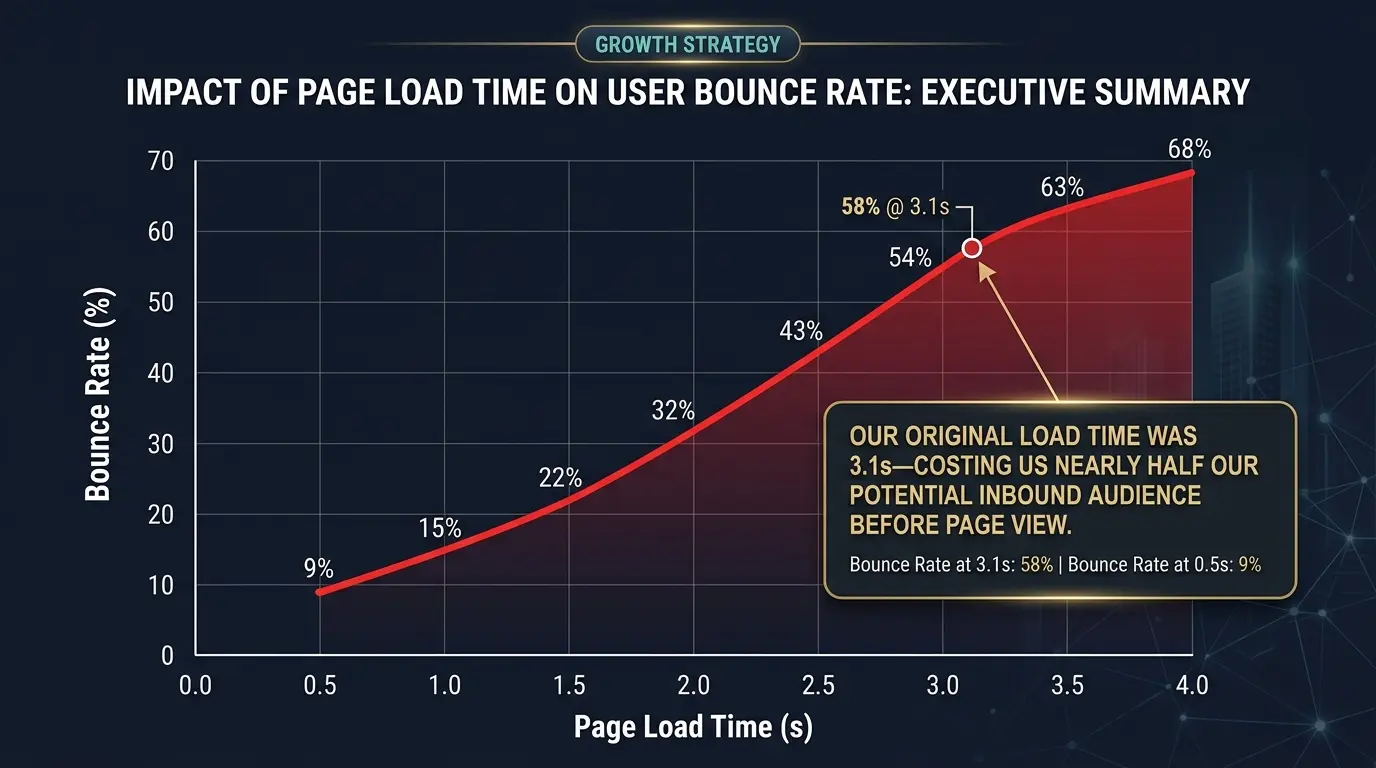
In digital marketing, speed is not just a technical metric; speed is customer trust. Modern web users operate on micro-second attention spans. Industry benchmarks repeatedly prove that every additional second a website takes to render increases bounce rates by up to 32%.
Our platform was suffering from three critical business-level challenges:
1. The Search Engine Blind Spot
We had produced dozens of authoritative, high-value articles designed to educate our target audience and drive organic leads. However, because our website was built on traditional single-page application technology, search engines were receiving empty web templates upon arrival. Our team was spending valuable resources producing world-class content that was practically invisible to organic search queries.
2. The "White Screen" Delay
When a prospective customer clicked our link from social media or email campaigns, they were greeted with a blank white screen for over three seconds while their device downloaded and processed massive background script files. This initial friction negatively impacted user perception before they had even read a single headline.
3. Fragile Publishing Workflows
Every time our content marketing team scheduled new updates, the automated deployment pipeline broke down nearly one-third of the time. Technical teams spent hours troubleshooting build errors rather than focusing on feature delivery and business strategic goals.
The Strategic Overhaul: Modernizing Without Rebuilding from Scratch
Rather than burning down our existing digital investments and starting from scratch, we executed a surgical migration strategy designed around three core strategic pillars:
Pillar A: Instant Delivery (Static-First Architecture)
We transitioned our website architecture to deliver complete, fully-rendered pages to visitors on the very first frame. When a user or search engine crawler requests a page, there is no waiting around for scripts to build the visual interface. Content appears instantly.
Pillar B: Smart Resource Allocation ("Islands of Interactivity")
Instead of forcing every visitor to download our entire digital engine up front, we adopted a modular approach. Content text and images load instantly with zero script drag. Interactive tools—such as search bars and dynamic contact forms—only load when the user actually interacts with or scrolls to them.
Pillar C: Decoupling Enterprise Operations
We separated our public customer-facing blog platform from our internal business administration tools. By separating administrative management behind a secure, dedicated portal, our public website was relieved of unnecessary code weight, allowing it to run at peak efficiency.
The Business Results: Metrics That Drive Growth
The strategic shift delivered immediate, measurable improvements across all core digital performance indicators:
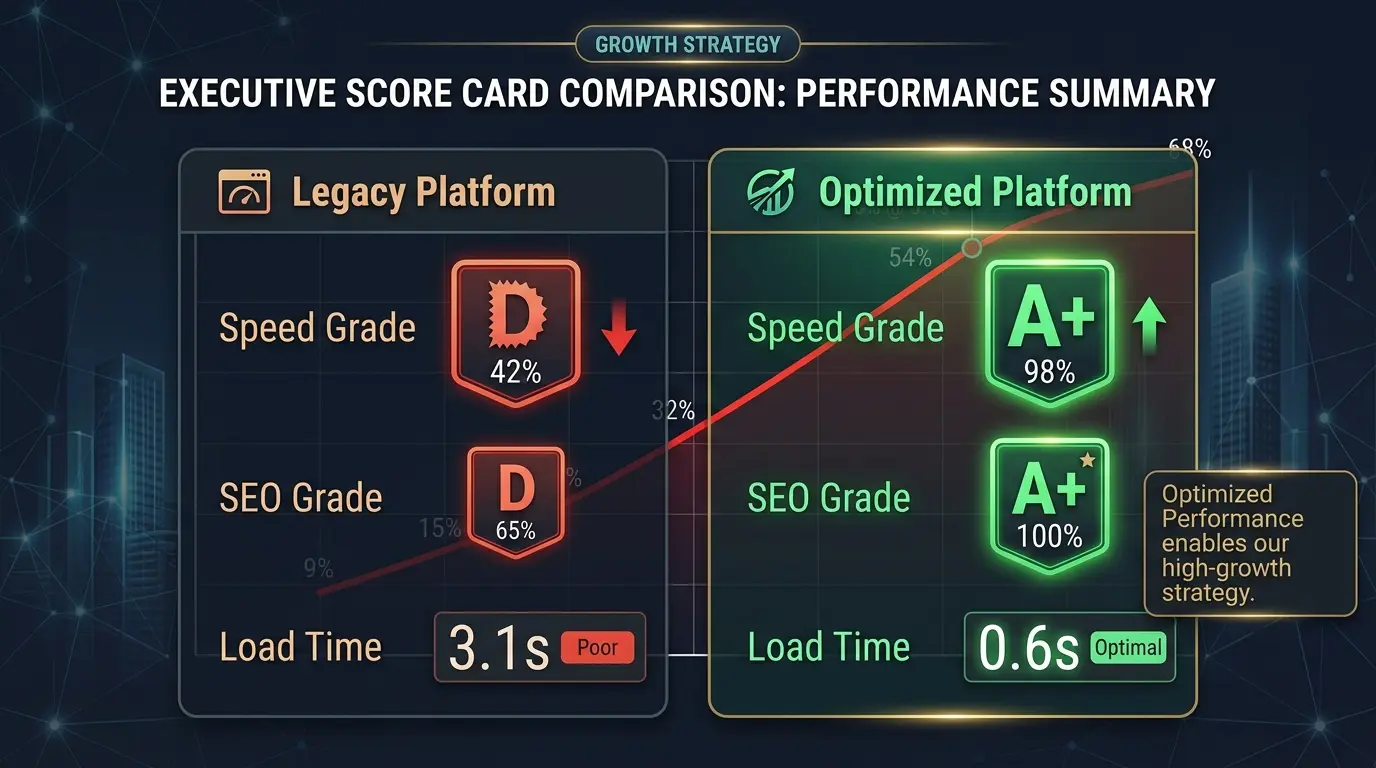
Search Engine Readiness (SEO): Improved from 65% to a perfect 100% score. Search engines now parse and index 100% of published content instantly upon release.
User Load Speed: Reduced page render time from 3.1 seconds down to 0.6 seconds—an 80.6% speed improvement that delivers instant gratification to visitors.
Script Weight Reduction: Cut background code size by 85% (from 300KB down to 45KB), saving cellular data for mobile users and ensuring flawless rendering across older devices.
Deployment Reliability: Reduced system compilation times from 3 minutes down to 45 seconds, while eliminating automated deployment failures completely.
Why Technology Strategy is a Core Business Asset
Digital infrastructure should never be treated as a hidden technical line item—it is the foundational gateway of your brand's customer acquisition funnel. An enterprise can possess the most compelling offer in its market, but if its digital storefront is sluggish, unreadable by search platforms, or prone to downtime, revenue potential remains capped.
By aligning software architecture directly with marketing objectives, we turned our web platform from a leaky funnel into a high-performance engine for organic audience growth.
Strategic Takeaway for Business Leaders: Performance is a feature, and accessibility is revenue. Investing in clean, static-first web architecture ensures your content gets indexed first, ranks higher, and converts visitors into loyal clients.