Introduction: The Classic "Drawing vs. Building" Confusion
If you have ever tried to build a house in Zambia, you know you don't just hire a guy with a shovel, point at an empty plot in Chongwe or Chilanga, and say, "Iwe, just start digging."
First, you hire an architect. They draw a beautiful plan. They decide where the master bedroom goes, how the kitchen flows into the dining room, and where the big sliding glass doors will sit to capture the morning light. They make it look gorgeous.
Once the drawings are approved, you bring in the contractor, the bricklayers, and the plumbers. They take those beautiful drawings and turn them into physical reality with concrete, steel, pipes, and electrical cables.
In the digital world, website design in Zambia is the architect. Website development in Zambia is the contractor.
Yet, when business owners in Lusaka or Kitwe look for professional web development services in Zambia, they often use these two terms interchangeably.
This confusion can lead to major misunderstandings, blown budgets, and websites that either look stunning but don't actually work, or work perfectly but look like they were built in 1998.
Let’s break down the exact differences so you know exactly who you are hiring and what you are paying for.
Website Design: The Visuals and User Experience (UX)
When you land on a page and immediately think, "Wow, this looks professional," you are admiring the work of a website designer.
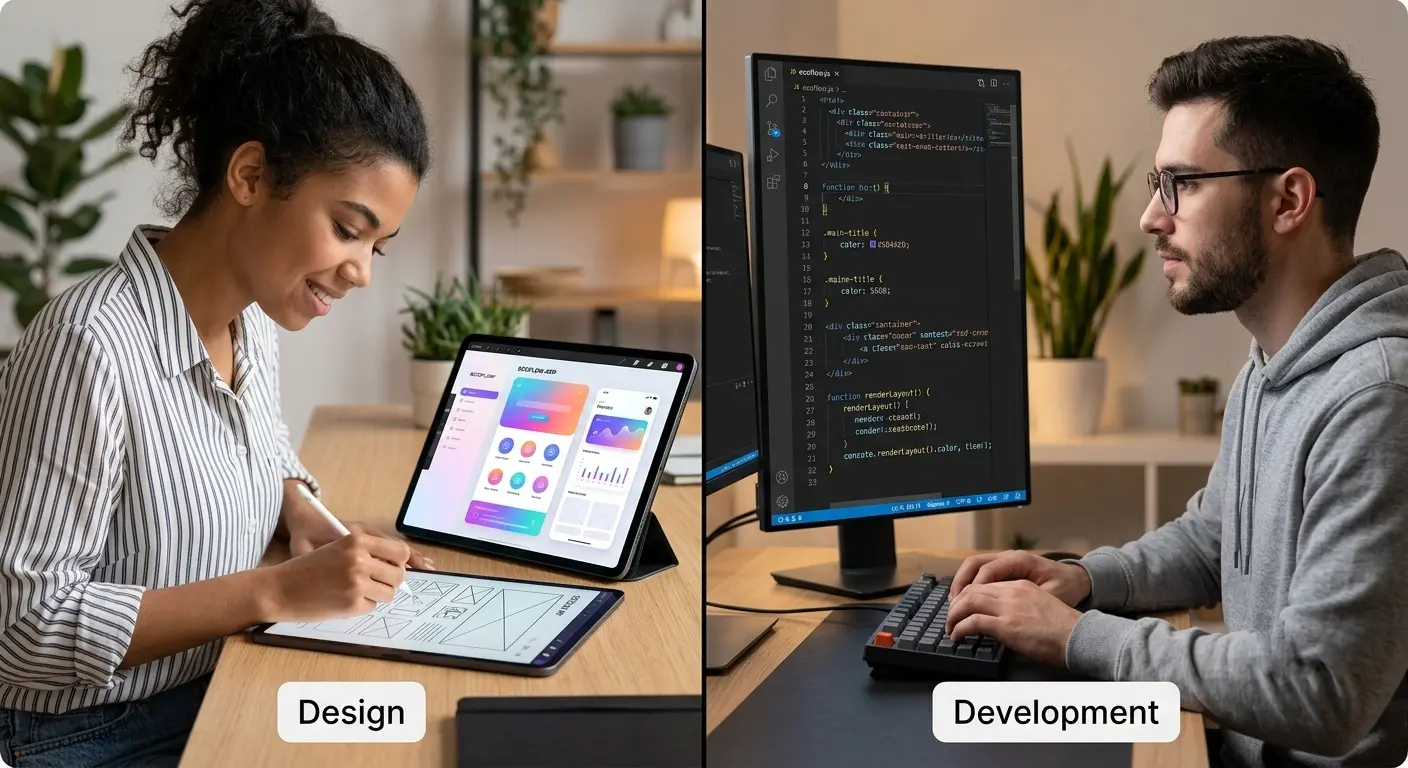
Website design is focused on the aesthetic portion of the website and its usability. Designers use creative software—not code—to map out how the site will look, feel, and behave.
The Role of the Web Designer
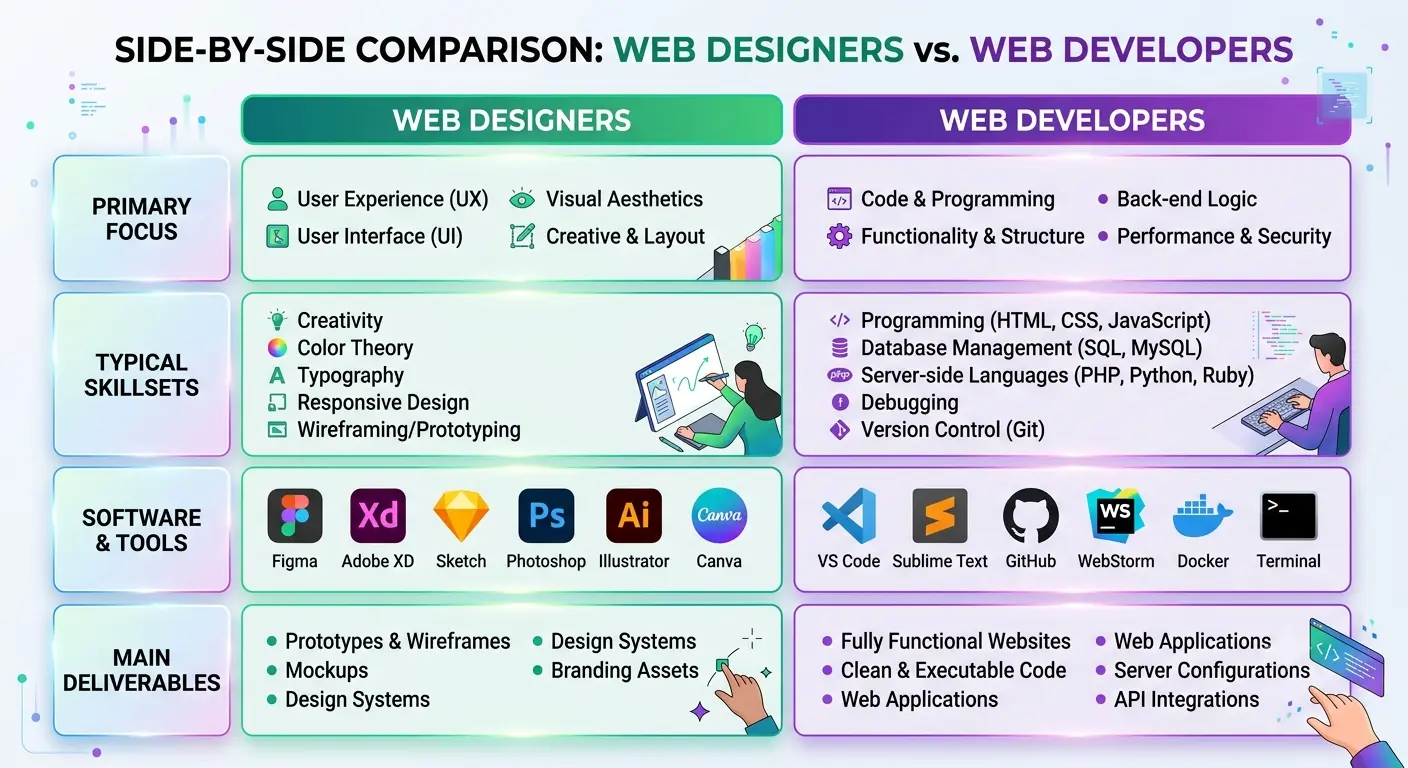
Visual Identity & Branding: They make sure your website matches your company’s brand. If your corporate colors are green and gold, they ensure these colors are balanced beautifully with appropriate whitespace, readable typography, and high-quality local images.
User Experience (UX) Design: A great designer doesn't just make things pretty; they make them intuitive. They figure out how to guide a visitor from the homepage to your "Contact Us" form in as few clicks as possible without causing headache.
User Interface (UI) Design: This involves designing the actual interactive elements—the buttons, the drop-down menus, the form fields, and the sliders.
Tools of the Trade: Web designers almost never touch code. Instead, they live in modern design applications like Figma, Adobe XD, Photoshop, and Illustrator. They deliver clickable interactive prototypes that show exactly how the website will look before a single line of code is written.
Web Development: The Code and Functionality
Once the design is finalized and approved, the web developer takes over. The developer’s job is to translate those flat design mockups into living, breathing, interactive code.
If the designer is the one who decides how the car dashboard looks, the developer is the engineer building the engine under the hood to ensure that when you press the accelerator, the car actually moves.
The Role of the Web Developer
Front-End Development: They take the design files from the designer and write the code that displays them on a browser. Using languages like HTML, CSS, and JavaScript, they ensure that buttons click, images load, and the layout features responsive web design that adapts seamlessly to small mobile screens, tablets, and large desktop monitors.
Back-End Development: This is where the heavy lifting happens. Back-end developers write the logic that connects your website to databases, handles secure user logins, and processes transactions. They use languages like PHP, Python, Ruby, or Node.js.
Database Management: If your website has user accounts, product catalogs, or booking systems, a developer sets up databases (using SQL or MongoDB) to securely store and retrieve this information instantly.
Tools of the Trade: Developers live in code editors like VS Code or Sublime Text and use version control tools like Git to keep track of their code.
Why You Need Both for Digital Success
Some business owners try to save money by hiring only a designer or only a developer. Here is why that usually ends in tears:
Scenario A: Hiring Only a Web Designer
You hire a highly talented graphic designer to build your site. They design a breathtaking layout in Figma. But because they don't know how to code, they try to build it using a basic drag-and-drop website builder without understanding page speed, database queries, or security.
The Result: The website looks like a masterpiece, but it takes 15 seconds to load on a standard MTN or Airtel connection. The contact forms don't deliver emails to your inbox, and the payment gateway fails every time a customer tries to checkout.
Scenario B: Hiring Only a Web Developer
You hire a brilliant, hard-coding software engineer. They build a highly secure, incredibly fast web platform from scratch.
The Result: The site is bulletproof and lightning-fast. However, the user interface looks like a Windows 95 spreadsheet. The fonts are microscopic, the colors clash so badly they hurt your eyes, and customers can't find the "Buy Now" button because it's hidden under three layers of technical menus.
To build a high-converting digital platform, you need a harmonious blend of both disciplines. A great agency offering web development services in Zambia will always have both specialized designers and developers working together on your project.
Understanding Responsive Web Design (The Ultimate Bridge)
In Zambia, the desktop computer is a luxury. The vast majority of your target audience will visit your website using their smartphones—often while walking, riding in a bus, or sitting in a café.
This is where the concepts of design and development collide to create responsive web design.
+-------------------------------------------------------------+
|                     RESPONSIVE WEB DESIGN                   |
|                                                             |
|  [ Designer's Job ]                    [ Developer's Job ]  |
|  Decides how elements shrink,          Writes fluid CSS and |
|  reorganize, and stack on              media queries to make|
|  mobile vs. desktop screens.           it load fast on 3G/4G|
+-------------------------------------------------------------+
Responsive design means your website automatically detects the user's screen size and reshapes itself to fit perfectly.
On a desktop, your services might display in a neat three-column layout.
On an iPhone or an ITEL device, those columns automatically stack into a single, easy-to-scroll column with large, finger-friendly buttons.
If your web team doesn't prioritize responsiveness, you are essentially locked out of 80%+ of the Zambian digital market.
Frequently Asked Questions (FAQs)
Q1: Is WordPress considered design or development?
WordPress is a Content Management System (CMS) that blends both. A designer can use visual page builders (like Elementor or Divi) to design a WordPress site without writing code. However, custom integrations, security hardening, database optimization, and custom plugin creation require a proper web developer.
Q2: Do I have to hire two different people for my small business site?
Not necessarily. For smaller, straightforward business websites, many skilled "full-stack" freelancers can handle both the basic design and development. However, for complex projects like custom e-commerce stores or corporate portals, you will get far superior results hiring an agency with dedicated specialists.
Q3: Why does a web developer cost more than a web designer?
Web development typically demands a steeper technical learning curve, involving complex logical coding, database structures, security integrations, and server management. Because developers deal with the functional mechanics and data security of your business, their specialized skills usually command a higher market rate.
Q4: How do I know which one my business needs right now?
If you already have a functional website but it looks outdated, unprofessional, or doesn't match your new branding, you need website design in Zambia. If your website design is fine, but the pages load incredibly slowly, the database is throwing errors, or you want to add a new online shop/portal, you need website development in Zambia.
Ready to Build a Beautiful, High-Performance Website?
You don't have to choose between a gorgeous look and flawless performance. We bring together elite creative designers and expert developers to build websites that look stunning, rank high on Google, and convert casual visitors into paying customers.
Let's build your perfect digital presence the right way.