There are two absolute guarantees in human life: taxes, and the reality that sooner or later, our hearts will beat their final rhythm.
Yet, despite death being the most common appointment in human history, no subject has sparked more wild theories, terrifying ghost stories, or lucrative religious industries.
Depending on who you ask, the moment you close your eyes for the last time, you either transform into a floating angel playing a harp on a cloud, drop straight into a subterranean lake of fire, wander around as a restless spirit haunting your old apartment, or enter a spiritual waiting room where your living relatives can pay a fee to expedite your transfer to heaven.
It sounds like a chaotic movie plot. But what if we set aside centuries of human traditions, pagan folklore, and Hollywood scripts, and simply ask: What does the Bible actually teach about the state of the dead?
When you examine Scripture carefully, you uncover a truth that is remarkably logical, deeply comforting, and completely consistent from Genesis to Revelation.
1. The Divine Equation: How God Defined a "Soul"
To understand what happens when a person dies, we first have to understand how a person is made.
Most modern culture assumes that humans possess a smooth, invisible, immortal entity inside them called a "soul" that breaks free from the physical body like a butterfly escaping a cocoon at the moment of death. But is that how the Creator described it?
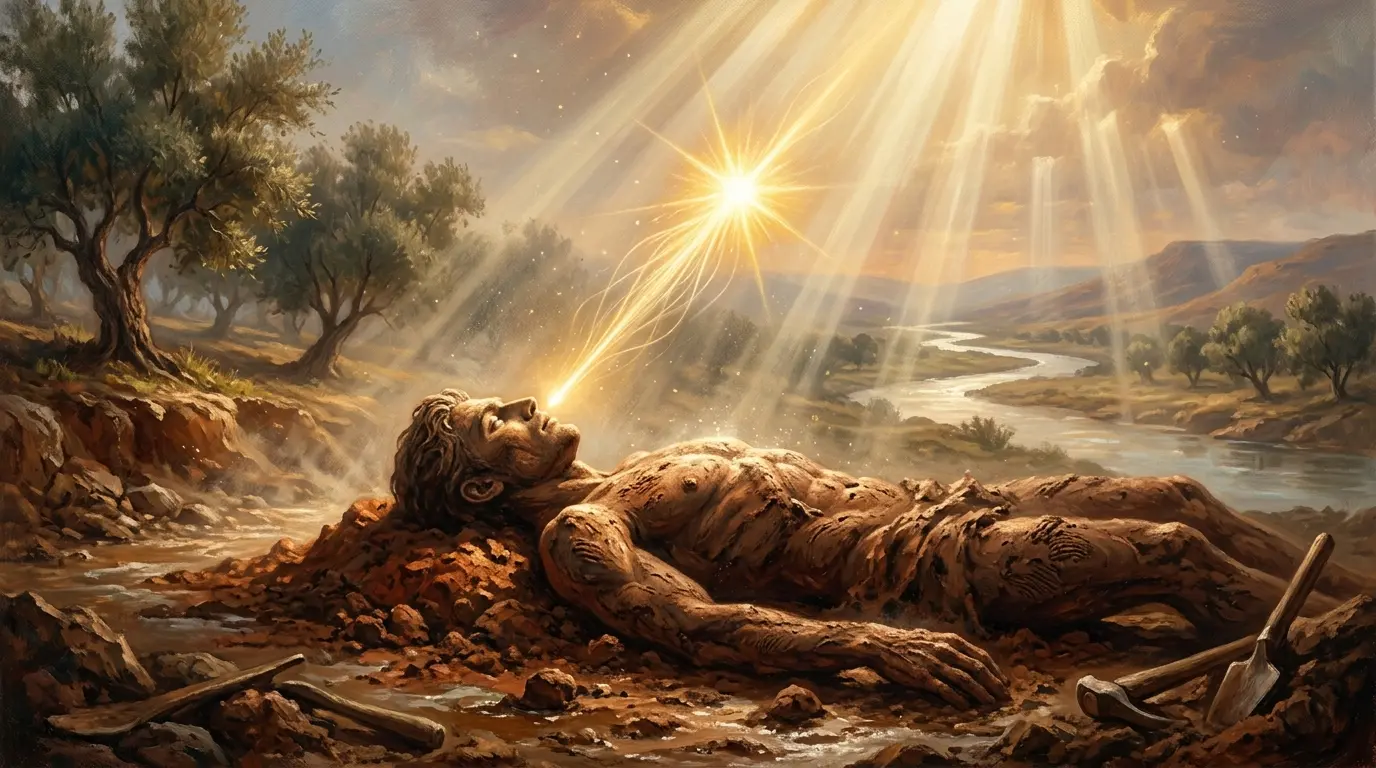
Let's look at the blueprint in Genesis 2:7:
And the Lord God formed man of the dust of the ground, and breathed into his nostrils the breath of life; and man became a living soul.
Notice the precise phrasing. God did not give man a soul; man became a soul.
Think of it like a simple mathematical equation:
[ Dust of the Ground ] + [ Breath of Life from God ] = [ A Living Soul ]A "soul" isn't a separate ghost residing inside your ribcage. It is the combination of the physical body and the life-giving breath of God.
Consider a wooden crate held together by nails. If you carefully extract every single nail, where did the "crate" go? It didn't fly off to a spiritual realm; it simply ceased to exist because the two necessary components were separated.
When death occurs, the reverse of creation happens:
[ Body Returns to Dust ] - [ Breath Returns to God ] = [ Soul Ceases to Exist ]Scripture is explicit on who actually possesses inherent immortality. 1 Timothy 6:15-16 states plainly that God alone “has immortality, dwelling in unapproachable light.”
Human beings are not naturally immortal. Immortality is a divine gift promised exclusively to the faithful at the second coming of Jesus Christ (1 Corinthians 15:52-54).
2. Sleeping Beauty: The Silence of the Grave
If a person is no longer a living soul after death, what is their conscious state?
If you were to ask the Old Testament writers, they wouldn't hesitate with their answer. They describe death not as an immediate ascension or descent to an underworld, but as a quiet, dreamless, unconscious sleep.
Consider these clear passages:
Ecclesiastes 9:5-6: "For the living know that they will die; but the dead know nothing, and they have no more reward, for the memory of them is forgotten. Also their love, their hatred, and their envy have now perished..."
Ecclesiastes 9:10: "There is no work or device or knowledge or wisdom in the grave where you are going."
Psalm 146:4: "His spirit departs, he returns to his earth; in that very day his thoughts perish."
Job 14:12: "So man lies down and does not rise. Till the heavens are no more, they will not awake nor be aroused from their sleep."
Jesus Himself affirmed this exact teaching. When His friend Lazarus died, Jesus turned to His disciples and said:
Our friend Lazarus sleeps, but I go that I may wake him up.
John 11:11
The disciples, taking Him literally, replied that if Lazarus was sleeping, he would get better. Jesus then stated directly: "Lazarus is dead."
When Jesus arrived at the tomb four days later and called Lazarus back to life, Lazarus didn't complain about being yanked back down from the pearly gates, nor did he recount terrifying tales of an underworld. Why? Because during those four days, Lazarus was in a peaceful, unconscious sleep, unaware of the passage of time.
3. Where Did the Idea of Conscious Souls Come From?
If the Bible is so remarkably clear about death being an unconscious sleep, where did the widespread belief in floating, conscious, immortal souls come from?
To trace this origin, you have to look back past church history to ancient Greek philosophy—specifically Plato and Socrates—and earlier Egyptian and Babylonian mythologies. These ancient pagan worldviews taught that the human body was merely a physical prison for an inherently divine, immortal soul.
As centuries passed, these pagan concepts slowly crept into Christian theology.
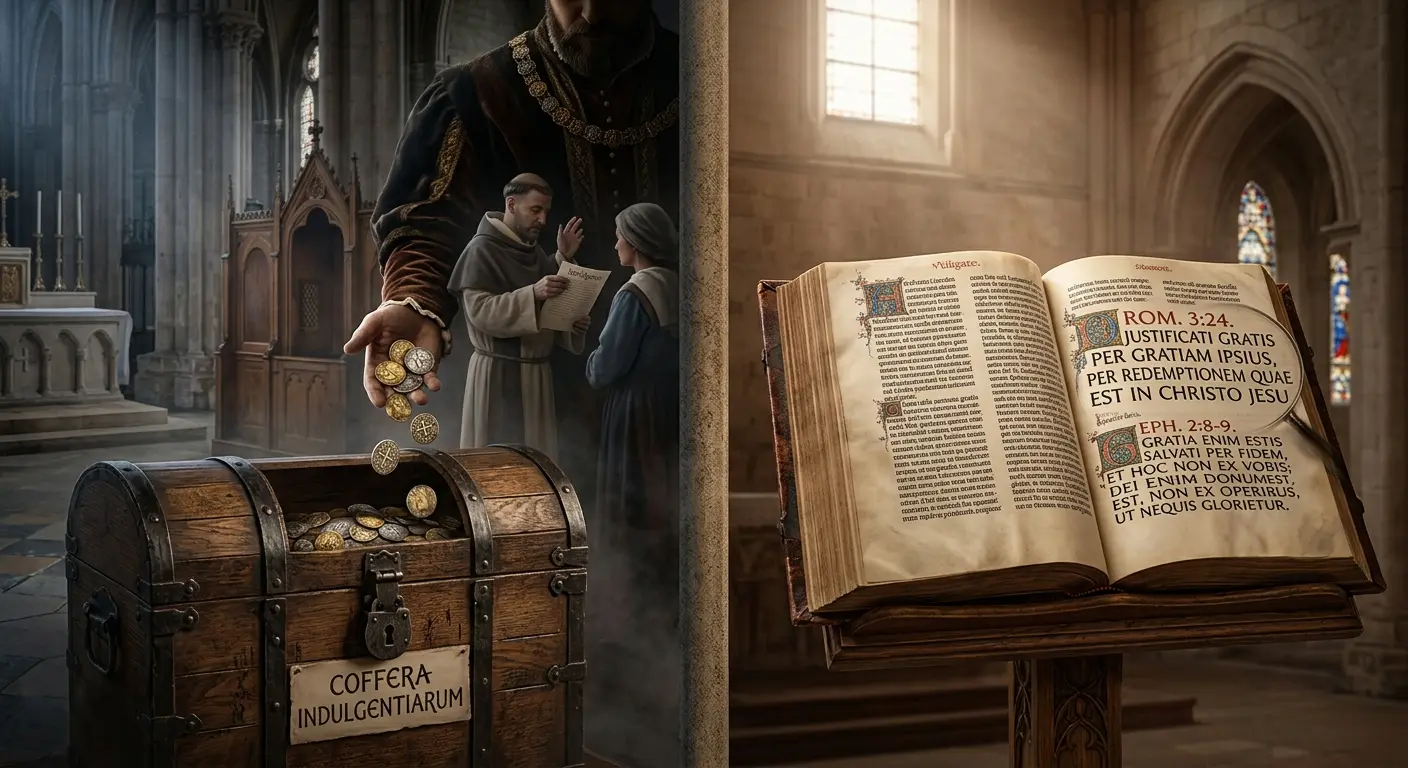
By the Middle Ages, the concept of an immortal soul that immediately enters conscious torment or reward upon death blossomed into the doctrine of Purgatory—a fictional holding facility where souls supposedly suffered until their earthly living relatives prayed or paid enough money to buy them out.
This concept proved to be an extraordinary financial engine. Medieval religious institutions, the catholic church to be exact, generated vast wealth by selling "indulgences"—certificates promising to reduce a deceased loved one's time in Purgatory.
It was a brilliant business model: sell relief from a place that doesn't exist to people who are terrified of a state that isn't happening, while collecting money that God never requested!
Even today, remnants of this practice survive in various church traditions. Many of us grew up in denominations—such as the New Apostolic Church—where specific days (like "Departed Services") are designated for members to pray and make financial donations to help the souls of deceased relatives "cross over."
It is the exact same medieval purgatory concept rebranded for the modern era, exploiting human grief for financial gain.
4. Unpacking the Hard Passages: Lazarus and the Rich Man
Whenever you present the clear biblical truth about death, someone will inevitably bring up Luke 16:19-31—the famous story of the Rich Man and Lazarus.
In this story, a rich man dies and goes to a place of torment, while a poor beggar named Lazarus dies and is carried to "Abraham’s bosom." They converse across a great gulf, with the rich man begging for a drop of water to cool his tongue.
Does this parable prove that people go immediately to heaven or hell upon dying? Let's analyze it closely.
If you take this story as a literal description of the afterlife, you run into absurd complications:
Is Heaven literally located inside Abraham’s literal chest cavity?
Can people in Heaven look directly across a narrow canyon and watch people being tormented in Hell, carrying on casual conversations with them?
Does a single drop of water on a finger provide relief to a soul burning in fire?
Jesus was telling a parable—a symbolic illustration using a popular folk tale of that specific era to teach a crucial moral lesson. During Christ's time, Greek mythology had infected Jewish culture, and some rabbis had begun adopting these pagan ideas of the afterlife. Jesus used their own familiar narrative structure as an object lesson.
What was the core point of the parable?
Look at the climax of the story: the rich man begs Abraham to send Lazarus back from the dead to warn his living brothers. Abraham answers:
If they do not hear Moses and the prophets, neither will they be persuaded though one rises from the dead.
Luke 16:31
The primary lesson of the parable is that your spiritual fate is fixed at death. There is no crossing over from evil to good after you die. There is no second chance, no purgatory, and no post-mortem bribe that can alter your standing with God.
Far from supporting Purgatory, the parable explicitly refutes it: neither side can cross over to the other.
5. If Everyone Goes to Heaven at Death, Why the Resurrection?
Here is the central logical flaw in the theory that holy people float off to Heaven immediately when they die: If believers are already enjoying the perfection of Heaven, why would Jesus need to return to resurrect them?
If a person has been enjoying Paradise for 2,000 years, dragging their soul back down to Earth just to put it back into a resurrected body makes very little sense!
Yet, the entire New Testament centers around one supreme event: The Resurrection at the Second Coming of Christ.
Listen to the Apostle Paul in 1 Thessalonians 4:16-17:
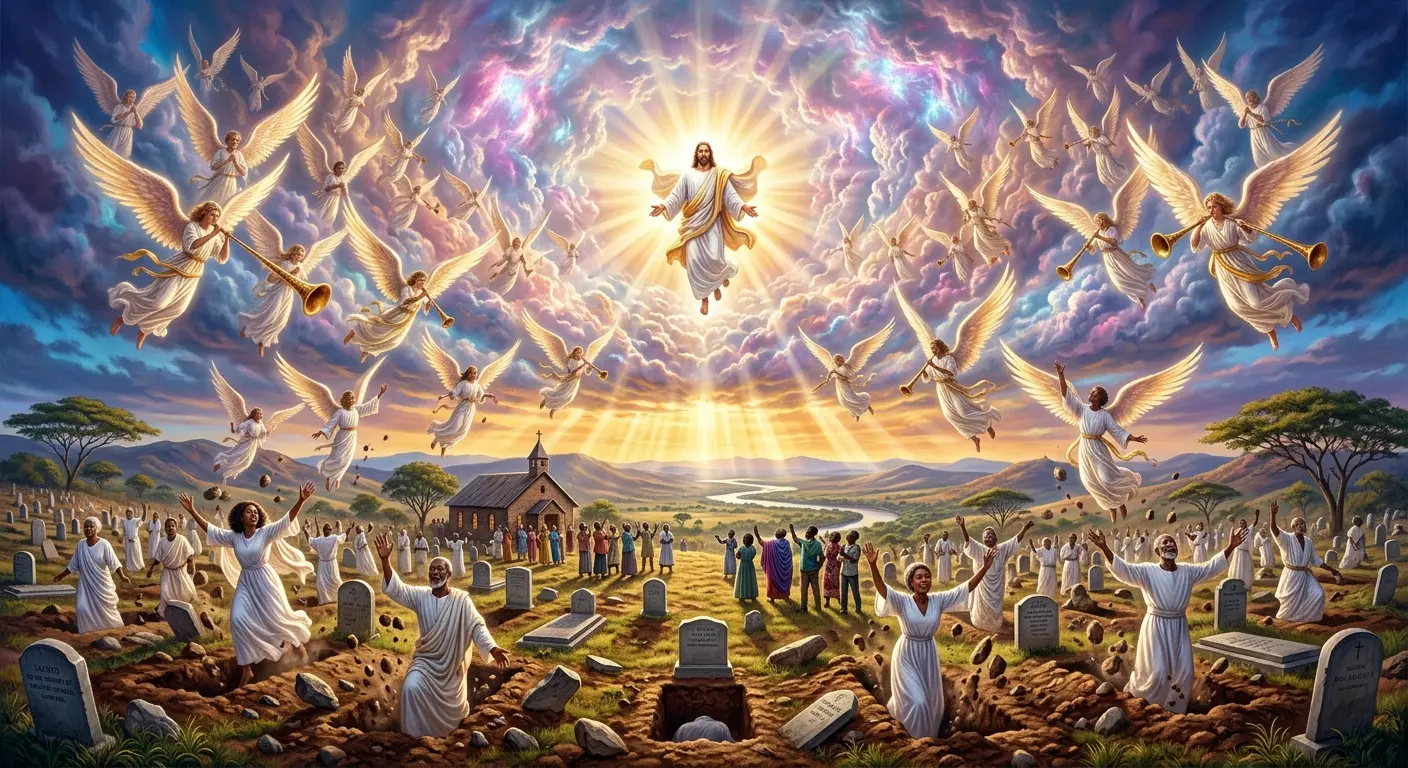
For the Lord Himself will descend from heaven with a shout, with the voice of an archangel, and with the trumpet of God. And the dead in Christ will rise first. Then we who are alive and remain shall be caught up together with them in the clouds to meet the Lord in the air.
Notice the sequence! The dead in Christ do not come down from heaven with Jesus; they rise up from their graves when He returns.
The Bible records only a few specific exceptions—individuals who were directly translated or resurrected by God and taken physically to heaven as special precursors:
Enoch: Translated without seeing death (Genesis 5:24).
Elijah: Taken directly to heaven in a chariot of fire (2 Kings 2:11).
Moses: Died, but was specifically resurrected by Christ and taken to heaven (Jude 1:9; Matthew 17:3).
The Firstfruits Group: A special group raised at Christ's resurrection (Matthew 27:52-53).
Every single one of these individuals is in heaven in a physical, resurrected state. The Bible presents zero examples of disembodied, conscious human souls floating in heaven while their bodies rot in the ground. Also note that there is no record of Mary being taken to heaven.
6. What About 1 Peter 3: Did Jesus Preach to Souls in Hell?
Another verse frequently misunderstood is 1 Peter 3:18-20, which speaks of Christ being "put to death in the flesh but made alive by the Spirit, by whom also He went and preached to the spirits in prison, who formerly were disobedient... in the days of Noah."
Some claim this means that while Jesus' body lay in the tomb, His conscious soul descended into an underworld prison to preach a second-chance sermon to the people who drowned in Noah's flood.
If that were true, why would Jesus offer a second chance only to the contemporaries of Noah and ignore every other sinner in human history? That would hardly be fair!
When read in context, Peter is explaining how Christ worked:
Christ was made alive by the Holy Spirit.
It was by that same Holy Spirit that Christ preached through Noah back in the days before the flood.
Noah was a "preacher of righteousness" (2 Peter 2:5) trying to reach people who were bound in the "prison" of their own sins.
The passage isn't saying Jesus went to a subterranean realm during His three days in the tomb; it is reminding us that the Holy Spirit has been actively working through human messengers to convict hearts since the very beginning of human history.
7. The Myth of the "Immortal Soul" vs. What Jesus Actually Said
What about Matthew 10:28, where Jesus says:
And do not fear those who kill the body but cannot kill the soul. But rather fear Him who is able to destroy both soul and body in hell
People often read the first half of that verse and jump to the conclusion: "Aha! The soul cannot be killed!"
But read the second half of the exact same sentence! Jesus explicitly states that God is able to destroy both soul and body in hell.
Jesus was making a clear distinction between the first death (the physical death of our present earthly body, which any human or accident can cause) and the second death (the complete, ultimate destruction of the unrepentant at the final judgment).
When a faithful person dies today, their physical life ends, but their eternal destiny is secured in Christ. Satan or wicked men can destroy your temporary body today, but they cannot strip away the eternal life that God has reserved for you at the resurrection.
On the other hand, God holds ultimate power over eternity. The wicked will not burn forever and ever like tortured immortal beings in a Dante's Inferno; Malachi 4:1-3 tells us they will be burned up until they become "ashes under the soles of your feet." They will suffer the second death—complete destruction of both body and soul—as if they had never existed.
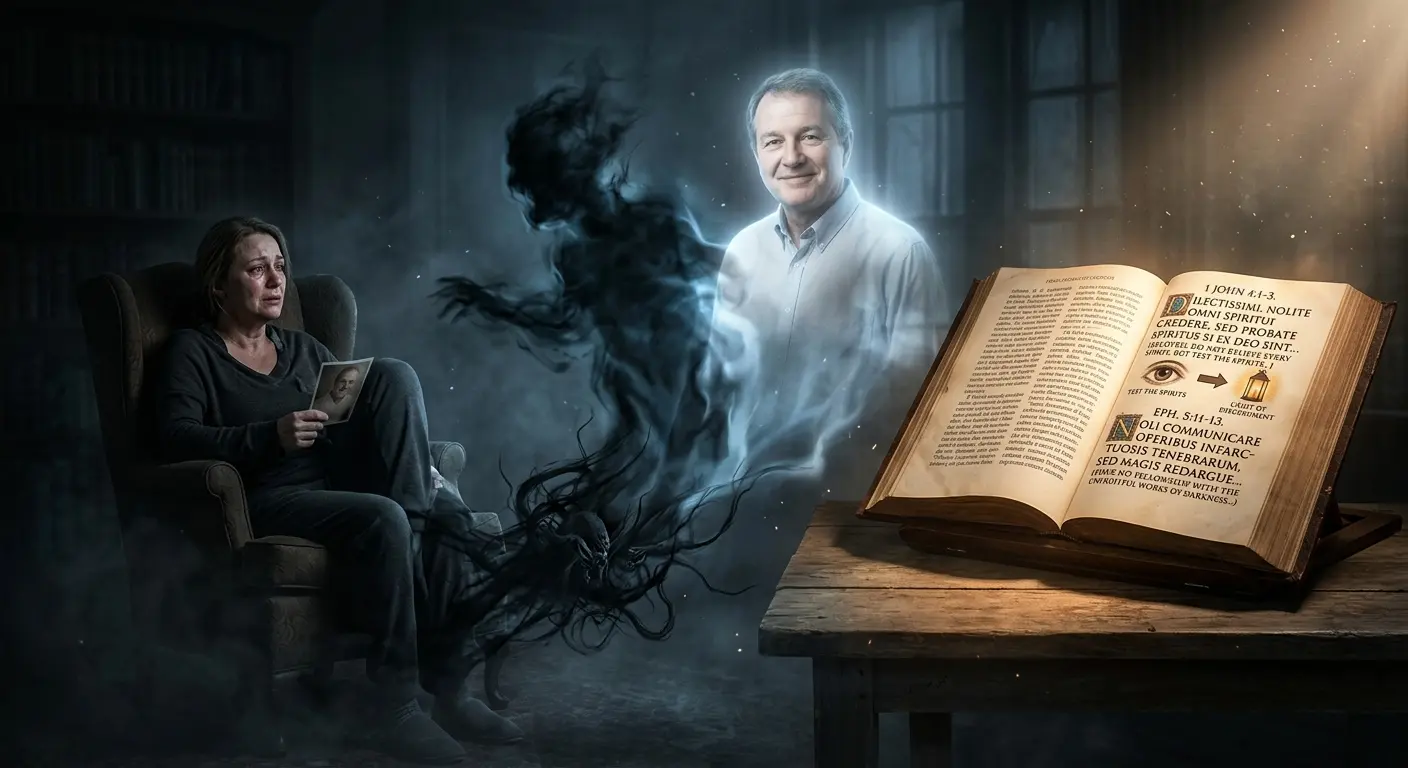
8. The Dangerous Reality: Demonic Deception and Ghosts
Understanding that the dead are completely unconscious isn't just an interesting theological point—it is a vital spiritual safeguard.
If you believe that the dead are conscious and capable of communicating with the living, you leave yourself completely vulnerable to one of Satan's oldest tricks: spiritualism.
Since the dawn of time, fallen angels (demons) have studied human behavior. They know your deceased grandmother’s voice, her favorite perfume, her childhood memories, and her personal quirks.
When a medium, a witch doctor, or a grieving relative experiences a "visitation" or hears a voice from a deceased loved one, they are not speaking to their relative. They are interacting with a fallen angel impersonating the dead!
The Bible gives a stern warning in Leviticus 20:6 and Isaiah 8:19:
And when they say to you, 'Seek those who are mediums and wizards, who whisper and mutter,' should not a people seek their God? Should they seek the dead on behalf of the living?
This dangerous deception reaches far into pop culture, Hollywood movies, popular TV shows, and even certain church movements where alleged miracles or apparitions are showcased.
Consider modern claims where followers report seeing high-profile religious figures physically ascending to heaven upon their death. Without a solid biblical foundation, people see a dramatic visual spectacle and immediately assume it is divine.
In reality, Satan routinely transforms himself into an "angel of light" (2 Corinthians 11:14) to generate illusions, perform signs, and lead people away from the authority of Scripture.
If the dead are asleep until the resurrection, then any voice, vision, or apparition claiming to be a dead person is an immediate red flag.
Rest in the Truth
When you understand the biblical reality of death, the fear vanishes.
Death is not a terrifying dark portal into an unknown underworld, nor is it a place where your departed loved ones are watching you from above while feeling helpless about your earthly struggles.
Death is simply a quiet, restful, dreamless sleep.
For the believer, the very next conscious thought after closing their eyes in death will be the glorious sound of the trumpet, the brilliant light of the Second Coming, and the voice of Jesus calling them out of the dust into eternal, immortal life.
Take comfort in God's Word, rely on His clear promises, and anchor your faith in the One who holds the keys of death and the grave!