The Adventists are the only body of Christians with the Bible as their teacher, who can find no warrant in its pages for the change of day from the seventh to the first . . . Reason and common sense demand the acceptance of one or the other of these alternatives: either Protestantism and the keeping holy of Saturday, or Catholicity and the keeping holy of Sunday. Compromise is impossible.
--Catholic Mirror, September 2 and December 23, 1893 [The Catholic Mirror, a Baltimore journal was at this time the official organ of Cardinal Gibbons].
You will notice that this blog post is a part two of the two-part series titled "What They Don't Want You To See In Daniel and Revelation", part one is here.
Protestantism and The Five Solas
Protestantism is a multifaceted theological, ecclesiastical, and socio-political movement within Western Christendom that emerged during the early sixteenth century. It is defined by its systemic break from the authority of the Roman Catholic papacy and its subsequent articulation of distinct Christian doctrines.
Rather than forming a single, monolithic institution, Protestantism developed into a diverse family of denominations and regional churches. These bodies are bound together by a shared rejection of papal supremacy and a commitment to several foundational theological principles. The primary theological boundaries of Protestantism are established by its adherence to the supreme authority of the Christian Scriptures over church tradition (sola scriptura), and the doctrine of justification by faith alone (sola fide) through the unmerited grace of God (sola gratia).
Ecclesially, the movement is characterized by the "priesthood of all believers," which rejects the necessity of a sacerdotal hierarchy to mediate salvation, and the distinction between the visible church (the physical, institutional assembly containing both true believers and hypocrites) and the invisible church (the complete body of the elect, known only to God).
To distinguish true visible congregations from false assemblies, Protestant theologians historically identify specific "marks of the church". These include the pure preaching of the Gospel, the right administration of the sacraments, and, in some traditions, the faithful exercise of church discipline.
Historically, the etymological origin of the term "Protestant" is traced to a specific legal and political crisis within the Holy Roman Empire. During the Diet of Speyer in 1529 (often referred to as Speyer II), the Roman Catholic emperor Charles V, represented by his brother Archduke Ferdinand, sought to suppress the growing reform movement. Ferdinand rescinded the temporary suspension of the Edict of Worms that had been granted during the Diet of Speyer in 1526. The 1526 recess had permitted individual German princes and free imperial cities to govern religious matters within their territories as they saw fit, which had effectively allowed Lutheranism to establish deep regional roots.
When Ferdinand commanded that the Catholic faith and the jurisdiction of Catholic bishops be uniformly restored across all imperial territories, a minority coalition of reform-minded rulers refused to submit. On April 19, 1529, this coalition presented a formal protestatio. They argued that the majority decision could not bind their consciences in matters concerning the honor of God and the salvation of their souls. The signatories of this protest included:
Elector John "the Steadfast" of Saxony
Landgrave Philip of Hesse
Margrave George of Brandenburg
Dukes Ernest and Francis of Braunschweig-Lüneburg
Prince Wolfgang of Anhalt
Representatives of fourteen free imperial cities, including Strasbourg and St. Gall
This legal protestation led their Roman Catholic opponents to label them "Protestants". Gradually, the term was adopted as a broad descriptor for all Western Christian movements that aligned with the theological and institutional goals of the Reformation.
Sola Scriptura (Scripture Alone)
This formal principle of the Reformation asserts that the canonical Bible is the sole inerrant, sufficient, and final authority for Christian faith and practice. It does not imply nuda scriptura (the radical rejection of all historical creeds, councils, and church offices). Instead, it maintains that while creeds and ministerial authorities are valuable, they serve underneath Scripture and must be judged by it. Because the Bible is "God-breathed" (2 Timothy 3:16–17), it possesses an inherent divine authority that cannot be claimed by any human council, pope, or ecclesiastical tradition. This principle fueled the translation of the Bible into vernacular languages, enabling laypeople to evaluate church teachings directly against the text.
Sola Fide (Justification by Faith Alone)
This material principle of the Reformation declares that sinners are justified—declared legally righteous in the sight of God—solely through faith in the person and finished work of Jesus Christ. Protestant theology rejects the Roman Catholic view that justification is an infused, cooperative process whereby a person is made righteous through faith and sacramental works. Instead, it asserts that justification is a forensic declaration: Christ's perfect righteousness is imputed to the believer as the only possible satisfaction of God's perfect justice. Good works are not the cause or condition of salvation, but the necessary and visible fruit of a genuinely justified life.
Sola Gratia (Grace Alone)
This principle emphasizes that salvation is entirely an unmerited gift from God, initiated and completed by His sovereign favor apart from any human cooperation, merit, or work. Drawing on the Augustinian understanding of original sin, the reformers held that fallen humanity is spiritually dead in sin and incapable of choosing or pleasing God on its own. Salvation, therefore, requires the monergistic (single-working) power of the Holy Spirit to regenerate the human will, freeing it from the bondage of sin to receive Christ.
Solus Christus (Christ Alone)
This Christocentric doctrine proclaims that Jesus Christ is the sole mediator between God and humanity. His substitutionary atonement and sinless life are completely sufficient for the believer's justification and reconciliation with God the Father. Consequently, Protestantism rejects the necessity of human priests, monastic intercessors, or the mediation of saints. Christ alone functions as the supreme Prophet (teaching perfect doctrine), Priest (offering Himself as a sacrifice and interceding for believers), and King (ruling the church and fighting on behalf of His people).
Soli Deo Gloria (Glory to God Alone)
This ultimate purpose of Protestant theology declares that because salvation is planned, achieved, and applied solely by God, all honor and praise belong to Him alone. It stands against any theological system that attributes a portion of saving efficacy to human effort, ecclesiastical structures, or saintly intervention. Believers are called to live their entire lives before the face of God (coram Deo), dedicating all secular and sacred activities to His glory.
The Venerable Day of The Sun disguised as the Lord's day
There have always been seven days in a week from time immemorial. Of these days, the seventh (Saturday) is declared in the Bible to be "the Sabbath of the LORD", in spite of the fact that most of the Christian world today keeps the first day (Sunday) holy. You must be curios as to why it is so.
The Planetary Week
The various days of the week were in ancient times called the first day, the second day, etc., for these were their Biblical names. But about the time of Christ they were given new names. The non-Christians began calling them the day of the sun, the day of the moon, etc., in honor of different heavenly bodies. This was known as the "planetary week."
Each day was ruled over by a different god, but the most important of all gods was given the rule of the first day of the week, with the idea in mind that the first is always more important than that which follows it. The most important of all gods was given the rule over the first of the seven days. It was his day, the day of the Sun, and all the worship of the week centered on his day.
Now, although these names for the days of the week were new, the sun god wasn't, for his worship came from a devotion to that most powerful of natural objects. It was one of the most ancient forms of worship and is represented by solar disc images found on nearly every continent of our world.
Sun worship was the earliest idolatry.
--Fausset, Bible Dictionary, page 666.
The Arabians appear to have worshiped it directly without using any statue or symbol (Job 31:26-27). Abraham was called out of all this when he went to the promised land. Ra was the Sun god in Egypt, and On (Heliopolis) was the city of Sun worship (see the Hebrew of Jer. 43:13). Entering Canaan under Joshua, the Hebrews again met Sun worship--Baal of the Phoenicians, Molech or Milcom of the Ammonites, and Hadad of the Syrians, and later the Persian Mithras or Mithra. Shemesh was an especially important Sun god in the middle east, and, later, in Egypt Aton was the god of the Sun Disc. The temple at Baalbek was dedicated to Sun worship.
By associating with Sun worshipers, the Israelites frequently practiced it themselves (Lev 26:30, Isa 17:8). King Manasseh practiced direct Sun worship (2 Kg 21:3,5). Josiah destroyed the chariots that were dedicated to the Sun, and also removed the horses consecrated to Sun worship processions (2 Kg 23:5,11-12). Sun altars, and incense were burned on the housetops for the sun (Zeph 1:5). and Ezekiel beheld the "greatest abomination": direct Sun worship at the entry way to the temple of the true God. This was done by facing eastward to the rising sun. (Ezek 8:16-17).
All this time there was no particular day that was used for this heathen worship. But then, about the time of Christ, or a little before, the various days of the week were dedicated to specific pagan gods--dies Solis--the day of the Sun, dies Lunae--the day of the Moon, and so on.
The sacred day of the Jews and Christians was the memorial of Creation--the true Sabbath--the Seventh day--the only Sabbath given in the Bible. The sacred day of paganism was the memorial of the Sun-god--the first day of the week. His day was called, "the Venerable Day of the Sun."
Mithraism
The planetary week, each day named after a different planet in the sky, played a very important part in the worship of the sun. By the time of Christ, Sun worship was most powerfully represented in Mithraism. Mithra (or Mithras) was originally an ancient god of Iran, and had been worshiped as the god of strength and war by the descendants of the Persians. But by the first century A.D. he had been transformed, oddly enough, into the leading sun god, and the foremost pagan god of any kind, of the western civilized world. The Romans often called him by a new name, Sol Invictus, "the Invincible Sun." During the early centuries of the Christian Era, Mithra was the greatest pagan rival of Christianity.
And this was not without a carefully developed plan, for Satan had arranged that this religion would closely approximate in several ways the only true religion in the world--Christianity. It had such features as a dying, rising Savior, special religious suppers, a special holy day out of the weekly seven--the Sun Day, initial baptism of its converts (in the blood of a slaughtered bull), and other similarities. It counterfeited the religion of the true God more cleverly than any other religion up to that time in history.
Gradually, large numbers of non-Christians began observing Sunday as a holy day in honor of Mithra. He was especially liked by the Roman soldiers, for his worship included athletic feats of skill and "warlike manliness."
Gradually, the worship of the Invincible Sun became even more popular and widespread among the Roman Empire. Emperor Aurelian (270-275 A.D.), whose mother was a priestess of the Sun, made this solar cult the official religion of the empire. His biographer, Flavius Vopiscus, says that the priests of the Temple of the Sun at Rome were called pontiffs. They were priests of their dying-rising Savior--Mithra, and vicegerents in religious matters next to him.
By this time, the middle of the second century, worldly Christians apparently, from the records in Alexandria and Rome more than anywhere else, in order to be better accepted by their pagan neighbors, began keeping Sunday, and in order to excuse their practice, since it was not Scriptural, they called it "the Lord's Day" even though it was obvious to all that Revelation 1:10 said nothing about Sunday.
Then the ball bounced back. Picking up this idea from the worldly Christians, the followers of Mithra began calling their Sunday, the day of Mithra, "the Day of the Lord," and their god, Mithra, "Lord." This led to Emperor Pius' official declaration that the deity--Mithra--was to be called Sol Dominus Imperil Romani ("The Sun, the Lord of the Roman Empire"). This title and the name Sol Invicto appeared together on his coinage.
Most of the "new things" that entered the church in the early centuries originated in Alexandria (Egypt) or Rome (Italy), and from those two locations they gradually spread to many of the western churches, and thence to some of the eastern ones. Until the fourth century and some time beyond, the eastern churches, being farther from Rome, tended to remain closer to the teachings of the Apostles.
Sun worship continued to be the official religion of the empire until Constantine 1 defeated Licinius in 323, after which it was replaced by Romanized Christianity.
Sunday and Christianity (50--300 A.D.)
It may seem surprising that any Christians before the time of Constantine would keep Sunday instead of the Biblical Sabbath--the Seventh-day Sabbath commanded by God Himself. But a clearer understanding of what was happening within the Christian church itself will explain this. Christ was crucified in 31 A.D. Most of his disciples were gone by 65 A.D. John, the last of the Apostles, died just before 100 A.D.
By the year 200, pagan compromises and practices were beginning to come into the church in a decided way. Of course, the safety of God's people then, is our only safety now: The Word of God--nothing less, nothing more, nothing else. But friendship with the world was a pleasant thing and brought many rewards. By 250, tides of worldliness were sweeping into the early church in an amazing flood. Occasionally persecutions would arise which would purify the church, but then as soon as peace returned, the world returned with it. This tendency to compromise and worldly ideas was especially noticeable in the urban areas of Egypt and the western part of the Empire.
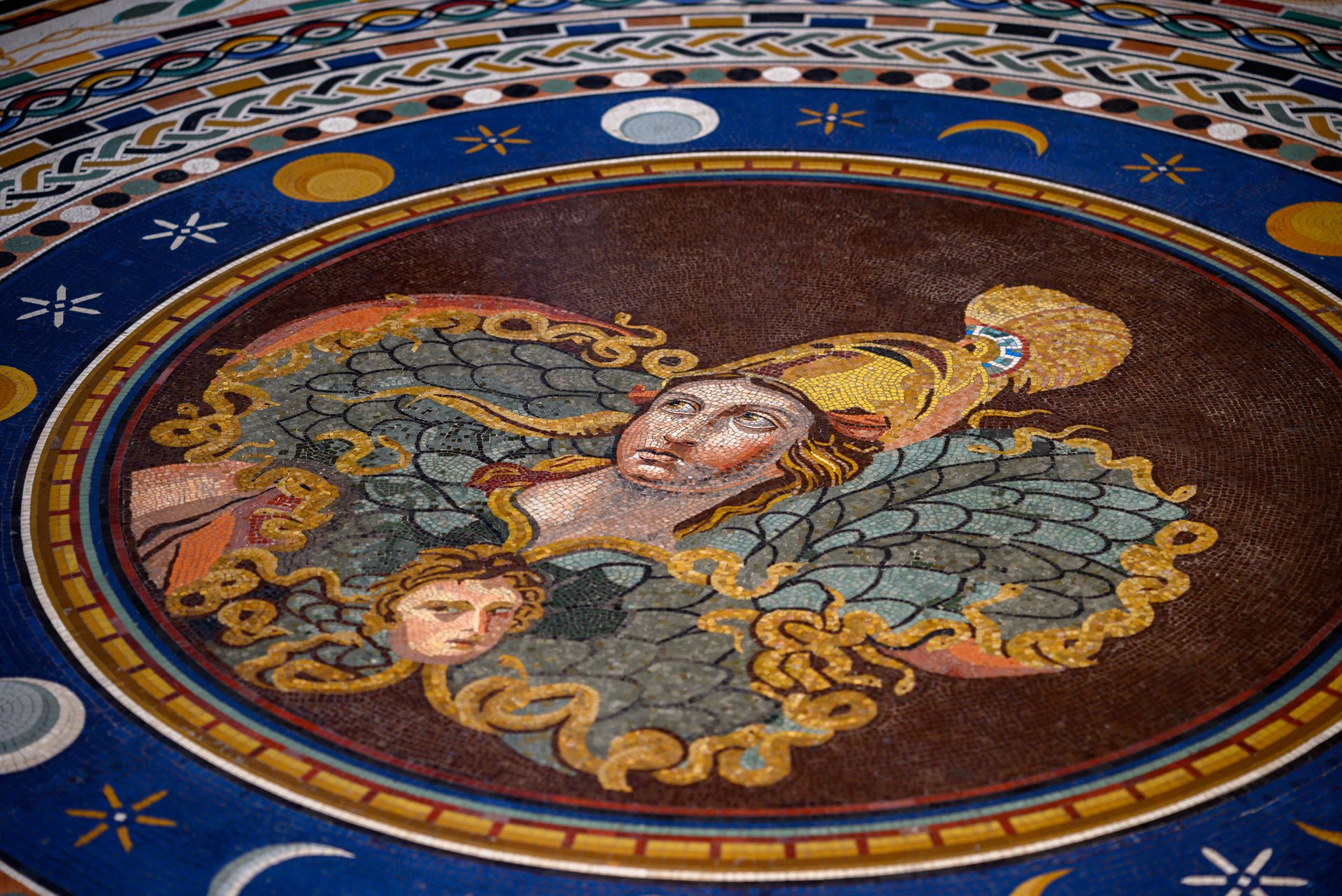
Here are some of the non-Scriptural changes that were coming into the Church at this time, primarily through the influence of Alexandria or Rome:
The December 25 Birth
Cumont, Olcott and others clearly show that December 25 was the yearly date of the annual birth of Mithra the Sun god--the leading heathen deity of the Empire. On this date, his followers celebrated the fact that the visible orb of the sun was again rising higher in the sky, following the winter solstice (December 21st, when it is the lowest). His birth-date was made an official holiday in the Empire by Aurelian about 273 A.D.
The Roman church being more liberal than most, the Christians there began celebrating this date as the birth-date of Christ not too long after this. The December 25 celebration came into the Christian Church from the local church at Rome, which received it directly from paganism
December 25 was a great pagan festival, that of Sol Invictus, which celebrated the victory of light over darkness and the lengthening of the sun's rays at the winter solstice. The assimilation of Christ to the Sun god, as Sun of Righteousness, was widespread in the fourth century and was furthered by Constantine's legislation on Sunday, which is not unrelated to the fact that the Sun god was the titular divinity of his [Constantine's] family.
--Williston Walker, A History of the Christian Church, third edition, page 155.
This midwinter pagan holiday was eventually declared to be the solemn anniversary of the birth of Christ--the mass of Christ.
Tonsure and Holy Water
Because pagan priests cut a circular bald spot on top of their heads in honor of the solar disc, Christian leaders of Alexandria and Rome soon copied this hair style, the tonsure. [Read Lev 21:5, and Deut 14:1]. It is still used by certain monastic orders to this day. Along about this time, "holy water" began to be used for baptism, which itself soon degenerated into a mere sprinkling instead of immersion. [Ac 8:35-38; Rom 6:3-5].
The Queen of Heaven
Much of the basis of later Roman Catholic liturgy originated at this time, with the direct copying by the Alexandrian and Roman churches of the Egyptian worship of Isis, the Egyptian Queen of Heaven. [Jer 7:18; 44:17-19,25]. Here is how the Egyptian Mother goddess and her Child were worshiped:
The daily ritual of Isis, which seems to have been as regular and complicated as that of the Catholic Church, produced an immense effect on the Roman mind. Every day there were two solemn offices, at which white-robed, tonsured priests, with acolytes and assistants of every degree, officiated. The morning litany and sacrifice was an impressive service. The crowd of worship pers thronged the space before the chapel at the early dawn. The priest ascending y a hidden stairs drew apart the Vail of the sanctuary, and offered the holy image to their adoration. He then made the round of the altars, reciting the litany [mystic words in an unknown tongue], and sprinkling the holy water from the secret spring.
--Samuel Dill, "Roman Society from Nero to Marcus Aurelius." page 577-578. London, Macmillan, 1904. [2 Tim 2:15-16, Ex 20:3-5].
The Mother and Child
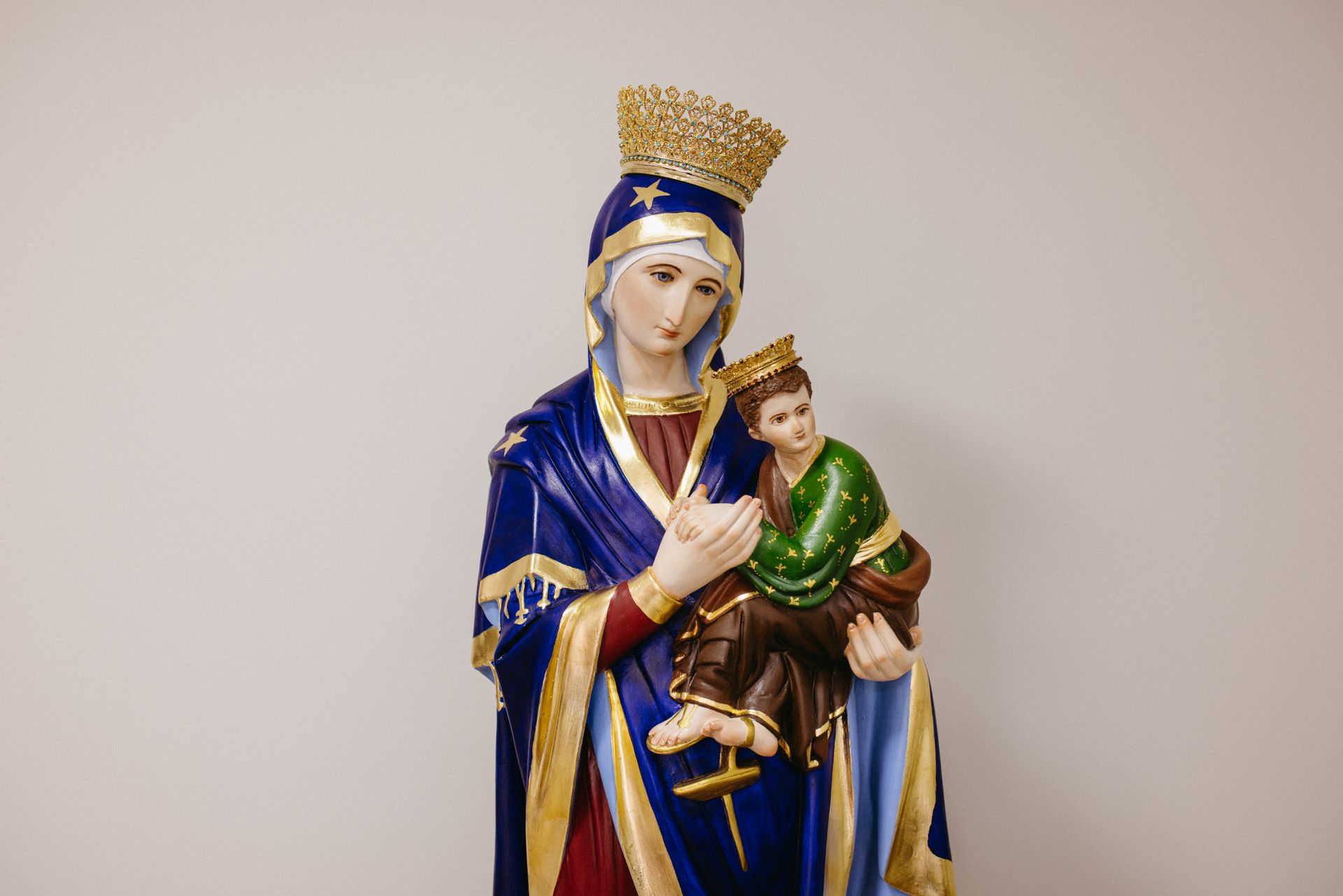
The "Queen of Heaven, the Mother of God" concept came directly into the Christian church from the Mother and Child Cult in Egypt--the worship of Isis and Horus. When this new idea came into the Christian church through the local church at Rome in the fourth century, it really shook up the church. It came as a result of the urging of Egyptian church leaders who declared Mary to be "the Mother of God." This caused a split in the church and the banishing of Nestorius, a Christian who tried to oppose it. Images--statues--of Isis nursing Horus at her side had already been accepted by pagans all over the empire, for she was the avowed patron goddess of sailors from Italy. But then in the fifth century a very significant thing happened: The names "Isis and Horus" totally disappeared, and in their place appeared the worship of "the Virgin Mary and her Child." [Mark 3:31-35, Luke 11:27-28, Matt 10:37]
It is interesting to note that the very same thing happened to Mithra. Just as soon as the essential aspects of Mithraism had been brought officially into the church, Mithra the greatest pagan god of his time--disappeared within a century! Satan no longer needed it for his purposes--for he had already brought both him and his day into the Church. And actually Mithraites no longer needed it either. Christianity, in its new form, now supplied its place very well.
Soon the church was reaching out to still other lands for ideas to make its rituals and teachings more varied and imposing.
Hermits and beads and Candles
From India, came ascetics, monastic hermits, and rosary beads. The burning of candles came from the worship of Mithra, the Sun god [the light in the candle flame was considered a small "sun"]. All these things entered as the Christian church, led by the Theological School at Alexandria and the Bishop of Rome opened its doors to heathenism. And, of course, with these new practices, and from the same sources, Sunday observance came into the church.
Easter--the Resurrection of Spring

In the time of the apostles there was no Easter service such as we have today. The early church kept the day of the Biblical Passover (Pascha), but not Easter, which was but another invention of paganism. Easter also came in the spring of the year, but it was a pagan fertility festival in honor of Ishtar, also known as Attis and was accompanied by licentious practices. Emperor Claudius made it an official holiday during his reign.
The issue here is the fact that Christians began keeping a pagan holiday sacred to an ancient and well-known goddess, and a licentious one at that. Cumont tells us:
Attis awoke from his sleep of death, and the joy created by his resurrection burst out in wild merrymaking, wanton masquerades, and luxurious banquets.
--Franz Cumont, Oriental Religions in Roman Paganism, pages 56-57, 1907 edition.
Gradually the Christian church identified with this pagan festival of the Resurrection of Spring, by keeping it in honor of the resurrection of Christ. History reveals that it was a deliberate decree of the bishop of Rome that brought Easter into the church.
About the year 154 A.D., Anticetus, bishop of the church at Rome, authorized a Sunday festival to correspond with the Attis fertility festival. This was a combining of Mithra, Attis and Christ and would better appeal to the heathen, he thought. Half-converted theologians in Alexandria spent their time digging up pagan philosophy and recommending it in writing to the Christian churches of the Empire, while half-converted church leaders in Rome used those ideas as levers to gain control over the other local churches by pretending that they had the authority to require obedience to them!
First Sunday Coercion
Then, in 195 A.D., for the first time in history the Roman church made major news in all the churches of Christendom, when Victor, bishop of Rome, tried to force all of the eastern church leaders to keep the annual celebration of Christ's resurrection on Sunday. Of course, the bishops of the other churches protested, insisting that if done at all, the Biblical precedent for this was on the fourteenth day of the month Nisan [Ex 10,12,14, Lev 23:5].
But Victor would not consider this, and had the boldness to write letters "ex-communicating" all leaders and churches that refused to do as he said. He declared all the churches of Asia to be apostates because they would not follow his example in the matter.
Back in those days, some churches were more influential than others, but none were "over" the others. What Victor tried to do in 195 AD. bordered on the fantastic.
This was probably the first time in history that the bishop of Rome attempted to gain control over all the other churches, and commenting on it, Dr. Bower, in his History of the Popes, volume 1, page 18, calls it "The first essay of papal usurpation." In simple language, we would call it, "the first attempt at papal takeover."
A careful study of the historical records reveals that gradually, with the passing of the years, the Roman bishop tended to use his new day, Sunday, as a ploy for political supremacy over the other churches. Victor's decree was the first ecclesiastical Sunday Law of any kind, in history.
The Easter Controversy continued, with the Eastern churches giving it stiff opposition until the Council of Nicaea in 325 A.D., at which time Sunday was declared the official day for Easter observance. Emperor Constantine immediately followed this, the same year, with civil enactments enforcing it among the churches.
Origin of Christian Sunday keeping
All this time, the influence of Sun worship was rapidly increasing in the Roman Empire. Over the centuries the official religion of the empire had been emperor worship, but it had died out and two strong contenders for popular favor were taking its place. This was Mithra the Sun god, and Christ of Christianity. And, frankly, as the third century neared its close, it was difficult in some of the cities of Egypt and the West to see much difference between the two religions. Fortunately in the rural areas there were the seven thousand who had not bowed the knee to Baal, and who would not do so for several centuries to come, in spite of persecution from their own brethren.
But it would seem that there were those in the church that were doing their best to help the world see that Christ was but another name for Mithra. Cumont tells us that they purposely compared the two as closely as they could so that pagans would be drawn into the church.
The dazzling orb of sunlight, he tells us was exalted as the great symbol of Christ. Christians in certain places had sun-symbols in their churches to help the pagans adjust to the new surroundings. [Deut 4:16-19]. This is where originated the idea of light beams coming from the heads of Christ, and Mary, and the saints.
It had been the custom of the Egyptians and Persians to worship the sun in the morning, and Tacitus (a Roman historian) tells us of this practice in Emperor Vespasian's Roman army in the first century. Tertullian, living west of Alexandria, tells us that he and fellow Christians of his time regularly faced the east when they prayed to Christ their God. He mentions this in an essay in which he advocates Sunday-keeping, and rebukes other Christians because they were refraining from work on the Seventh day.
In every case that the present writer can locate, the few men advocating Sunday-keeping prior to 400 A.D.--were the very ones who were introducing pagan heresies to the brethren in the Christian Church. The primary exception were the Roman Bishops, who appeared to be stronger at legislating the heresies upon the churches, than at inventing them.
Along about this time, a youngster was growing up that was destined to powerfully affect the Christian world for all time to come--a boy named Constantine.
Constantine and a State Church (300--350 A.D.)
On the retirement of Emperor Diocletian in 305, it was an uphill fight among several men for the coveted title of Emperor. Fighting continued on and off from 305 till 323. But out of it Constantine emerged as the sole ruler of the vast Roman empire. The crucial battle occurred just north of Rome in October of 312, following which by the Edict of Milan, he gave Christianity full legal equality with every other religion in the empire. More favors to the church soon followed.
Then, on March 7, 321, was issued the first national Sunday Law in history. This was the first "blue law" to be issued by a civil government. Here is the text of Constantine's Sunday Law Decree:
Let all judges and townspeople and occupations of all trades rest on the Venerable Day of the Sun [Sunday]; nevertheless, let those who are situated in the rural districts freely and with full liberty attend to the cultivation of the fields, because it frequently happens that no other day may be so fitting for ploughing grains or trenching vineyards, lest at the time the advantage of the moment granted by the provision of heaven be lost. Given on the Nones [seventh] of March, Crispus and Constantine being consuls, each of them, for the second. time.
--The Code of Justinian, Book Ill, title 12, law 3.
Five additional Sundays Laws were to be issued by Constantine within a very few years to buttress this, his basic one.
When Constantine was issuing his Sunday laws, was he a consistent Christian? Hardly. He was at that very time embellishing The Temple of the Sun in Rome, and in the same year that he proclaimed his first Sunday Law, he made several decrees maintaining pagan practices. The old Roman priests in these superstitious performances decided the most important governmental questions by watching the flight of birds, by examining the entrails of chickens, or by similar superstitions. All this Constantine legalized.
The very next day after giving the Sunday Law of March 7, 321, quoted above, Constantine made another law favoring pagan soothsayers, to the intent that whenever lightning should strike the imperial palace or any other public building, the heathen priests should be consulted as to what it might mean. This they did by looking at the entrails of beasts that had been slaughtered in sacrifice to the gods.
It is to be observed that Constantine's Sunday law was just that--a Sunday law--and nothing more. For Sunday was the great day of the Sun worship cults as well as of compromising Christians. In that law, Christianity is never mentioned. The day is called "the Venerable Day of the Sun" (venarabili die solis). This was the mystical name for the Day of the Sun god. Both the heathen and the Christians well knew this. It is a historical fact that when Constantine issued this first imperial Sunday edict of 321, enforcing the observance of Sunday by the people of the Roman Empire, he was still a worshiper of Sol Invictus--"the Invincible Sun," as well as being the Pontifex Maximus (supreme pagan pontiff or priest) of Roman heathen worship as the state religion.
In another of his six Sunday laws, he gave the order that all of the heathen troops of his army be marched out on the drill field each Sunday in order to recite a prayer composed by the emperor for this purpose. It was worded in such a way that it could be addressed to any god adored by mankind. The soldiers were required by this Sunday law to recite this prayer while facing the sun.
Victor Duruy, a French historian, says this:
He [Constantine] sent to the legions, to be recited upon that day [Sunday], a form of prayer which could have been employed by a worshiper of Mithra, of Serapis, or of Apollo, quite as well as by a Christian believer. This was the official sanction of the old custom of addressing a prayer to the rising sun.
--Victor Duruy, History of Rome, volume 7, page 489.
However, after the death of Licinius (324), his colleague in the imperial office, Constantine openly professed Christianity, though he intentionally postponed baptism until a few days before his death in 337, for he considered baptism as something of a supernatural power to take away sin, and he avoided doing it any sooner than necessary.
Philip Schaff, the noted historian, commenting on the first Sunday Law Decree, clearly shows that the day to be observed was given not under the name Sabbatum [the Sabbath], or dies domini [the Lord's day], but instead, it was given under the heathen title for the day of the sun god dies Solis [the Day of the Sun]. Schaff observes that there was no reference in the law either to Christ, Christianity, or the resurrection of Christ.
But though Constantine meant the law to unite all contending religions into one giant compromising conglomerate, it was thought otherwise by the Christian church leaders of his time. To them it was considered a great victory.
Eusebius and Nicea
Eusebius, bishop of Caesarea (270-338), generally considered to be Constantine's outstanding flatterer in the church, made this remarkable statement:
All things whatsoever it was duty to do on the [Seventh day] Sabbath, these we [the church] have transferred to the Lord's day.
--Commentary on the Psalms, in Migne, Patrologia Graeca, volume 23, column 1171.
Commenting on this heaven-daring statement, one historical writer says this:
Not a single testimony of the Scriptures was produced in proof of the new doctrine. Eusebius himself unwittingly acknowledges its falsity, and points to the real authors of the change. 'All things,' he says, 'whatever that it was duty to do on the Sabbath, these we have transferred to the Lord's day.' But the Sunday argument, groundless as it was, served to embolden men in trampling upon the Sabbath of the Lord. All who desired to be honored by the world accepted the popular festival.
--E.G. White, The Great Controversy, page 574.
This was the beginning of some thing new and ominous within the Christian Church. Rome, itself, the capitol of the mammoth empire, was more licentious, dissipated, and political, than any other city. The influence of it all had reached to the local Christian church there, and a concern to meet the world's standard, as well as a fascination with power-politics had gripped it.
In 325 A.D. the Council of Nicaea met, at which time the church leaders decreed that all honor the resurrection of Christ by keeping the Easter festival--and only on a certain Sunday of each year. Immediately, following this ruling, Constantine issued an imperial order commanding all Christians everywhere to obey the decree of this council. Church and State had united, and whenever in history this has happened persecution of religious dissenters has generally followed. Trouble was ahead for the people of God.
Persecution of God's People Begins (350-- 700 A.D.)
In order to placate church and government authorities, there were those who attempted to keep both days--Sabbath as well as Sunday holy--thus endeavoring to obey God as well as man, for religious persecution against non-observance of Sunday was growing stronger.
For this reason, Sozomen, a church historian of that time, tells us that many "were assembling together on the Sabbath as well as on the first day of the week, which custom is never observed at Rome or at Alexandria."--Sozomen, Ecclesiastical History, book 7, chapter 19, in A Select Library of Nicene and Post -Nicene Fathers, second series, volume 2. [Lk 16:13, Ac 5:39, Gal 1:10].
Even at this late date, Rome and Alexandria continued to be the only bulwarks of Sunday-keeping.
The keeping of both days might seem a practical solution, but it wasn't. The Seventh-day Sabbath was the divinely ordained day for the worship of the Creator. God had never changed it. The Sun day was a man-made institution of worship in honor of a pagan god. To obey both was impossible. [Matt 6:24].
This was exactly the problem the three Hebrew worthies faced at Dura (Read Daniel 5.) They were not at this time forbidden to worship the true God. They need only bow down that day with others in a semblance of worship to the false. But, of course, to do so would signify an acceptance of heathen worship. And this they could not do. They would rather die first. They would rather die than lose something that many in our day consider to be of little value--The Sabbath of the Fourth Commandment given by the God of Heaven Himself.
Now, when in the fourth century it was discovered that some were doing this--keeping both days--this made the religious leaders unhappy--and angry. They saw that their authority would not be respected as supreme, as long as both days were kept. The Sabbath had to go.
And so later in the fourth century, at the Council of Laodicea, for the first time Bible Sabbath-keeping--worshiping on the Seventh day of the week--was forbidden by an official decree of the Christian church. Not to comply meant "anathema"--excommunication. This meant forced separation from church attendance and association with fellow Christians for the rest of their lives unless they recanted and submitted to the authority and teaching of the church. But to submit meant to lose the precious truths of God's Word, and the precious Sabbath.
Christians shall not Judaize and be idle on Saturday [in the original: Sabbato--shall not be idle on the Sabbath], but shall work on that day; but the Lord's day they shall especially honour, and as being Christians, shall, if possible, do no work on that day. If, however, they are found Judaizing, they shall be shut out [anathema, or excommunicated] from Christ.
--Council of Laodicea, Canon 29, in C.J. Hefele, A History of the Councils of the Church, volume 2, page 316.
This talk of "Judaizing" was a cover-up for the real facts in the case. Christians who kept the Seventh-day Sabbath, weren't obeying the Jews--they were obeying God! They weren't Judaizing,--they were Bible-izing!
The first recorded church legislation on this was at Laodicea:
The keeping of the Sunday rest arose from the custom of the people and the constitution of the Church. Tertulian was probably the first to refer to a cessation of affairs on the Sunday; the Council of Laodicea issued the first Council legislation for that day; Constantine 1 issued the first civil legislation.
-- Priest Vincent J. Kelly, Forbidden Sunday and Feast-Day Occupations, page 203. [Roman Catholic] (The exact date of this Council of Laodicea, which marked the first Sunday legislation by the Christian Church, is not known, but is thought to have been in 336 A.D.)
The Council of Laodicea marked the beginning of a new era. When the persecution of God's people began, the extermination of Sabbath-keeping lay at the heart of it.
Additional Decrees
Gradually, with the passing of time, additional decrees were passed, restricting what could be done on Sunday, and forbidding religious activities on the Bible Sabbath (governmental decrees in the years 365, 386, 389, 458, 460, 554, 589, 681, 768, 789, and onward, and church council decrees in 343, 538, 578, 581, 690, and onward.) Each law became stricter--every penalty more severe. Satan was determined to destroy the Sabbath, for it represented part of God's will for mankind.
In every case, we find human laws suppressing that which God has expressly commanded, the keeping of the seventh-day Sabbath, and in its place exalting a day for which God has made no provision whatever at any time; namely, the day of the sun. Surely here we have a mark, an evidence, of the desire of willful men to set up their own wishes against the wishes of God, and to establish their own traditions in place of the things which God has commanded.
The Sabbath in 425 A.D.
It is a striking fact that all this time the Seventh-day Sabbath continued to be kept by the majority of Christians in spite of all the inroads of paganism and compromise.
There are those who claim that most Christians had begun to keep the Sunday within two or three hundred years after the time of Christ and the Apostles. This is not true. By the middle of the fourth century under the duress of combined church and state legislation many of the city Christians may have begun compromising in this direction, but the greater majority of the Christians--the Christians outside the cities remained free for a much longer period of time from the encroachment of Sunday pressure.
The important church leader, Augustine, the bishop of the church of Hippo in North Africa, who died in the year 430, acknowledged the widespread keeping of the Sabbath in his day and in a letter to Jerome (the translator of the Roman Catholic Bible), he urged that Christians not be persecuted for keeping it instead of Sunday. In this letter he mentions that the Seventh-day Sabbath was observed in his day "in the greater part of the Christian world." Augustine, himself, was a Sunday-keeper.
Here is what the church historian Socrates, who died about 440 A.D., wrote nearly a hundred years after Constantine's Sunday Law Decree:
Although almost all churches through the world celebrate the sacred mysteries on the Sabbath every week, yet the Christians of Alexandria and at Rome, on account of some ancient tradition, have ceased to do this.
--Ecclesiastical History, book 5, chapter 22.
People cannot "cease" to do what they have never done, and so we can know that even at Rome and Alexandria the Bible Sabbath was once kept. But here we see that--amazingly so--400 years after the death of Christ and 100 years after Constantine's linking of church and state by his national Sunday law-Rome and Alexandria were the ONLY places in the world where the majority of Christians kept Sunday and not the Bible Sabbath.
This is truly remarkable. In spite of decrees and punishments; in spite of church leaders and governmental decrees, the true Sabbath of the Bible was being kept everywhere in Christendom a hundred years after Sunday legislation began--except in but two places--Rome and Alexandria. We can understand why Rome had ceased to keep the Sabbath, since for two hundred years it had been emphasizing the keeping of Sunday.
The Church in the Dark Ages (700-1500 A.D.)
As the centuries rolled by, Sunday observance became increasingly a symbol of the religious power of the Roman Church. Dissenters wherever they might be found were severely punished, but in spite of this, followers of the true Sabbath were to be found in distant or isolated places.
For many centuries after Bible Sabbath-keeping had been crushed out of much of the western world, it was still kept in such areas as Britain, Scotland and Ireland. A school was established on the lonely isle of Iona, and from there missionaries went to northern Europe, Switzerland and elsewhere. Eventually the churches in the British Isles were taken over by Rome, but among the Waldenses of the Italian Piedmont and the Swiss Alps, one of the most persecuted and hunted people of the Dark Ages, many kept the Bible Sabbath. Churches that held to this faith also existed for hundreds of years in Central Africa, in Ethiopia and Abyssinia, and among the Armenians and Syrians of Asia. (See Heylyn, History of the Sabbath, part 2, chap. 5, sec. 7; J.H. Merle D'Aubigne, History of the Reformation of the Sixteenth Century, bk. 17, chap. 2; Roger de Hoveden, Annals, vol. 2, pp. 528-530, 281-282; Michael Geddes, Church History of Ethiopia, pp. 311-312, and other books on the Dark Ages.)
The pattern is a simple one: Christian groups that tended to be hidden away in distant places from Rome, and that had access to the Bible in their own language, were the ones who were likely to continue keeping the true Sabbath.
When the northern tribes invaded the empire, the larger number of them accepted the Roman version of Christianity, instead of the purer eastern faith. And so at the request of the pope, they prohibited Sunday work with severe civil decrees in their respective countries.
But the medieval church never mixed Sunday with the Sabbath in their thinking. They recognized and freely admitted that it wasn't the Bible Sabbath. Christians never called Sunday "the sabbath" until modem times.
Interestingly enough, just as is done today, in their blue laws they never forbade amusements on Sunday, except the most objectionable types.
Sunday rest proved difficult to regulate. To church and civil decrees were added superstitious tales of letters from heaven, or miraculous punishments visited upon violators of Sunday.
Gregory, a sixth-century bishop of the city of Tours, in France, wrote up a bookful of them--fire falling from the skies and killing Sabbath-keepers, iron sticking to the hand, blood spurting from the eyes, or thorns growing inside the eyeballs of Sunday violators, and so forth.
In what company has Sunday arisen! Born of tradition, introduced by gnostic philosophers, popularized by Sun worship, clothed in anti-Semitism, enforced by law, sanctified by superstition, finally upheld by the death sentence. All these means have been necessary because of a lack of divine authorization in even one smallest passage of Scripture.
The Catholic Church's attitude towards Sunday
Protestantism, in discarding the authority of the church has no good reasons for its Sunday theory, and ought logically to keep Saturday as the Sabbath.
--John Gilmary Shea, "The Observance of Sunday and Civil Laws for its Enforcement," in The American Catholic Quarterly Review, Jan. 1883, p. 152 [Shea (1824-1892), a Catholic priest, wrote an important history of American Catholicism].
Ques. --Have you any other way of proving that the church has power to institute festivals of precept [command holidays]?
Ans. --Had she not such power, she could not have done that in which all modem religionists agree with her.--She could not have substituted the observance of Sunday, the first day of the week, for the observance of Saturday, the seventh day, a change for which there is no Scriptural authority.
--Stephen Keenan, A Doctrinal Catechism, 1846 edition, p. 176 [Keenan was a Scottish priest, whose catechism has been widely used in Roman Catholic schools and academies].
It is well to remind the Presbyterians, Baptists, Methodists, and all other Christians, that the Bible does not support them anywhere in their observance of Sunday. Sunday is an institution of the Roman Catholic Church, and those who observe the day observe a commandment of the Catholic Church.
--Priest Brady, in an address at Elizabeth, N.J. on March 17, 1903, reported in the Elizabeth, N.J. News of March 18, 1903.
The Catholic Church for over one thousand years before the existence of a Protestant, by virtue of her Divine mission, changed the day from Saturday to Sunday . . . But the Protestant says: 'How can I receive the teachings of an apostate Church?' How, we ask, have you managed to receive her teaching all your life, in direct opposition to your recognized teacher, the Bible, on the Sabbath question?
--The Christian Sabbath, 2nd ed., published by the Catholic Mirror of Baltimore, 1893, pp. 29-31. [The journal of James Cardinal Gibbons].
Contrary to popular belief that Sunday is kept as a day of worship because it is the day when Jesus resurrected, Catholics keep Sunday because the catholic church changed the day from Saturday to Sunday - something that you will notice in the quotes above. See, Catholics are taught, and believe, that the church [catholic church] is infallible, and that the church, through Christ's Vicar (the pope), has the power to make the change. They sincerely believe this, but, as we saw in part one, no such power was given to the church at all.
To argue that Sunday is a day of worship because of the resurrection is not different from arguing that Thursday should be a day of worship since it is the day when Jesus ascended to heaven, but nobody keeps Thursday. This goes to show that the resurrection is only used as an excuse to keep holding on to church tradition while violating God's law.
While there's nothing wrong with cerebrating the resurrection of Jesus, there is everything wrong with substituting the day when it happened for the Sabbath (Saturday). There is an express commandment telling us to "keep the sabbath day holy" and that surpasses everything else. Not to mention, Jesus did not instruct any person to substitute the day of His resurrection for the Sabbath and the disciples didn't change it either.
Today, most of the Christian world obeys a commandment of the catholic church, just as the Bible said, "all who dwell on the earth will worship him, whose names have not been written in the Book of Life of the Lamb" [Revelation 13:8].
What The Mark of The Beast is Really About

So they worshiped the dragon who gave authority to the beast; and they worshiped the beast, saying 'Who is like the beast? Who is able to make war with him?'
-- Revelation 13:4.
All who dwell on the earth will worship him, whose names have not been written in the Book of Life of the Lamb slain from the foundation of the world.
-- Revelation 13:8
And he exercises all the authority of the first beast in his presence, and causes the earth and those who dwell in it to worship the first beast, whose deadly wound was healed.
-- Revelation 13:12
He was granted power to give to the image of the beast, that the image of the beast should both speak and cause as many as would not worship the image of the beast to be killed.
--Revelation 13:15
Then a third angel followed them, saying with a loud voice, 'If anyone worships the beast and his image, and receives his mark on his forehead or on his hand'
-- Revelation 14:9
And the smoke of their torment ascends forever and ever; and they have no rest day or night, who worship the beast and his image, and whoever receives the mark of his name.
-- Revelation 14:11
So the first went and poured out his bowl upon the earth, and a foul and loathsome sore came upon the men who had the mark of the beast and those who worshiped his image.
-- Revelation 16:2
Then the beast was captured, and with him the false prophet who worked signs in his presence, by which he deceived those who received the mark of the beast and those who worshiped his image. These two were cast alive into the lake of fire burning with brimstone.
-- Revelation 19:20
There are so many interpretations of what the mark of the beast is, here are some of them:
Physical mark/tattoo: A literal brand, tattoo, or chip on the right hand or forehead. Popular in modern readings. Lined to ideas of RFID chips, barcodes, biometrics.
Economic system: Something required to "buy or sell" - so credit cards, digital IDs, cashless society, CBDCs. The "mark" = participation in the system.
Loyalty/allegiance: "Hand" = actions, "forehead" = thoughts. The mark = mindset + lifestyle devoted to the beast/anti-God system. Opposite of the God's "seal" on foreheads in Rev 7:3.
Roman imperial cult: Written for 1st century Christians. "666" = gematria for Nero Caesar in Hebrew/Aramaic. The "mark" = certificates proving you worshiped Caesar. Without it you couldn't trade in the Roman economy.
Idolatry: Any system, ideology, or power that demands worship competing with God. Could be political, economic, cultural.
Nero & Rome: Fulfilled in 1st century. Nero persecuted Christians 64-68 AD. 666 = "Neron Kaisar" = Nero Caesar. "Mark" = proof of loyalty to emperor worship.
Roman coinage: Coins had Caesar's image + "son of god" titles. Using Roman currency = bearing the "mark" of the empire.
Antichrist system: A future world leader/government requiring a mark for commerce. Often tied to a one-world government or religion.
Technology: Microchips, QR codes, digital IDs, AI, etc. The idea is tech that enables total economic control.
Gematria code: 666 is just a code. Different names have been calculated: Nero, Caligula, Diocletian, even non-persons. The number itself is the "mark" = imperfection, since 7 = perfection/completion in biblical symbolism.
Church tradition: Catholic/Orthodox readings often see it as symbolic of sin/separation from God, not a specific tech. Protestants like Luther tied it to the papacy. Jehovah's Witnesses see it as symbolic support for political nations.
Some people even applied the prophecy to Covid-19 - either the face masks or the vaccines. You will remember that people weren't allowed to enter/visit certain places unless they had a face mask or unless they were vaccinated. They believed this to be the "no one should buy or sell except one who has the mark or name of the beast" [13:17].
I started this section with 8 verses from Revelation that actually talk about the mark of the beast. I'm hoping that you will notice, with me, what all the above verses have in common. The Bible is consistent in pointing out that the mark of the beast is about worship more than anything else.
The interpretations that apply the prophecy to technology are merely speculative. It is something to do with God's people and their turning to worship the beast and his image as opposed to worshiping God. This crowd has turned away from God.
And to apply the prophecy to a literal brand or tattoo on the forehead or hand would be to trivialize the issue at hand. The idea even misrepresents the character of God and His love, for if God can destroy people, according to the threats pronounced in the Bible towards those who receive the mark of the beast, for simply having a tattoo or brand then that would make Him a cruel God. And the devil has, for ages, been trying to convince people that God is cruel. Such theories originate from him.
Then there are those who spiritualize the subject altogether, saying that it means "general separation from God". But the Bible gives us specific details by which we know that it's more than that.
By now we already know who the beast is - from part one. We turn to the Bible to understand what his [the beast's] mark is.
According to Rev 13:4, people would worship the dragon and the beast. The dragon is the devil [Rev 12:9]. The devil infiltrated the church and established his throne in the form of the beast (the papacy) and receives worship through the false form of religion set up by the papacy and the catholic church - where tradition is above scripture and the pope claims to have "power over the Almighty". The pope is just a mere man and the claim that he is above the Almighty just shows whom he's representing - the devil. The controversy has always been between Christ and the devil. However, God accepts the worship of those who do not know any better [Acts 17:30].

It was customary among the ancients for servants to receive the mark of their master, and the soldiers of their general, and those who were devoted to any particular deity, of the particular deity to whom they were devoted. And these marks were usually impressed on their right hand or on their forehead, and consisted of some hieroglyphic character, or of the name expressed in vulgar letters, or the name distinguished in numeral letters, according to the fancy of the imposer.
--- Dissertations on the prophecies Vol 3, p.241.
The Bible uses the same language, not to refer to the act of receiving a literal mark, but to what the act represents - loyalty. The Bible teaches us to worship God because He is the creator Rev 14:7 and that the sabbath is a sign between Him and His people [Ezekiel 20:20]. The sabbath points to God as the creator, He has the authority to command us to worship on the seventh day of the week because He is the creator and He set that day apart as a memorial of creation.
Prove to me from the Bible alone that I am bound to keep Sunday holy. There is no such law in the Bible. It is a law of the holy Catholic Church alone. The Bible says 'Remember the Sabbath day to keep it holy.' The Catholic Church says, No. By my divine power I abolish the Sabbath day and command you to keep holy the first day of the week. And ho! The entire civilized world bows down in reverent obedience to the command of the Holy Catholic Church.
--Priest Thomas Enright, CSSR, President of Redemptorist College, Kansas City, Mo., in a lecture at Hartford, Kansas, February 18, 1884, and printed in the Hartford Kansas Weekly Call, February 22, 1884, and the American Sentinel, a New York Roman Catholic journal in June 1893, page 173.
Now, I want you to notice what the catholic church's claim is, as it is laid out in the quote above. The catholic church claims to have authority to command worship on a certain day - Sunday, and that Sunday is a sign/mark of its authority, the same way the sabbath is the sign of God's authority.
While God's people are sealed on their foreheads, the beast's subjects will receive its mark on the hand or on the forehead. The bible predicted "all the world wondered after the beast" [Rev 13:3] and the catholic church says "the entire civilized world bows down in reverent obedience to the command of the Holy Catholic Church."
Either You are Sealed or You Receive The Mark of The Beast
I would like to circle back to the quote that I started with at the beginning:
The Adventists are the only body of Christians with the Bible as their teacher, who can find no warrant in its pages for the change of day from the seventh to the first . . . Reason and common sense demand the acceptance of one or the other of these alternatives: either Protestantism and the keeping holy of Saturday, or Catholicity and the keeping holy of Sunday. Compromise is impossible.
--Catholic Mirror, September 2 and December 23, 1893 [The Catholic Mirror, a Baltimore journal was at this time the official organ of Cardinal Gibbons].
I want to start by clarifying that Sunday is not yet the mark of the beast at this time. And all those who kept and those who still keep Sunday holy don't have the mark of the beast. You will notice that the early reformers who started Protestantism all kept Sunday holy. They lived according to the light that they had at the time. There are good, and sincere Christians who keep Sunday today because they do not know better, they have been taught to keep Sunday holy all their lives.
A time will come however, when Sunday will be enforced by the image of the beast, a power/nation that will force religion. The image of the beast forces the people to receive the mark of the first beast, the first beast being the papacy. This nation will force people to show their allegiance to or worship the papacy. And the way to show allegiance to the papacy will be by keeping Sunday holy, for it will be the sign/mark of the beast's authority.
The key phrase is "Compromise is impossible". At that time every living person will have to choose whether to receive God's seal (the Sabbath) or receive the mark of the beast (Sunday worship). Everyone will have heard this truth: they will know clearly what the catholic church did, how Sunday observance came to be and what it symbolizes. Yet some people will reject this truth and believe in Sunday anyway, these will receive the mark on their foreheads. Others will believe this truth, but will still choose to receive the mark of the beast for convenient reasons, they will receive it on their hand. The Bible clearly shows that God's remnant people, those who will stand firm on God's side during the time of the mark of the beast, will "keep the commandments of God and have the testimony of Jesus Christ" [Rev 12:17, 14:12, 22:14].
The Image of The Beast
Then I saw another beast coming up out of the earth, and he had two horns like a lamb and spoke like a dragon. And he exercises all the authority of the first beast in his presence, and causes the earth and those who dwell in it to worship the first beast, whose deadly would was healed. And he deceives those who dwell on the earth by those signs which he was granted to do in the sight of the beast, telling those who dwell on the earth to make an image to the beast who was wounded by the sword and lived. He was granted power to give breath to the image of the beast, that the image of the beast should both speak and cause as many as would not worship the image of the beast to be killed.
-- Revelation 13:11, 13:14, 13:15
Revelation 13:11 introduces another beast, a lamb-like one. Here are some interesting things about this beast/power:
It comes up out of the earth
It has two horns
It is like a lamb
It exercises the power of the first beast
It makes an image to the beast
It comes up around the same time when the first beast has a deadly wound
While the sea, from which the first beast arose [Rev 13:1], symbolizes multitudes, waters and nations [Rev 17:15] , the earth where this lamb-like beast arises symbolizes a new and previously unoccupied territory. The lamb-like characteristics represent its infancy and innocence at the time when it's introduced in the prophecy. The horns actually have a two-fold meaning, the beast's infancy, as well as the two principles upon which its power is founded. And finally this power comes up around the same time that the first beast has a deadly wound. We saw from part one that the first beast (the papacy) had its deadly wound in the year 1798.
There's only one nation that meets all the specifications of the lamb-like beast, and that nation is the United States of America. It was the fastest growing nation around 1798, it was established on unoccupied territory, with civil and religious liberty (the two horns) being the main principles of its government. And the beast is introduced in prophecy at its peaceful state, America already had its independence at the time. Spiritualism began in America, a fulfilment of the "signs" or miracles that the lamb-like beast would perform.
We already noticed, in part one, that the beasts in prophecy all have something to do with God's people. Babylon - God's people were captured to Babylon and God worked through Daniel and his counterparts to reveal His [God's] character to the heathen King Nebuchadnezzar; Media-Persia - God worked through Daniel to teach the Persians the true God, some of the Israelites were still captives there; Greece; Pagan Rome - Rome was in power when Jesus was on earth, they helped the Jews crucify Jesus and afterwards persecuted God's people.
Papal Rome followed: the catholic church became a kingdom, with the pope as its king. Religious intolerance and persecution continued. But around 1798 (the date when the deadly wound was inflicted, when the pope was imprisoned), a new beast is introduced in the prophecy. It follows that this beast would be have some connection to God's people.
America made religious liberty possible, granting its citizens the freedom to worship God according their own consciences. Thus Protestantism grew, spreading into other nations as well.
But the Bible predicts a time when the lamb-like beast (Protestant America) will make "an image to the beast", the beast being the papal power. An image is a reflection of the real object. So, if we can understand the papal power's characteristics, we can figure out what its image is.
Papal supremacy was characterized by religious intolerance which stemmed from the combination of church and state, that's to say the church influencing the government. This inevitably leads to the persecution of the minority who refuse to obey this church-state power, as history has already proven.
In this prophecy is predicted a time when the protestants of America will unite and form "an image to the beast", a state-church alliance which will lead the country to betray its own foundational principles, especially that of religious liberty. This will not necessarily be a universal church, as protestants differ in their beliefs so much as to render that an impossibility. There are however, two points of belief on which the unity will be based on, and these are Sunday worship and the immortality of the soul.
A secret union or council will be formed, an alliance where each of the protestant churches involved will have representation. And since the lamb-like beast has a republic kind of government, this council/union will push for congress to enact a law enforcing Sunday worship. That is why the prophecy says "saying to them that dwell on the earth", that's reference to the republic nature of the lamb-like power's government. Unlike a monarch, the people have the power. Thus the "image of the beast" will come alive in this church-state alliance.
Among the arguments for the unity will be to pray for God's intervention as earthquakes, cyclones, global warming, wars etc. will grow worse with time. But by so doing, they will be giving life to the "image of the beast", creating a combination of church and state.
When Sunday worship will be enforced by law, then it will become the mark of the beast, the papal power that is. But before that time comes, God will allow every person alive to learn this truth. This here is part of that process where God is enlightening his people.
When that time comes, the ones who get the mark of the beast on their foreheads will be those who will reject this truth and choose to keep believing in Sunday sacredness. Those who get the mark on their hand will be those who will understand and believe this truth, but still choose Sunday for convenience reasons, like keeping a job. Because those who refuse to obey the church-state power will not be allowed to "buy or sell", they will be forced to live in the mountains and caves, this has happened before with the Waldenses and other early Christians during papal supremacy.
Soon after America enforces Sunday worship, other nations will follow and to each individual will come the test to either receive the mark of the beast or be sealed by God on the forehead, that is either to accept Sunday worship or be part of God's remnant people, who "keep the commandments of God", especially the Sabbath (fourth) commandment.
Conclusion
You must have noticed that this presentation is not about denominationalism. God's remnant church is not called by any denominational name. But here is how you can identify them, they "keep the commandments of God and have the testimony of Jesus Christ" [Rev 12:17, 14:12, 22:14].
God is calling His people to "Come out of" Babylon [Rev 18:4] and her daughters, which symbolizes a system of religion that teaches human traditions in place of God's law. They are being called to join the remnant church, symbolized by the woman in the wilderness who eventually gets "arrayed in fine linen, clean and bright" [Rev 12:17, 19:8].