Let’s get one thing straight right off the bat: forget Walter White.
Yes, Bryan Cranston’s descent into a hat-wearing, pork-pie-rocking meth kingpin was incredible television. But Walter White was constrained by morality, guilt, and a desperate desire to secure his family’s future before his lungs quit on him. He was tethered to societal expectations until he actively chose to break them.
Frank Gallagher? Frank was never tethered to a single social contract in his entire, alcohol-soaked life.
Played with absolute genius by William H. Macy in Showtime’s Shameless, Frank Gallagher isn't just a great television character. He might genuinely be the greatest TV character ever created.
[ Traditional Anti-Hero ] ──► Moral Conflict ──► Guilt ──► Downfall / Redemption
[ Frank Gallagher ]       ──► Zero Moral Conflict ──► Pure Self-Interest ──► Absolute Freedom
The writers of Shameless didn't just push the envelope with Frank—they shredded the envelope, set it on fire, and used the ashes to roll a questionable cigarette. In an era where television writing is often terrified of making anti-heroes truly irredeemable or unlikable, the creative team behind Shameless gave themselves complete, unfiltered freedom.
The result? A character who embodies the show's title in every single frame, yet remains endlessly magnetic, fiercely intelligent, and shockingly hilarious.
The Philosophy of "Parenting": Frank's Bizarre Moral Compass
Most terrible television parents are written as one-dimensional monsters or tragic failures who spend their scenes weeping into a bottle over their mistakes. Frank Gallagher does neither.
Frank actually believes he is a great parent.
In Frank’s warped, philosophical mind, providing food, shelter, or emotional stability for six children would be doing them a massive disservice. Why spoil them with comfort when you can forge them in the furnace of absolute abandonment?
To Frank, leaving Fiona, Lip, Ian, Debbie, Carl, and Liam to fend for themselves isn't neglect—it's evolutionary parenting. He unironically views his neglect as a tough-love methodology designed to build self-reliance. When his kids survive another freezing Chicago winter by stealing heat or scamming the local pantry, Frank takes mental credit for raising survivors.
Frank's Logic:
[ Providing Food & Safety ] ──► Creates Soft, Dependent Children ──► Bad Parenting
[ Abandonment & Chaos ]     ──► Creates Ruthless, Resourceful Survivors ──► Genius Parenting
This unique perspective is what makes Frank so revolutionary. Writers are usually terrified to create a character who feels zero guilt about being a deadbeat. But Frank owns it with the swagger of a street philosopher, delivering eloquent, booze-fueled monologues on the back patio while his children figure out how to pay the property taxes he neglected.
The Ultimate Master of the Scam
If scamming were an Olympic sport, Frank Gallagher wouldn't just take home the gold—he’d steal the metal off the medal podium, pawn it for beer money, and convince the judges that it was their idea to give it to him.
Frank’s entire life is an intricate, daily tapestry of systemic exploitation. He doesn't look at societal safety nets as temporary assistance; he treats disability benefits, health insurance loopholes, and pension fraud like a full-time executive career.
Disability Fraud? An art form.
Insurance Exploitation? A spiritual calling.
Worker’s Comp? His personal retirement fund.
[ Standard Citizen ] ──► Gets a job ──► Pays taxes ──► Earns a living
[ Frank Gallagher ]   ──► Finds a loophole ──► Sues a corporation ──► Drinks for free
And yet, Frank is undeniably brilliant. His mind works at a level of tactical agility that would make top corporate lawyers weep. When he needs a fix, a place to crash, or a way out of a federal fraud charge, his brain computes options at warp speed.
Remember the rare times Frank actually took a real job? Specifically, after the death of his wife, Monica, when he briefly went on a spree of legitimate employment?
He wasn't just good at working—he was terrifyingly great at it. He rose through the management ranks in record time, out-performing everyone around him without breaking a sweat. It proved what viewers suspected all along: Frank isn't unemployed because he lacks ability. He's unemployed because he considers working a traditional 9-to-5 an insult to his intellectual freedom.

The Art of the Lie: William H. Macy’s Masterclass
A character this wild on paper only works if the actor can execute it without winking at the audience. William H. Macy didn't just play Frank Gallagher; he inhabited his skin, his staggering walk, and his rasping, charismatic voice.
Watch how Frank lies.
In almost every fictional drama, when a character tells a massive lie, the actor gives you tell-tale signs: a nervous eye twitch, a sudden sweat, a crack in the voice, or a panicked glance toward the exit.
Standard TV Lying: [ Lie Delivered ] ──► Sweating / Panicking ──► Audience Smells Guilt
Frank Gallagher Lying: [ Lie Delivered ] ──► Absolute Conviction ──► Flawless Execution
Frank Gallagher never panics. When Frank is caught red-handed with his arm inside a neighbor’s safe or fabricating a dead relative to collect an extra benefit check, his heart rate doesn't even spike.
The lie tumbles out of his mouth with complete, casual fluency. He invents elaborate backstories, moral justifications, and emotional appeals on the fly, delivering them with such unshakeable conviction that the person he’s robbing ends up apologizing to him.
That is high-level screenwriting meeting god-tier acting. Macy plays Frank not as a sniveling crook, but as a man who genuinely believes his own lies the moment they leave his lips.
Unfiltered Freedom in a Bound-Up World
Why do we love watching a man who steals from his own children, ruins weddings, and sleeps on the kitchen floor of the Alibi Room?
Because Frank Gallagher represents a bizarre, intoxicating form of pure freedom.
Most people wake up every day bound by obligations: alarm clocks, mortgages, performance reviews, social graces, and the constant fear of what other people think. Frank lives completely outside that grid. He has no boss, no reputation to protect, no social anxiety, and zero interest in fitting into civilized society.
[ Society's Rules ] ──► Work, Pay, Conform, Worry
              VS.
[ Frank's Reality ] ──► Wander, Rant, Scam, Live Free
He is a raw, living embodiment of real-world urban chaos. We all know people who possess fragments of Frank's traits, but television writers rarely have the guts to assemble those traits into a lead character and let him run wild for 11 seasons without forcing a cheap, unearned redemption arc on him.
The Final Verdict: The Anti-Hero Champion
In the grand pantheon of iconic television anti-heroes—alongside Tony Soprano, Don Draper, and Walter White—Frank Gallagher stands in a category all his own.
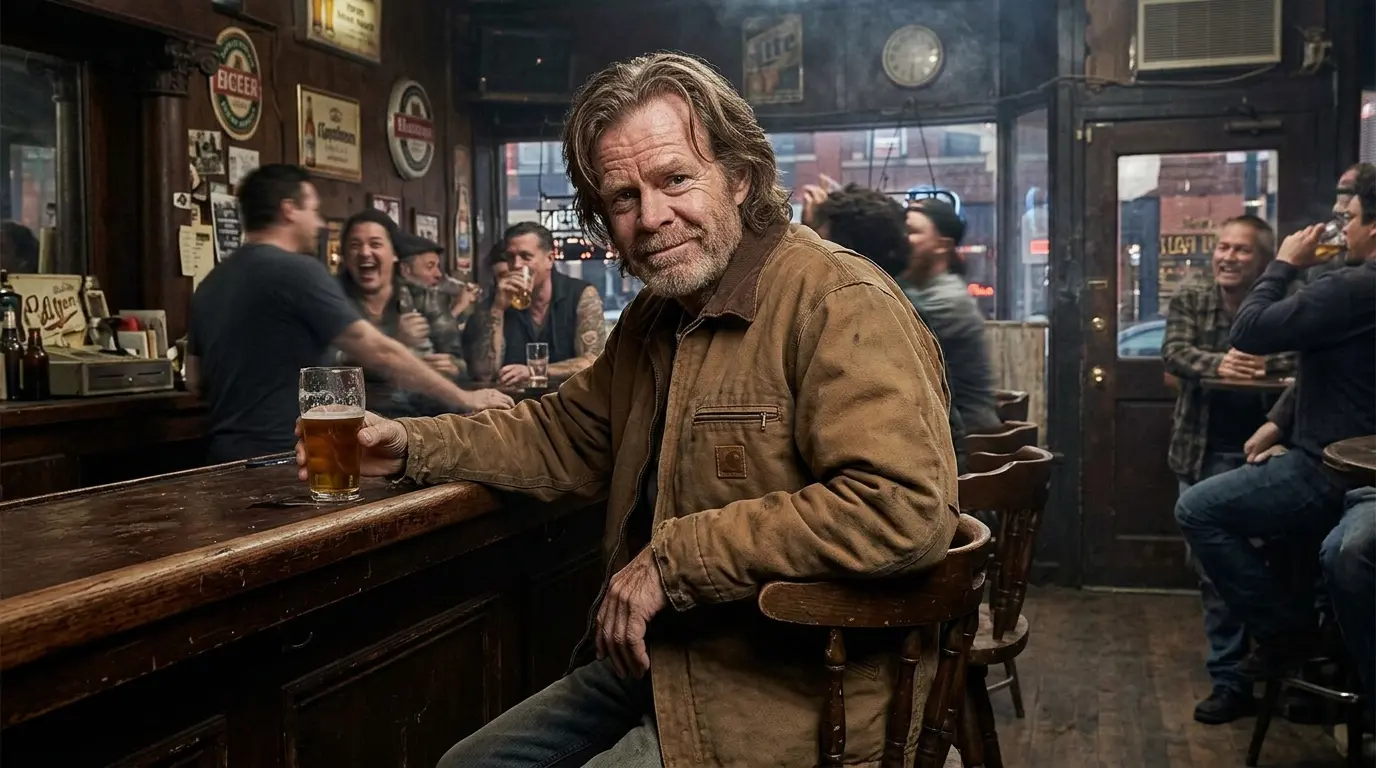
He didn't need a hidden fortune, a criminal empire, or a secret identity to captivate audiences for over a decade. All he needed was a worn canvas coat, a pint of cheap beer, and an endless reservoir of nerve.
Frank Gallagher proved that when writers give themselves total freedom to create a character who is unapologetically true to his own twisted nature—and when an actor like William H. Macy brings that vision to life with zero hesitation—you don't just get good TV.
You get a legend.