Introduction: The "Ghost Business" Syndrome
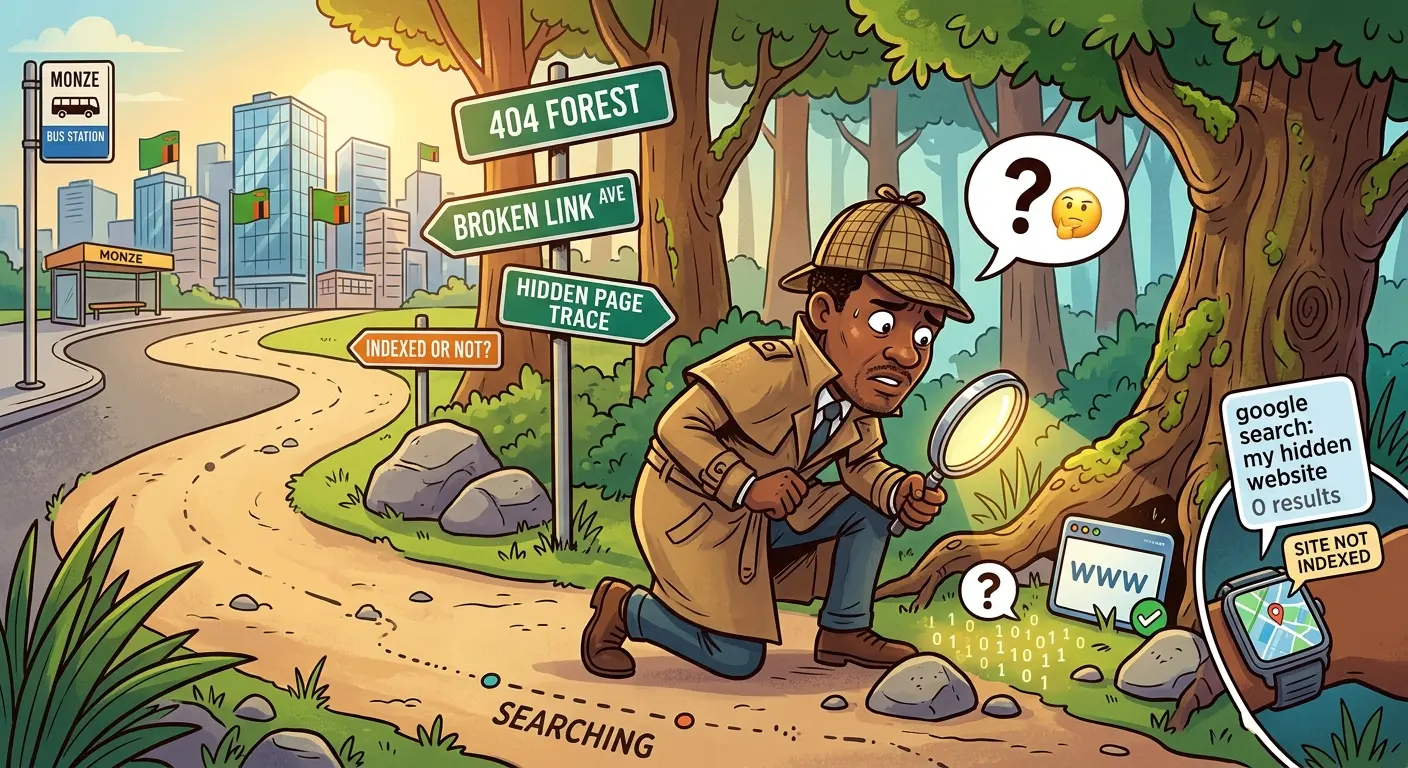
Picture this: You have spent weeks designing a stunning new logo, printed fresh business cards, and paid a developer to launch a shiny new website for your business. You sit back, put your feet up, open Google on your laptop, type in your company name, hit search, and...
Nothing.
Page one shows a random blog post from 2015. Page two shows a company with a similar name in South Africa. Page three shows a YouTube video of someone’s pet monkey. Your brand-new, expensive website is completely nowhere to be found.
It feels like opening a gorgeous, world-class restaurant in the middle of the Kafue National Park—without building a road, posting any signposts, or putting it on a map. You have built a great venue, but nobody knows it exists.
If you are trying to figure out how to get your business on Google in Zambia, you are not alone. Every single day, thousands of potential clients in Lusaka, Kitwe, Ndola, and across the country open Google to look for solar installers, corporate accountants, private schools, lodges, and lawyers.
If your website isn't showing up when they search, your competitors are eating your lunch.
Getting your business onto Google isn't magic, and it doesn't require paying millions of Kwacha in monthly advertising fees. It requires a clear, practical strategy. Here is your step-by-step 2026 guide to getting found, getting indexed, and dominating local search results.
Step 1: The Basics – Indexing vs. Ranking (Understanding the Difference)
Before we start tweaking settings, we need to clarify two terms that people constantly confuse: Indexing and Ranking.
Indexing means Google knows your website exists and has saved your pages in its massive digital library.
Ranking means Google considers your website valuable enough to display near the top when someone searches for specific keywords.
Think of indexing as getting your passport printed. Ranking is whether you get selected for the VIP lounge.
How to Check If Google Has Indexed Your Website
Open Google right now and type this exact phrase into the search bar (replace yourdomain.co.zm with your actual website address):
site:yourdomain.co.zm
If Google returns zero results, your site has not been indexed yet. Google’s automated software "crawlers" haven't found your pages, or your website developer accidentally left a "noindex" tag turned on in your site settings (a surprisingly common mistake that makes even the best websites invisible).
How to Force Google to Index Your Site Immediately
Instead of waiting weeks for Google to discover you naturally, set up a free Google Search Console account. This is a direct hotline between your website and Google. Once connected, you can submit your XML sitemap (a digital map of all your website pages) directly to Google and request indexing with a single click.
Step 2: Claim Your Google Business Profile (The Local SEO Secret Weapon)
If you are a business operating in a specific physical area—like a consulting firm in Roma, a clinic in Kitwe, or a transport service in Ndola—the fastest way to show up at the top of search results is not standard organic links. It is the Google Maps Pack.
When someone searches for "best web developer in Lusaka" or "plumber near me," Google displays a map with three highlighted local business profiles right at the top of the page, long before any standard web pages appear.
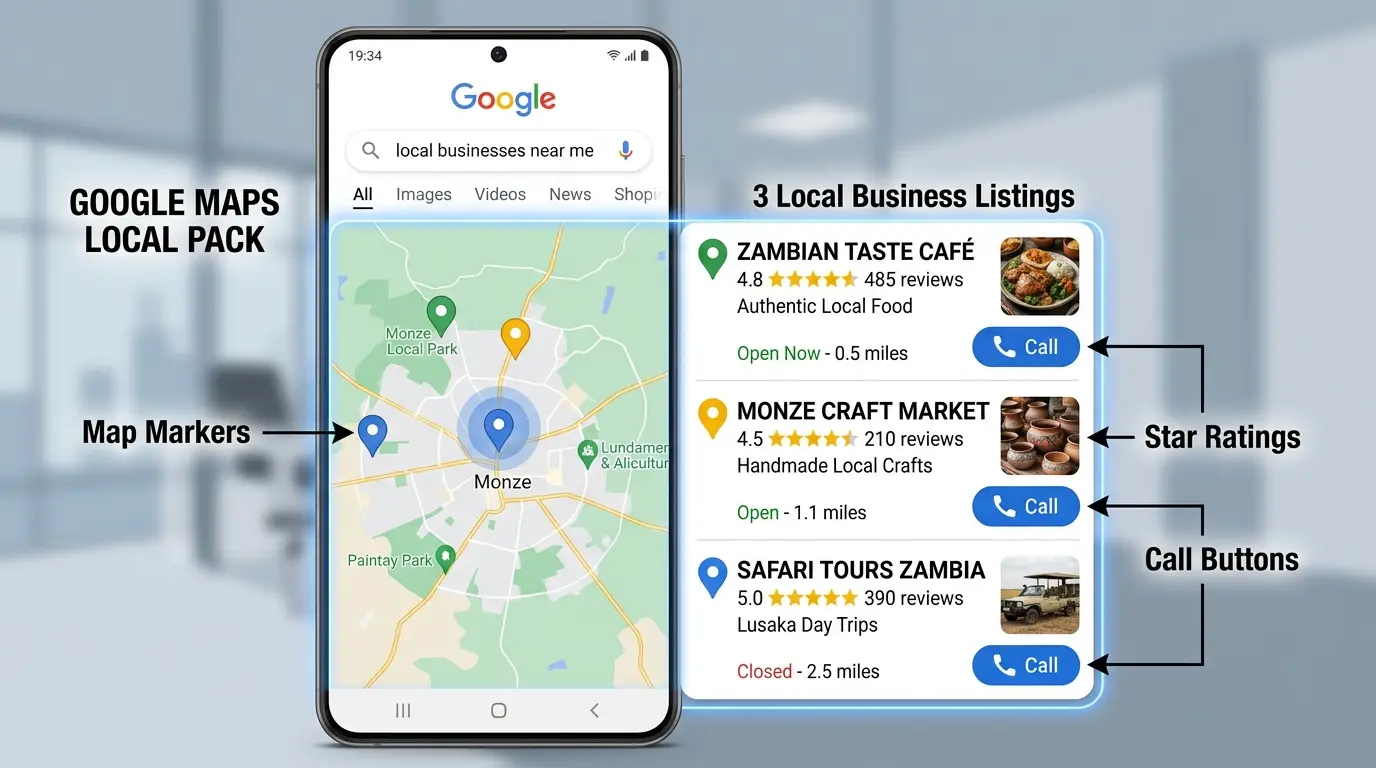
To dominate local SEO in Lusaka and across Zambia, you must claim and optimize your Google Business Profile Zambia for businesses:
Go to Google Business Profile (
business.google.com) and log in with your primary company email address.Enter your exact business name, physical address, and phone number (NAP). Make sure your address matches what is listed on your website down to the exact door number.
Select your primary business category. Be specific. If you are a commercial solar installer, select "Solar Energy Contractor," not just "Business Service."
Complete the verification process. Google will verify your location (usually via a video upload of your office premises, a text code, or email).
Collect local reviews. Ask your happy clients to leave honest 5-star reviews on your profile. Profiles with consistent, high-rating local reviews get massive priority on Google Maps.
Step 3: Target Keywords That Actually Bring in Customers
Once your site is indexed and your Google Business Profile is active, it’s time to focus on getting your website pages to rank a website on Google in Zambia.
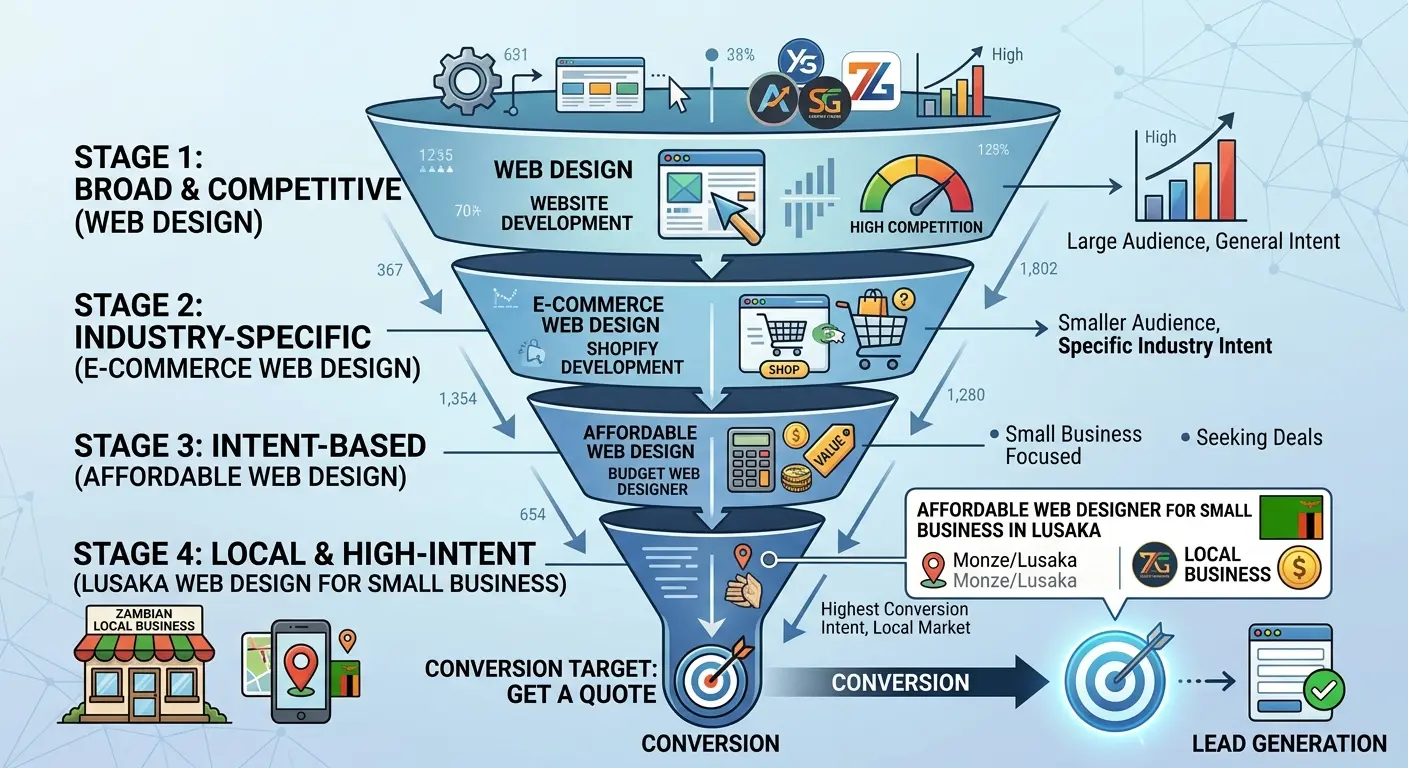
The biggest mistake small businesses make is attempting to rank for broad, hyper-competitive keywords. If you run a small legal practice in Lusaka, trying to rank page one globally for the word "Lawyer" is virtually impossible. You are competing against international law schools, Wikipedia, and multi-million-dollar global firms.
Instead, you need to target Long-Tail Keywords with local intent.
Broad & Hard: "Accountant" ❌
Targeted & High-Converting: "Corporate tax accountant in Lusaka" or "Payroll services for small business Ndola" 🟢
When you use specific, local keywords on your website, you attract visitors who are actively looking to hire someone today, not just students looking for free homework research.
Step 4: Master On-Page Technical SEO Fundamentals
Search engine optimization (SEO) sounds complicated, but at its core, on-page SEO is simply making sure Google’s crawling bots can read and understand what each page on your site is about.
To get your content recognized by Google, every page must include these four elements:
1. Title Tags & Meta Descriptions
Your Title Tag is the blue headline that appears in Google search results. It should clearly state your service and location.
Example: Professional Accounting Services in Lusaka | Phiri & Associates
Your Meta Description is the short paragraph beneath the headline. It should be an enticing summary with a clear reason for the user to click.
2. Header Structure (H1, H2, H3 Tags)
Don't just write paragraphs of uniform text. Use heading tags to structure your content like a well-organized book.
H1 (Page Title): You should only have ONE H1 tag per page (e.g., "Web Development Services in Zambia").
H2 (Main Sub-headings): Use these to divide major sections.
H3 (Sub-sections): Use these for sub-lists or specific details.
3. Local .co.zm Domain Advantage
While a .com domain works fine, having a local .co.zm domain gives Google a crystal-clear signal that your business is locally based and serving the Zambian market. This local signal gives you a distinct advantage over international competitors when local users search online.
4. Descriptive Image Alt Text
Google cannot "see" images; it reads the text hidden behind them. Always fill in the "Alt Text" field for every image you upload. Instead of letting an image file be named IMG_9921.jpg, rename it to solar-panel-installation-lusaka.jpg and set the Alt text to "Technicians installing corporate solar panels on a rooftop in Lusaka."
Step 5: Speed, Mobile Usability, and Core Web Vitals
Google’s ultimate goal is to give its searchers a great user experience. If Google sends a user to a website that takes 15 seconds to load, breaks on mobile screens, or displays overlapping text, that user will be disappointed—and Google will penalize that website by dropping its rank.
In Zambia, where mobile internet speeds can fluctuate and mobile data usage matters to consumers, website performance is an essential ranking factor.
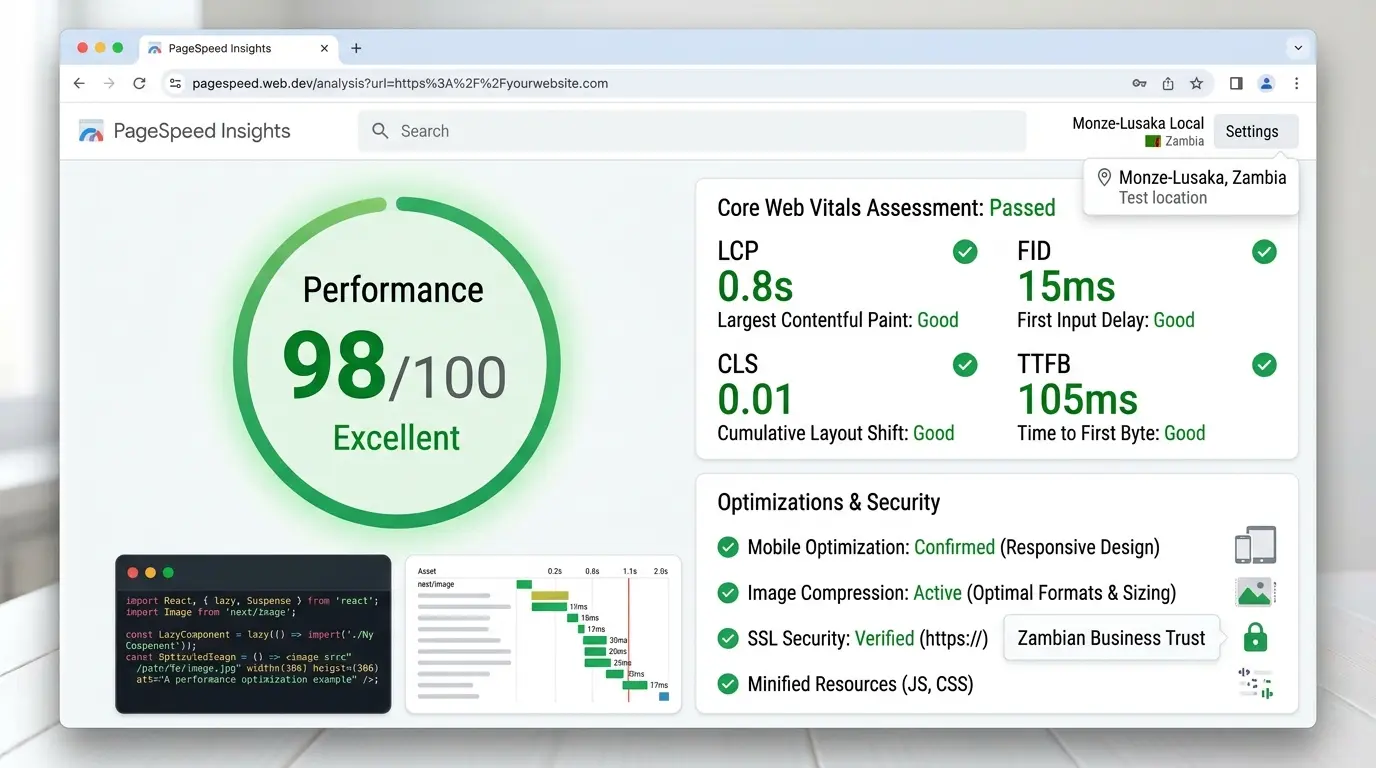
To keep Google happy and keep your rankings high:
Compress your images: Never upload a raw 10MB photo directly from a camera. Use web tools to compress images down below 200KB without losing visual quality.
Ensure mobile responsiveness: Test your site on multiple mobile devices to ensure buttons are easy to tap and text is comfortable to read.
Secure your site with SSL: Ensure your website address starts with https:// instead of http://. Google actively penalizes unsecured websites in search rankings.
Step 6: Build Local Authority (Backlinks & Trust Signals)
Think of a backlink as a vote of confidence from another website. When reputable, external websites place a hyperlink pointing to your site, Google interprets it as: "Hey, this external site trusts them, so they must be an authority in their field."
However, not all backlinks are created equal. Getting a link from a spammy, unknown blog in another country will actually hurt your rankings.
Focus on building legitimate local links:
Get listed in trusted Zambian business directories.
Partner with local suppliers or industry associations to feature your logo and website link on their "Partners" page.
Write guest columns or articles for local industry news blogs.
Sponsor a local community event or conference that links to your business homepage from their sponsor page.
SEO is a Marathon, Not a Sprint
The most important thing to understand about learning how to rank a business website in Zambia is that SEO takes time. Unlike Google Ads, where traffic starts the moment you pay and stops the second you run out of credit, SEO builds cumulative compound interest.
It usually takes 3 to 6 months of consistent optimization, good content, and review-building to see significant movement on Google’s first page. But once you earn those top positions, you unlock a steady stream of targeted, high-paying local leads every day—without paying a single Kwacha for ad clicks.
If you aren't sure if your current site is optimized for Google, start by auditing your existing content. Read my guide on Website SEO Audit: A Complete Checklist for Zambian Businesses to identify technical errors holding you back.
Or, if you are looking to build a brand new site from the ground up, make sure your developer understands these principles by reading my advice on How to Choose the Right Web Development Company in Zambia.
Stop letting your business remain a hidden digital secret. Get indexed, optimize your local presence, and claim your spot on page one.
Want to skip the guesswork? Contact us today for a comprehensive SEO Audit and let’s get your business to the top of Google!