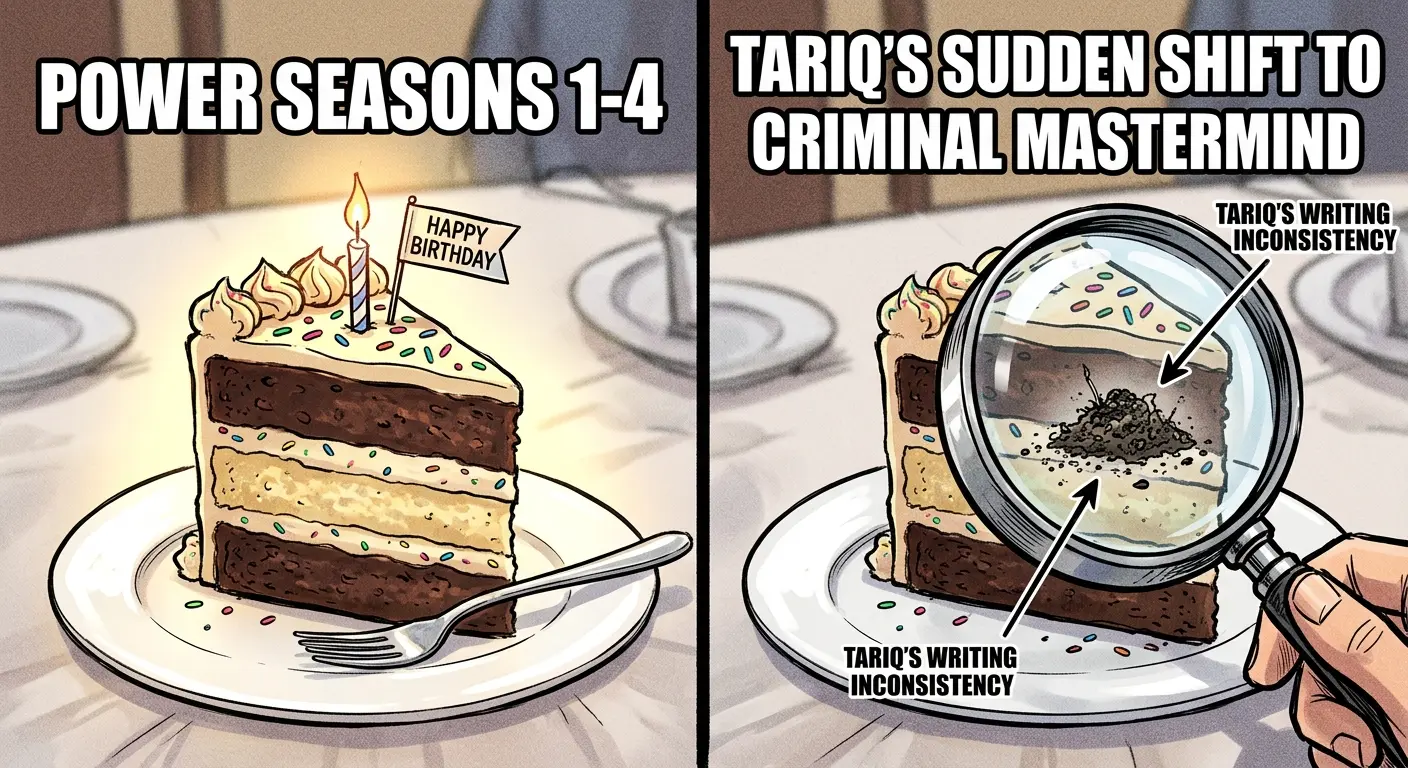
Picture this: it’s your birthday. You buy yourself the highest-tier, most decadent vanilla cake you can possibly afford. You take a massive bite. The perfect harmony of sugar, cream, and fluffiness hits your tastebuds. You close your eyes, smiling like a kid who just tricked their parents into buying them a PS5. Life is peak perfection.
Then—CRUNCH.
A massive, stray grain of sand hiding inside the frosting grinds against your molar.
That sudden, dental-work-inducing disappointment? That is the exact spiritual experience of watching the original Power series unfold into Power Book II: Ghost.
⚠️ SPOILER ALERT: If you haven’t watched Power or Power Book II yet, pause reading right now, go binge them, and return once you’ve experienced the emotional roller coaster.
At the climax of the original Power, Tariq St. Patrick (played by Michael Rainey Jr.) pops his own father, James "Ghost" St. Patrick (Omari Hardwick).
Now, look. I’m not some naive TV viewer who expects family dinners and happy endings in a gritty crime drama. Ghost dying made sense for the plot. It was peak prestige television chaos. But Tariq being the executioner? I was so furious I nearly threw my remote control straight through my flat-screen TV.
My issue wasn’t the body count; it was the screenwriting mechanics. In storytelling, we have this handy little technique called foreshadowing—the art of dropping subtle crumbs early on so that when a character does something outrageous later, the audience nods along saying, "Ah, yes, brilliant!" instead of screaming, "Wait, WHAT?!"
Let’s be honest: Tariq’s character development lacked those crumbs.
He starts out as a completely harmless suburban rich kid who attends elite prep schools and plays video games. Then, he discovers his dad lied about growing up poor in the hood. Naturally, instead of reacting like a normal teenager by slamming his bedroom door and playing edgy music, Tariq decides the appropriate response to Dad’s secrecy is to start acting out and accidentally getting his twin sister, Raina (Donshea Hopkins), murdered by a dirty cop.
You’d think losing his sister—the ultimate price of street violence—would serve as a terrifying wake-up call. You'd think he'd say, "Wow, Dad was actually keeping us away from this nightmare for a reason!" But no. Tariq sees the tragedy and thinks, "You know what? This gangster lifestyle seems like a solid career choice for me!"
Make it make sense! The show effectively trivialized Raina's tragic death. Sure, Tariq eventually shot the cop responsible, but the underlying motivation was totally backwards.
And don't even get me started on his parental grudge. Tariq hated Ghost for having an extramarital affair with Angela. Since when does a teenage boy get more personally offended by his father's infidelity than his actual mother does? Tasha was out here dealing with the emotional damage, while Tariq was acting like he was the spouse who got cheated on!
By Season 5, Episode 9 ("There's a Snitch Among Us"), Tariq looks his dad dead in the eyes and declares, "This is who I am"—referring to himself as a hardened G.
I almost laughed out loud at my screen. That wasn't who he was; that was who the writers forced him to be overnight without doing the homework! If they wanted us to buy his transformation into a street kingpin, they needed to show us early glimpses of him mimicking his father's instincts. Without that setup, his sudden evolution felt less like a organic character arc and more like a magic trick pulling a fully-formed gangster out of a top hat.
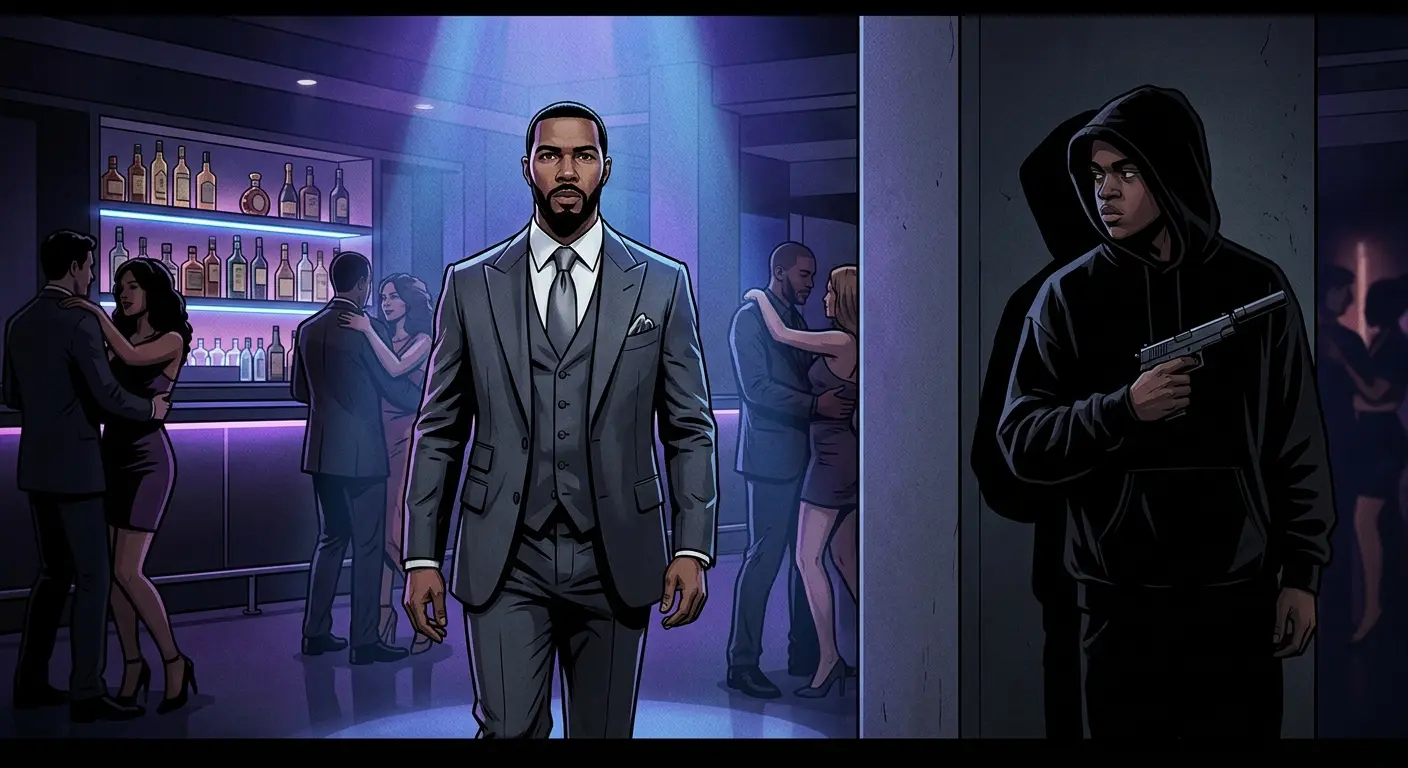
So, Tariq’s resentment builds and builds until he pulls the trigger on his own father. Ghost wasn't a saint—he killed plenty of people, let's be real—but his core ambition was to drag his family out of the gutter. He wanted a clean legacy. Yet his reward was a bullet from his ungrateful son.
Enter Power Book II: Ghost
Because of that giant grain of sand in my cake, I refused to watch Power Book II: Ghost for two whole years. Every time the thumbnail popped up on my streaming menu, I scoffed and scrolled past.
"This show is a complete joke!"
Eventually, curiosity (and perhaps a lack of other good shows to watch) broke my strike.
I hit play on Episode 1, watched the credits roll, and literally announced to my empty living room: "This show is a complete, absolute joke."
And yet... I kept watching.
Three episodes in, the joke was on me because I was utterly addicted.
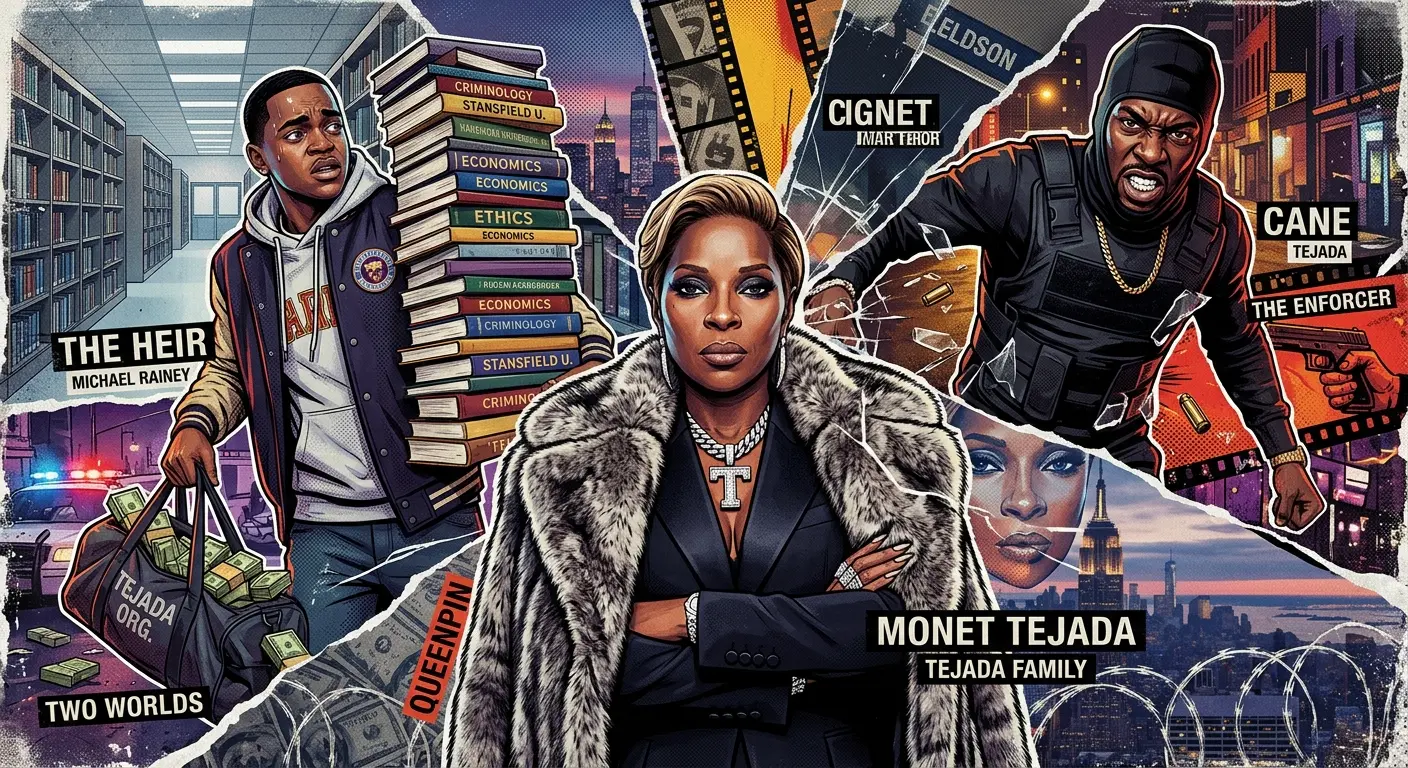
The dynamic of the Tejada crime family was pure chaotic entertainment. Monet, Cane, Dru, and Diana injected a fresh, cutthroat energy into the universe. More importantly, the stakes surrounding Tariq’s double life were insanely high. Watching him juggle ivy-league university exams, Ivy League prep-school drama, drug distribution, and federal prosecutors required a level of strategic gymnastics that was impossible to look away from.
The most fascinating part of the spin-off, however, was watching Tariq desperately try to deny that he was becoming the exact man he murdered: his father.
Remember when Diana Tejada got pregnant? Tariq’s immediate, instinctive reaction was to leave the drug game behind so he could protect her and the unborn baby. Sound familiar? That was Ghost’s exact core blueprint throughout all six seasons of the original show!
Whether Tariq liked it or not, Ghost’s DNA was dictating his every move. By the series finale (Season 4, Episode 10, fittingly titled "Ghost"), Tariq finally stops lying to himself and utters the ultimate confession: he is basically Ghost.
The Epiphany Moment
Early on in Power Book II (Season 1, Episode 2, "The Truth"), Tariq dismisses his father as a hypocrite who spent his whole life pretending to be something he wasn't.
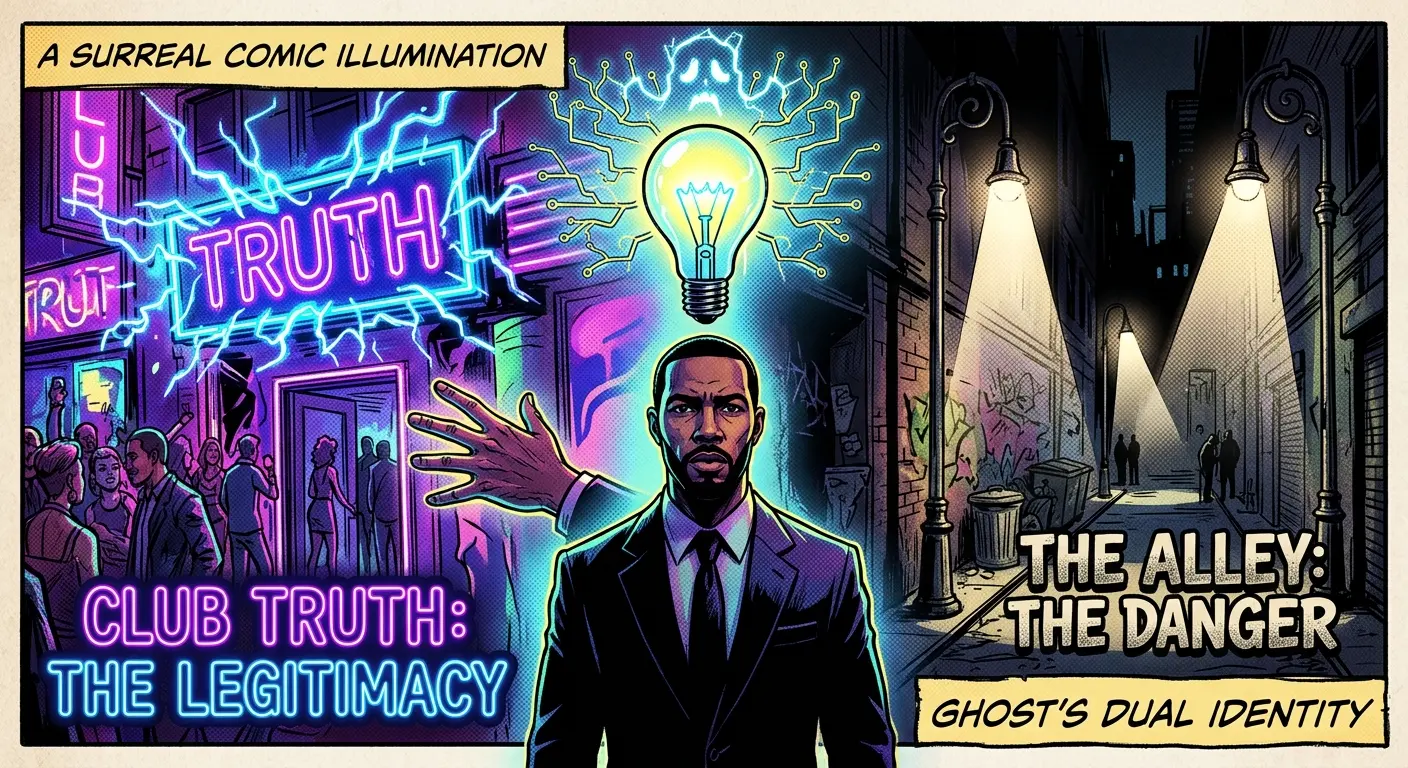
For a long time, I agreed with Tariq. I viewed the original show as a tragedy about a reformed drug dealer trying to become a legitimate, high-society nightclub owner running Truth, only to be dragged back down by his past.
I was completely wrong.
I once read an interview with a veteran screenwriter who admitted he used to hate certain movies because they didn't follow the exact plot paths he envisioned in his head. But when he finally set his personal expectations aside and rewatched them for what they actually were, he realized the stories were brilliant—he had just been evaluating them through the wrong lens.
That exact epiphany hit me like a bolt of lightning during the Season 3 Finale ("Divided We Stand"). I paused the video, sat back on my couch, and stared at the screen in silence.
Ghost wasn't a civilian trying to stay clean; Ghost was a drug lord to his very core who used high-end suits, corporate titles, and luxury nightclubs as a sophisticated camouflage. His fatal flaw wasn't that the streets pulled him back—it was his delusion that he could balance both worlds simultaneously without paying the toll. That hypocrisy wrecked his family. It led to him getting drunk and physically assaulting Tasha. It led to him trying to force Tariq to take a murder rap just to protect his own political aspirations.
Tariq didn't just turn bad out of nowhere; he looked at his father's constant double-talk, contrasted it with Kanan's brutal, unapologetic honesty (played brilliantly by 50 Cent), and chose the raw reality over the polished lie.
Once you understand that context, the entire Power saga transforms. Power Book II isn't just an unnecessary cash-grab sequel—it is the inevitable, tragic completion of Ghost's legacy.
Is Power Book II worth all the hype?
If you can swallow that initial grain of sand in the cake, chew through the wild soap-opera twists, and accept that Tariq was destined to wear his father's crown all along... absolutely. Just keep your dental insurance handy.