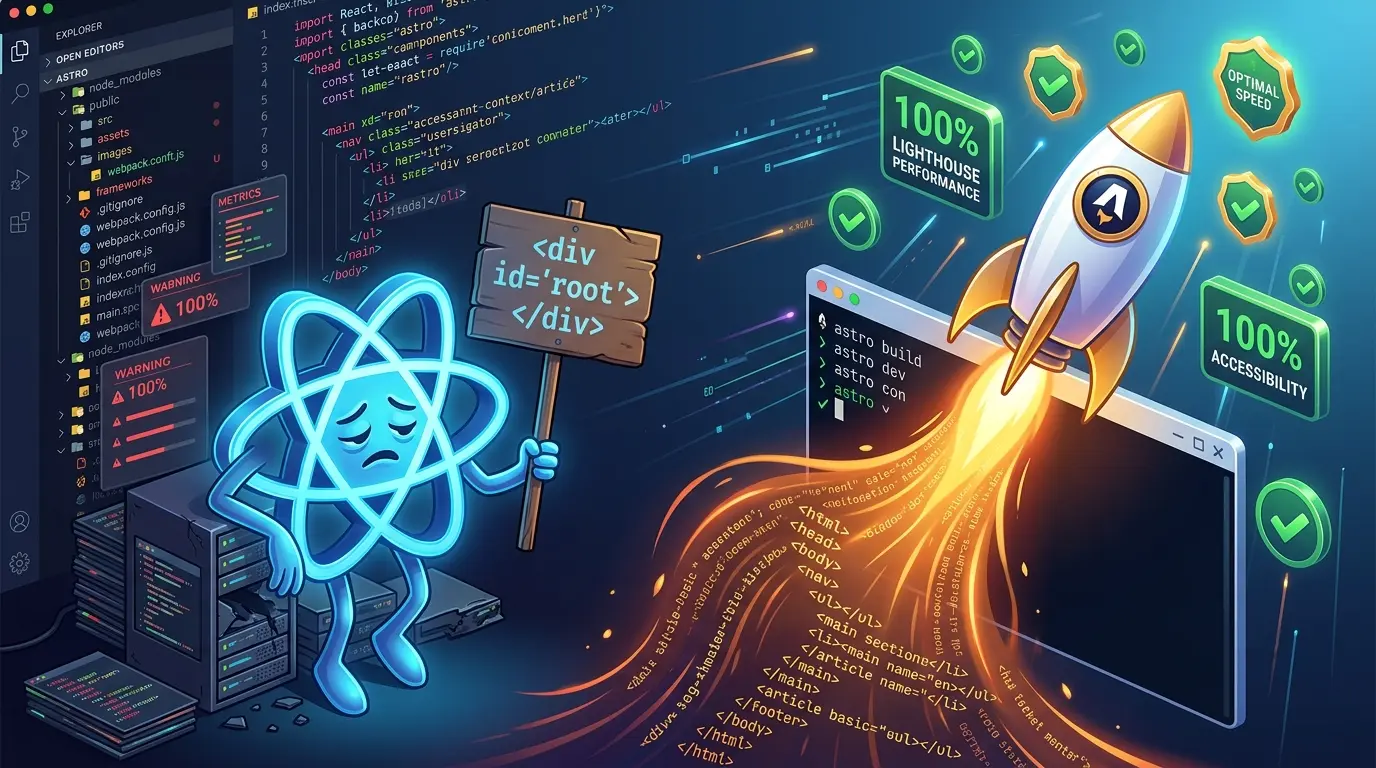
Every few months, the tech world erupts into the exact same circular argument. A fresh-faced beginner posts on Reddit, Twitter, or LinkedIn with a seemingly simple question:
“Hey guys, what is the best programming language to learn?”
What follows is an absolute bloodbath of opinionated chaos.
The Python fanboys swarm in, preaching readable syntax and machine learning supremacy. The Rust evangelists materialize out of thin air to lecture everyone on memory safety and raw speed. The C grognards scoff quietly from the shadows while manually managing their own pointers, and the JavaScript engineers just keep shipping code while their node_modules folder quietly consumes another 50 gigabytes of local storage.
Here is the cold, hard truth that most tech influencers won't tell you: Asking "What is the best programming language?" is fundamentally the wrong question.
If you walk into a hardware store and ask the clerk, "What is the best tool?" they are going to stare at you until you clarify whether you're trying to hang a picture frame or demolish a concrete wall. A hammer is an absolute masterpiece of engineering—until you try to use it to drive a screw.
Programming languages and software frameworks work the exact same way. Nobody invents a brand-new programming language just for the fun of writing a compiler (okay, maybe a few bored computer science PhDs do). Languages are built to solve specific problems.
Instead of asking what language is the best, the question you should be asking is: "Which programming language is best for what I am trying to build?"
Let's dismantle the hype, examine what each major language actually excels at, and settle this debate once and for all.
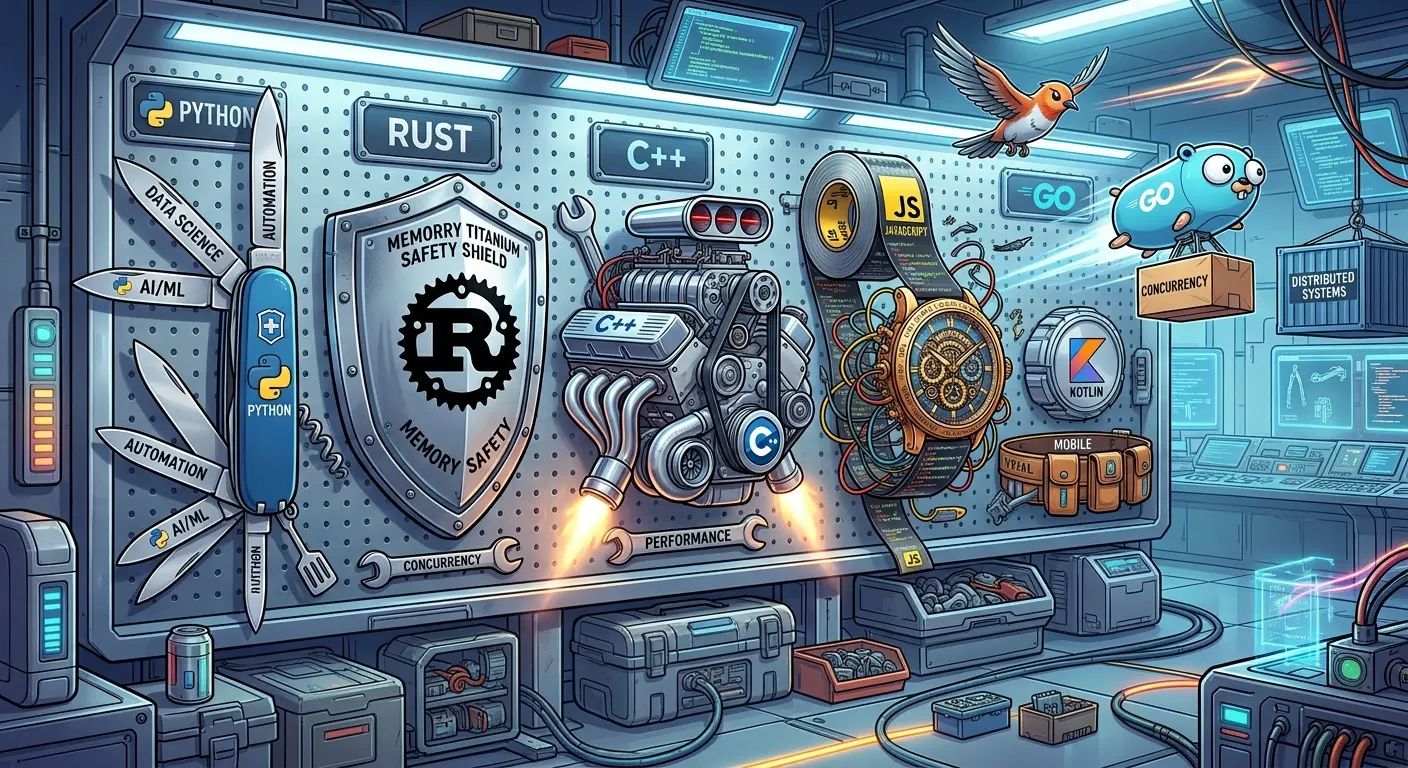
Why Every Language Exists: Solving Specific Pain Points
Before we look at individual languages, we have to understand why the landscape is so fragmented.
When engineers create a new language, they are usually trying to fix an agonizing pain point in their current workflow. They might be looking for:
Easier Developer Experience (DX): Less boilerplate, cleaner syntax, faster learning curves.
Performance & Execution Speed: Getting as close to raw hardware speed as humanly possible.
Memory Safety: Preventing catastrophic memory leaks and security vulnerabilities without sacrificing speed.
Concurrency: Handling millions of simultaneous user requests effortlessly across multiple CPU cores.
Ecosystem & Tooling: Access to pre-built libraries, package managers, and debugging tools so you don't have to reinvent the wheel.
If you decide to build a massive 3D multiplayer video game in Python, technically you could do it. But because Python wasn't designed for high-throughput graphics rendering, you’d have to do all the heavy performance lifting yourself.
On the flip side, if you pick a language like C++ or C#—which have decades of game engine optimizations, battle-tested patterns, and established ecosystems like Unreal and Unity behind them—half your work is already done.
The ecosystem matters just as much as the syntax.
The Specialization Map: What Each Language Is ACTUALLY Good For
To drive this point home, let’s look at the major languages on the market and what problems they were engineered to solve.
[ What Are You Building? ]
                   │
   ┌───────────────┼───────────────┬────────────────┐
   ▼               ▼               ▼                ▼
[ Web/Mobile ]  [ AI/Data ]   [ Systems ]    [ Games/XR ]
   │               │               │                │
   ├─ JavaScript   └─ Python       ├─ Rust          ├─ C++
   ├─ TypeScript                   ├─ Go            └─ C#
   └─ Kotlin/Swift                 └─ C / Java
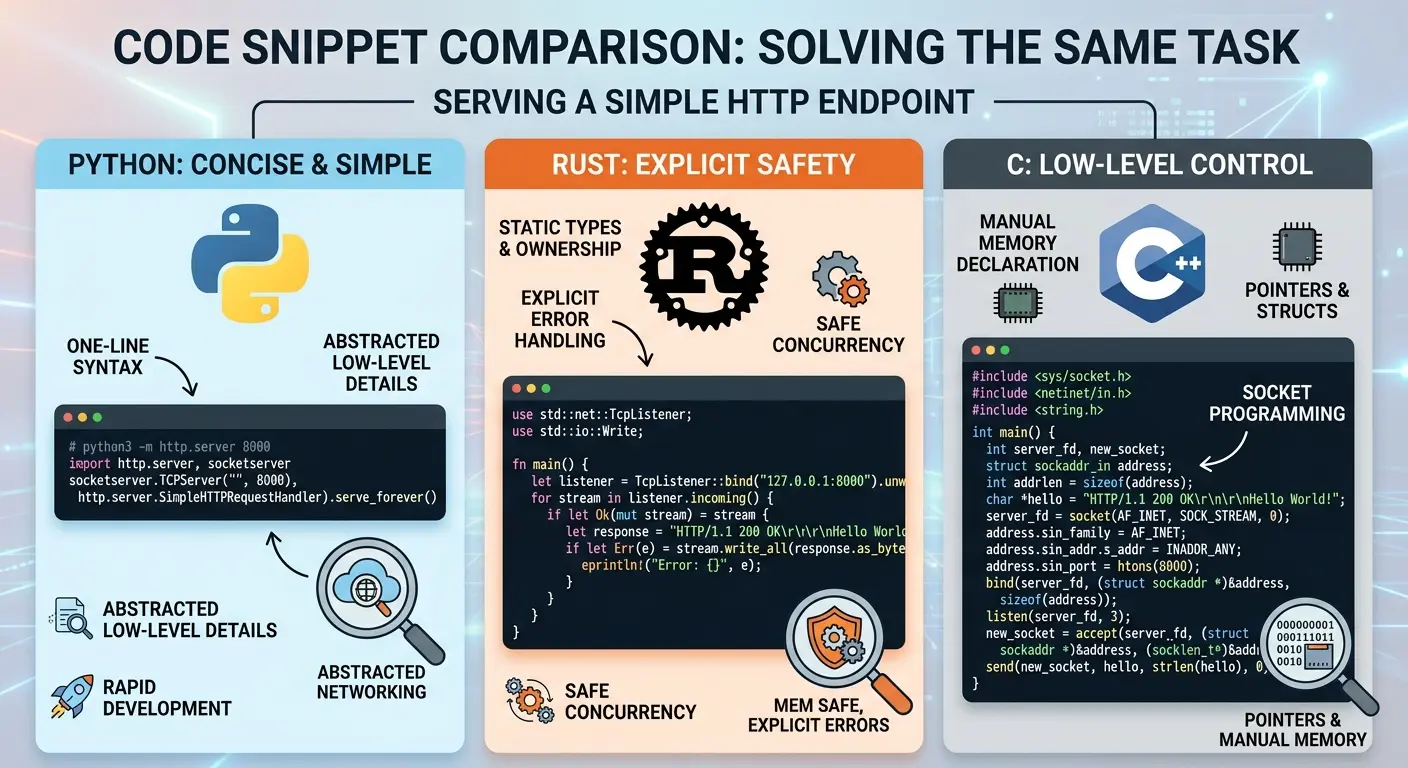
1. Python: The King of Data Science and AI
Python's philosophy is simple: human readability over raw execution speed. It has a gentle learning curve that allows non-programmers—statisticians, data scientists, researchers—to write functional code quickly.
Because of this readability, Python became the undisputed home for data analysis, machine learning, and artificial intelligence. Almost every major AI framework (PyTorch, TensorFlow) relies heavily on Python interfaces.
2. JavaScript / TypeScript: The Universal Web & Mobile Engine
JavaScript started as a tiny scripting language built in ten days to make web pages interactive. Today, it rules the digital world.
With Node.js on the backend, React/Vue on the frontend, and cross-platform mobile frameworks like React Native or ByteDance's modern multithreaded Lynx framework, JavaScript/TypeScript is the only language stack that can power your entire product ecosystem end-to-end. You can write your database logic, your web dashboard, and your iOS/Android app without ever switching languages.
3. C & C++: Raw Speed, Hardware Control, and Game Engines
C is the granddaddy of modern programming. It gives you direct access to memory and hardware. If you don't mind managing memory pointers yourself (and accepting the grey hair that comes with debugging segmentation faults), nothing beats C for low-level embedded systems.
C++ took C and added object-oriented architecture, becoming the industry standard for high-performance video games, browser engines, and audio processing software where every single millisecond counts.
4. C#: The Enterprise & Game Development Powerhouse
Developed by Microsoft, C# strikes a brilliant balance between the power of C++ and the developer-friendly features of modern languages. Paired with the Unity engine, it is the primary language driving indie and studio game development worldwide, while also powering massive corporate backend systems via .NET.
5. Rust: Memory Safety Without the Speed Penalty
For decades, developers had to make an agonizing choice: use a "safe" language with a garbage collector (like Java or Python) that pauses your app to clean up memory, or use C/C++ for maximum speed while risking dangerous memory corruption bugs.
Rust shattered that trade-off. Through its revolutionary "ownership" model, Rust guarantees memory safety at compile time without needing a garbage collector. It’s fast, secure, and rapidly becoming the darling of low-level systems engineering.
6. Go (Golang): High Concurrency for Distributed Cloud Infrastructure
Google created Go because their massive distributed servers needed something fast, simple, and capable of handling thousands of simultaneous concurrent tasks. Go discards complex language features in favor of extreme simplicity and lightweight "goroutines," making it the go-to language for cloud infrastructure (Docker and Kubernetes are both written in Go!).
The "Python Will Rule the Future" Myth (And the AI Misconception)
Lately, a new narrative has taken over tech forums: "Python is the most important language of the future because AI is taking over the world."
This prediction sounds smart on the surface, but it completely misses how modern software architecture actually works.
Yes, Python is the dominant language used to train large language models (LLMs) and neural networks. But training a model is only one small part of the modern technology pipeline. Once an AI model is trained, it becomes an artifact—a mathematical file that is completely language-agnostic.
You don't need to write Python to use an AI model. In fact, most developers aren't training custom LLMs from scratch anyway; that requires millions of dollars in GPU clusters and specialized research teams.
Instead, the vast majority of software engineering moving forward lives in AI Engineering—the art of taking pre-trained AI models and integrating them into real-world applications.
And how do you build real-world AI applications?
You build responsive web dashboards (using TypeScript/React).
You build cross-platform mobile apps (using TypeScript, Kotlin, or Swift).
You build high-throughput, distributed microservices to handle user traffic (using Go, Rust, Java/Spring Boot, or Node.js/NestJS).
An AI model sitting by itself in a Python script doesn't solve a consumer's problem until it is wrapped inside a robust, scalable product. AI is just one piece of a much larger architectural puzzle.
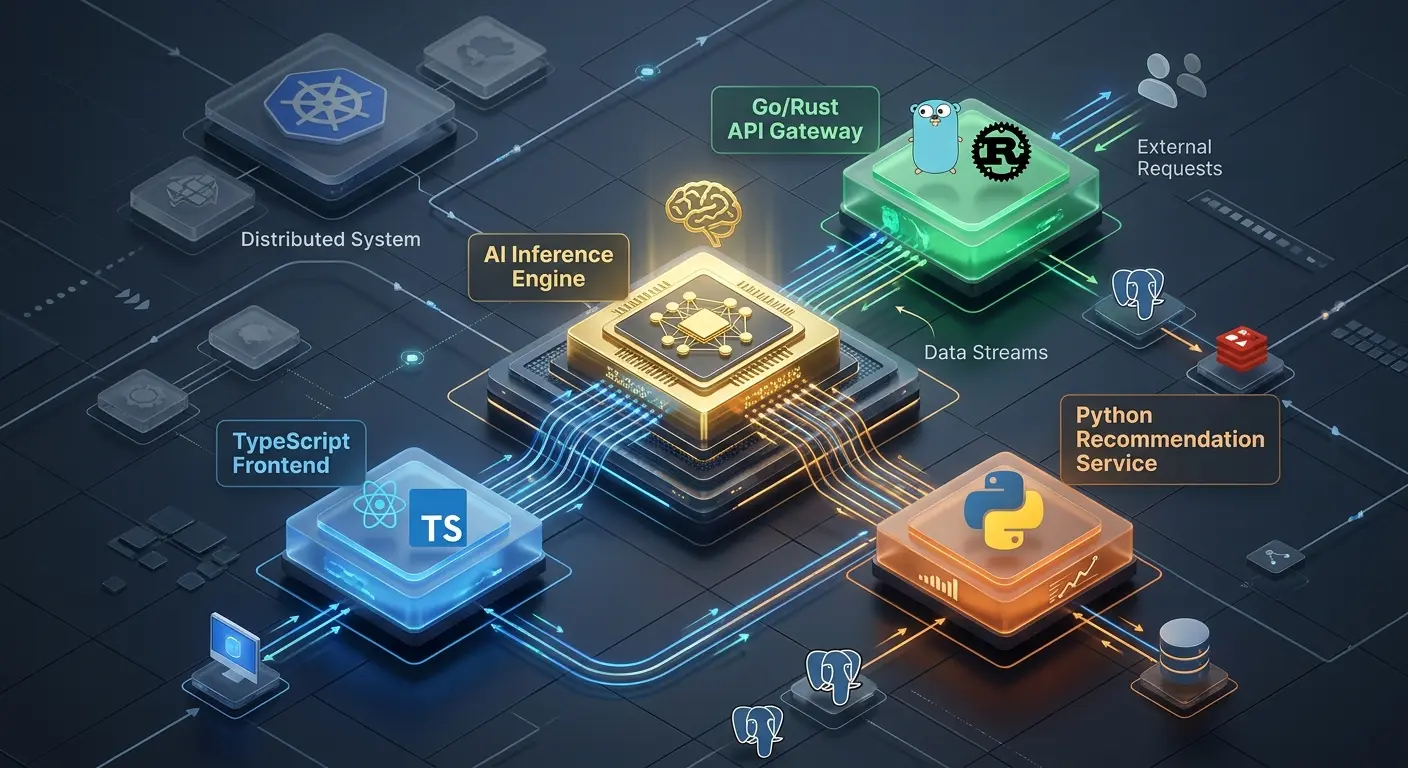
The Rise of Polyglot Distributed Systems
If you talk to senior engineers working on modern cloud platforms, you’ll quickly realize that modern tech stacks rarely rely on just one language anymore. We live in the era of distributed systems.
Because microservices communicate over network protocols (like gRPC or REST APIs), developers can choose the absolute best language for each specific microservice within the same company:
[ User Request ] ──► [ TypeScript / React Frontend ]
                            │
                            ▼
                     [ Go API Gateway ]
                            │
       ┌────────────────────┴────────────────────┐
       ▼                                                ▼
[ Rust Memory-Critical Service ]   [ Python ML Recommendation Service ]
In a single ecosystem:
The frontend team uses TypeScript for web and mobile interfaces.
The API gateway team uses Go for blazingly fast routing and low latency.
The security service uses Rust to guarantee zero memory leaks under load.
The recommendation service uses Python to run matrix math over user data.
That is the power of picking the right tool for the right job. Claiming that one language will conquer all of computing ignores the fundamental reality of modern cloud engineering.
Stop Debating, Start Building
If you’re a beginner sitting on the fence, paralyzed by choice because you're terrified of learning the "wrong" language, here is my final piece of advice: Just pick one and start building.
The core concepts of programming—loops, conditional logic, data structures, algorithms, state management, and object-oriented architecture—transfer remarkably well from one language to another. Once you truly master your first language, picking up a second or third one takes a fraction of the time.
Stop chasing the mythical "best" language. Figure out what you want to create, pick the language that has the best ecosystem for that specific domain, and get your hands dirty on the keyboard!