Let me start with an honest confession: I do not watch science fiction. I don't care for aliens, laser guns, or time machines. And don't even get me started on horror.
However, like most human beings trapped in a world where pop culture is 90% spandex-clad vigilantes, I’ve made a few rare exceptions. I’ve watched at least two Spider-Man movies, and I’ve tuned into the TV show The Flash (though I'm saving my full rant about Barry Allen running in circles for a separate blog post altogether).
Before we dive into the main problem with these Hollywood blockbusters, can we just pause for a second and appreciate the absolute irony of modern culture?
[ Secular Society ] ──► Rejects God / Supernatural ──► Preaches Pure Physics & Evolution
        │
        ▼
[ Sci-Fi & Horror ] ──► Guys flying in weird suits ──► Calls it "Advanced Science"
Our secular society goes to extraordinary lengths to argue that there is no supernatural being, no God, and no spiritual realm. We are told that everything is strictly dictated by cold evolution, random mutation, and the unyielding laws of physics.
And yet, those exact same people sit down to watch a movie where a man in a bizarre, skin-tight costume flies through the clouds without a jet engine, and they slap the label "Science!" on it with a straight face.
Science is gravity! Science is thermodynamics! What these shows are peddling isn't science—it’s disguised magic, spellcasting, and deep spiritualism wrapped in a glowing test tube. (I've actually written an entire separate blog post on spiritualism and the state of the dead, so if you want to dig into that rabbit hole, go check that out).
But spiritual ironies aside, let's talk about the main reason sci-fi superheroes drive me absolutely crazy: they completely throw basic human nature out the window.

The Spider-Man Flaw: Cruelty + Power Does Not Equal Saint
To give credit where it's due, the science fiction movies that actually pull me in are the ones that anchor themselves in a genuine human element. The core of who we are as human beings needs to be there, or the story completely falls apart.
Take the original setup for Spider-Man: an awkward, unpopular high school boy gets bullied constantly, goes on a field trip, and gets accidentally bitten by a genetically modified spider.
That right there? That’s fantastic storytelling. It’s totally relatable! We’ve all felt like the underdog, we’ve all dealt with people who pushed us around, and we’ve all fantasized about suddenly getting the upper hand.
But right after that brilliant setup, Hollywood messes up the entire narrative.
[ Reality of Human Nature ] ──► Bullying + Sudden Power ──► Revenge / Personal Gain
[ Superhero Movie Trope ] ──► Bullying + Sudden Power ──► Instant Altruistic Crime-Fighter
Peter Parker acquires God-like physical capabilities—unmatched strength, super-reflexes, wall-crawling—and he instantly decides to become a selfless, neighborhood-saving good guy by default?
What kind of logic is that?
Let’s be honest for a moment. In a world where you have been treated cruelly by your peers, if you suddenly wake up with the power to tear down a brick wall with your bare hands, your first thought isn't going to be, "Gee, I should really go stop a purse-snatcher down on 5th Avenue for free!"
Humans are inherently selfish. If an average, bullied kid gets unchecked power, he isn't patrolling the streets out of the goodness of his heart. He’s going to rob a bank! Or at the very least, he’s going to pay a little visit to the kids who bullied him—and maybe their parents, too! (I’m just saying! 😂)
The police couldn't stop you even if they tried. So why does Peter Parker instantly turn into an angelic crime fighter? It ignores everything we know about human psychology.
Why Captain Man from 'Henry Danger' Is Realism at Its Finest
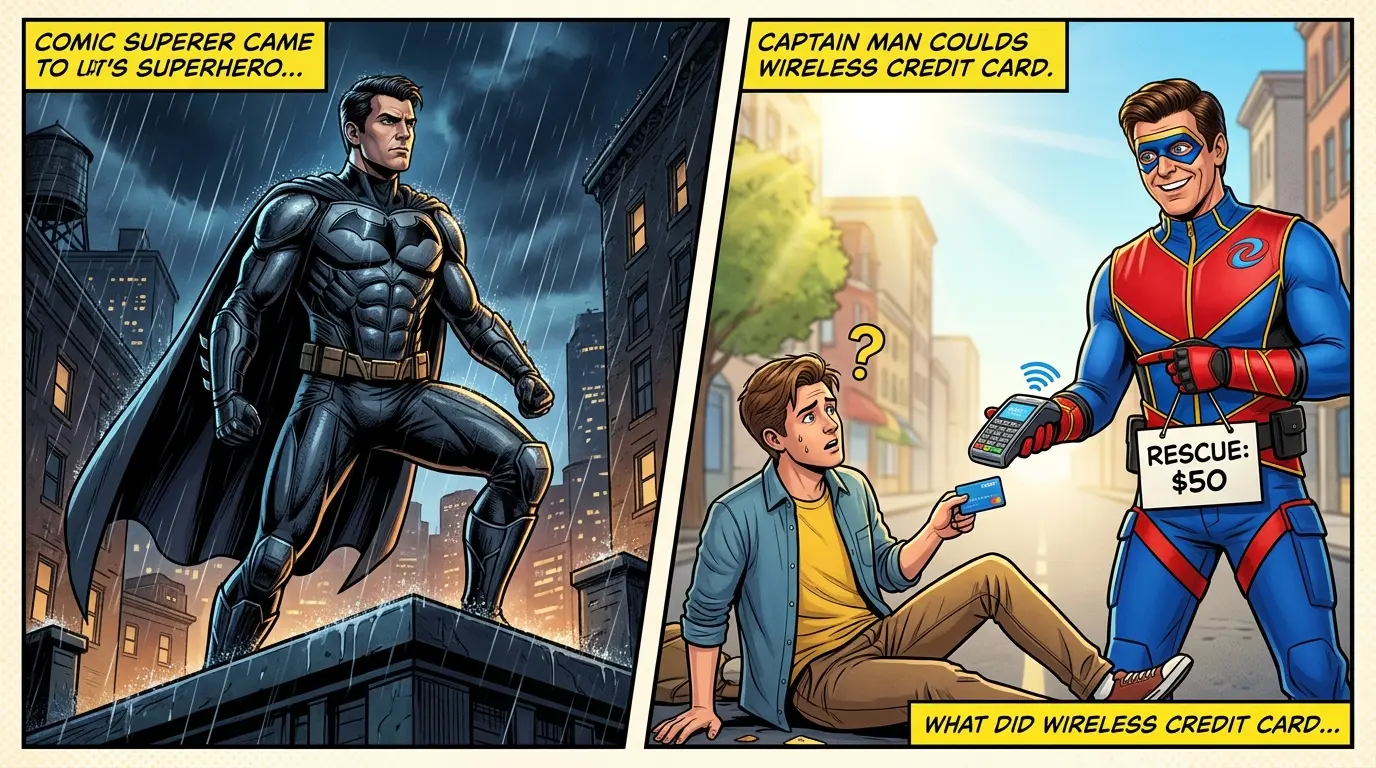
If you want a realistic depiction of how a human being actually behaves when given superhero powers, forget Marvel and DC. Look at Nickelodeon's Henry Danger.
In Henry Danger, the character Captain Man gets an official cut out of the city budget for Swelview! He gets paid handsomely to save the day, lives in a sweet underground lair, and treats crime-fighting like a business.
[ Marvel's Altruism ] ──► Fights crime for free ──► Makes zero financial sense
[ Captain Man's Logic ] ──► Fights crime for money ──► Asks for a credit card before saving lives
There is an episode where the city decides to cut his municipal budget for hero services. What does Captain Man do? He literally refuses to help! He sits there asking for a credit card before he’ll even pull an injured person out of harm's way or save a life.
It is completely hilarious 😂—and yet, it makes my point perfectly!
The only crime-fighting that makes logical sense is traditional law enforcement. Oh, I love a good law enforcement show or movie! Cops, detectives, and federal agents are trained, sworn in, and—most importantly—paid. It’s their chosen career path. They get a paycheck, benefits, and a retirement plan to deal with criminals.
Why Law Enforcement Makes Sense:
[ Training & Duty ] ──► [ Contractual Salary ] ──► [ Public Service ] = LOGICAL
Unless you explicitly tell us in the story that your superhero is a deeply religious person acting out of a strict moral obligation to God, altruistic crime-fighting is a total fantasy.
Which brings up another funny point: people scoff at religious folks for living by a high moral code, yet Hollywood scripts superheroes who behave like hyper-devout saints—and secular audiences swallow it without blinking!
The "Accident" Problem: Killing the Uniqueness
The lack of human logic in superhero origins inevitably forces writers into a structural trap. Because they refuse to make the main character behave like a real human being who grapples with choices, they have to manufacture an external villain.
Enter the scientist-turned-bad-guy.
Now, look at the logic here. We are initially asked to accept that Peter Parker getting bitten by a radioactive or genetically altered spider was a crazy, one-in-a-billion accident.
Fine. I’ll buy the accident. Once.
[ The Superhero Accident Paradox ]
Accident #1 (Hero)     ──► "A rare, one-in-a-million miraculous twist of fate!"
Accident #2 (Villain)  ──► "Wait, another guy accidentally gets powers next week?"
Result                 ──► The rarity is completely destroyed.
If an "accident" can be replicated or repeated next week by some angry scientist in a lab coat, it ceases to be an accident! It becomes a routine workplace hazard.
When the exact same freak occurrence happens to the bad guy, it completely kills the uniqueness and rareness of the hero’s origin. Suddenly, the quiet, relatable story about an unpopular boy gaining powers disappears.
What replaces it? Two grown men in ridiculous foam rubber costumes flying through the sky, shooting green gliders and webbing at each other, smashing through buildings while the city explodes in CGI fire.
That’s a spectacle that mostly only kids can enjoy (no offense intended to the adults out there who love these movies!). But for anyone looking for a grounded narrative, the genuine human drama is totally gone.
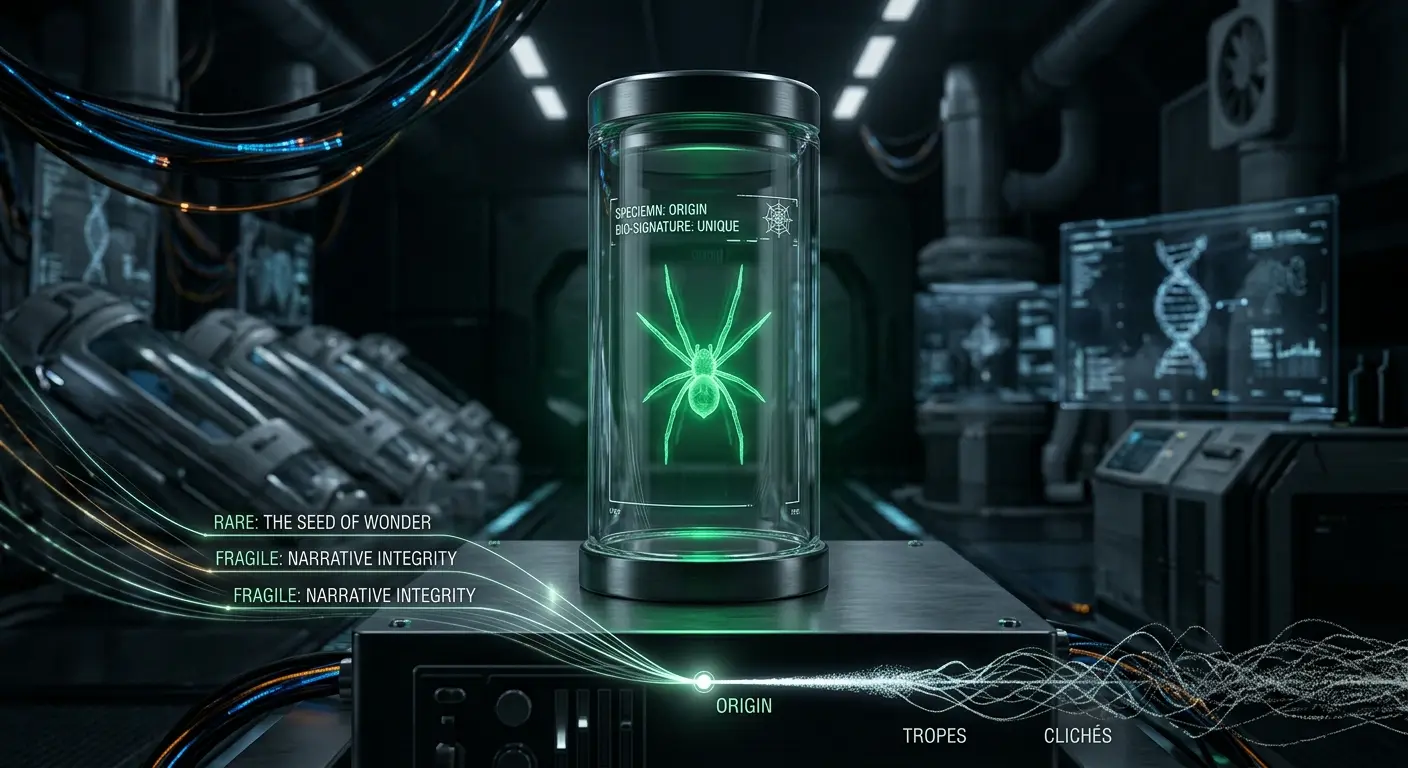
Pre-Existing Personality Doesn't Solve the Choice Problem
Defenders of these movies will often jump in and say: "Well, Peter Parker became good and the scientist became evil because of their pre-existing personalities before their accidents!"
Sorry, but that explanation still falls completely flat.
A personality trait isn't an automated script. Human choices require logical buildup. A person who gets pushed around all his life doesn't just wake up with demigod powers and instantly choose saintliness over self-interest, while a respected scientist turns into a cackling maniac because a green gas made him sneeze.
We need to see a real, grounded journey where a human being weighs the rewards, the consequences, and the personal cost of their choices—not a quick shortcut to sell action figures.
If science fiction wants to win over people who care about real storytelling, it needs to stop pretending that men flying in tight suits is "physics," stop repeating "accidental" origin stories, and start treating human nature for what it actually is.
Until then? I’ll stick to my police procedural shows—where the cops actually get paid for fighting crime.