Anyone who has ever watched an episode of SpongeBob SquarePants will agree with me on one fundamental truth: it’s downright hilarious. Most of us grew up glued to the TV, hypnotized by a yellow kitchen sponge screaming into a microphone.
Now, I’m guessing you probably stopped watching it a long time ago when you decided to become a "serious adult" with taxes and lower back pain. Or maybe you still secret-watch it under the cover of darkness while eating cereal at 2:00 AM. Look, only God knows the truth. Jokes aside, let’s talk about why this show still holds a massive grip on grown-ups.
The Cast of Characters (Or: A Directory of Our Mental Health States)
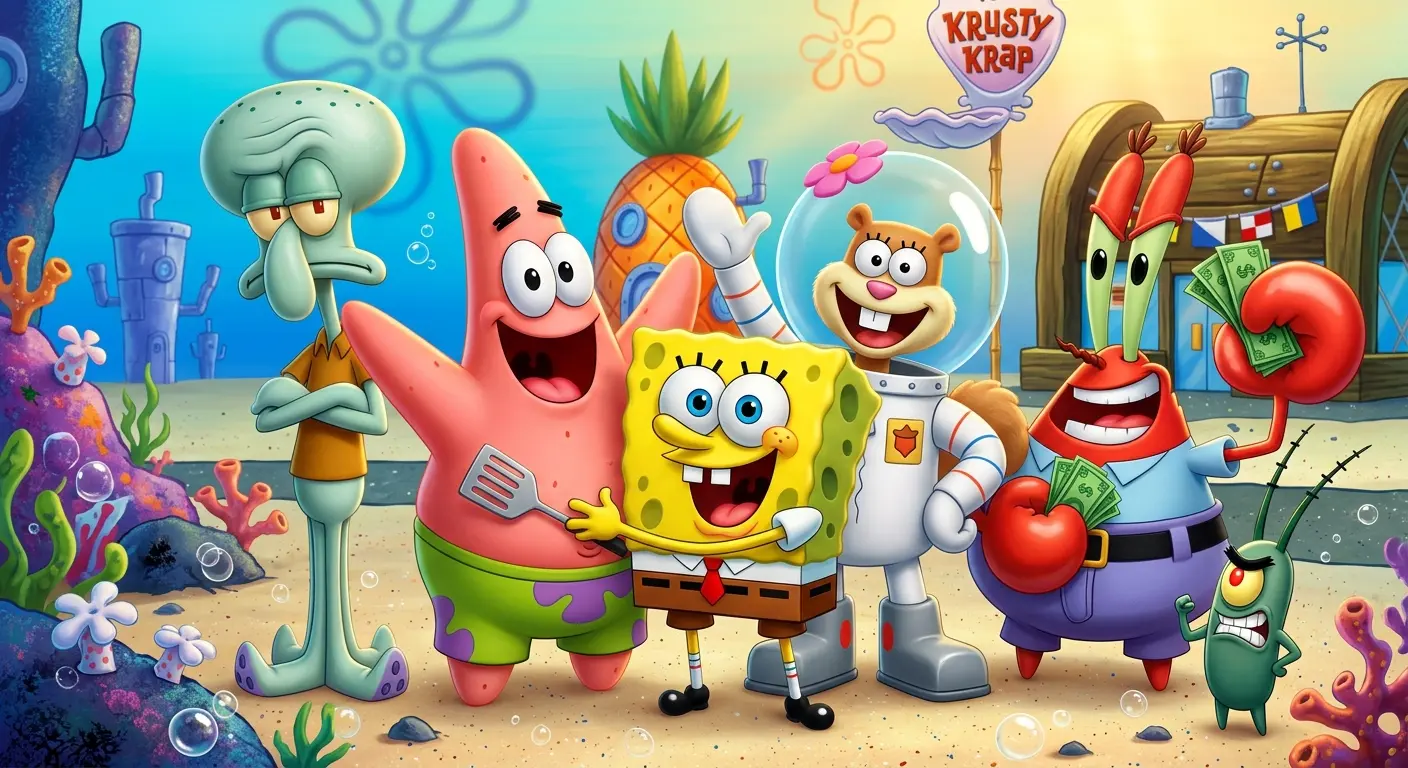
Before we dive into the deep end of the ocean, let’s do a quick roll call of the main ocean-dwellers running around Bikini Bottom:
SpongeBob SquarePants (voiced by Tom Kenny) is an anthropomorphic, hyperactive yellow sea sponge who wears brown shorts, a crisp white collared shirt, and a red tie. He has the energy of a toddler who just discovered espresso.
Patrick Star (voiced by Bill Fagerbakke) is a bright pink starfish who literally lives under a rock, wears green and purple floral swim trunks, and operates on a brain wave frequency best described as "dial-up internet."
Squidward Tentacles (voiced by Rodger Bumpass) is a turquoise, constantly irritated Giant Pacific octopus with a bulbous nose. He slaves away as a cashier at the Krusty Krab, despises his existence, and dreams of a refined life as a misunderstood artist.
Eugene Krabs (voiced by Clancy Brown) is an aggressive red crab who resides in an anchor-shaped house with his teenage whale daughter, Pearl. His primary relationship in life is with currency.
Sheldon Plankton (voiced by Mr. Lawrence) is a microscopic, dark-green copepod and the self-proclaimed archenemy of Mr. Krabs. He operates with maximum villain energy despite being smaller than a bean.
Karen Plankton (voiced by Jill Talley) is a waterproof supercomputer invented by Plankton who serves as his wife, voice of reason, and chief roaster.
Sandy Cheeks (voiced by Carolyn Lawrence) is a thrill-seeking brown squirrel from Texas who lives underwater in an air-filled glass dome and wears a full astronaut suit just to breathe.
Well, that lineup will do for now.
Full disclosure: I still watch the show myself. And no, I’m not 30 years old just yet—though my knees occasionally make popping sounds like they’re trying to send Morse code. But I think I can give you a genuine reason why adults keep coming back, one that might actually benefit you too. Don't worry, I’m not trying to peer-pressure you into binging Season 3 tonight, though honestly, there are worse ways to spend a Tuesday.
A Brief Background (The Bikini Bottom Daily Grind)
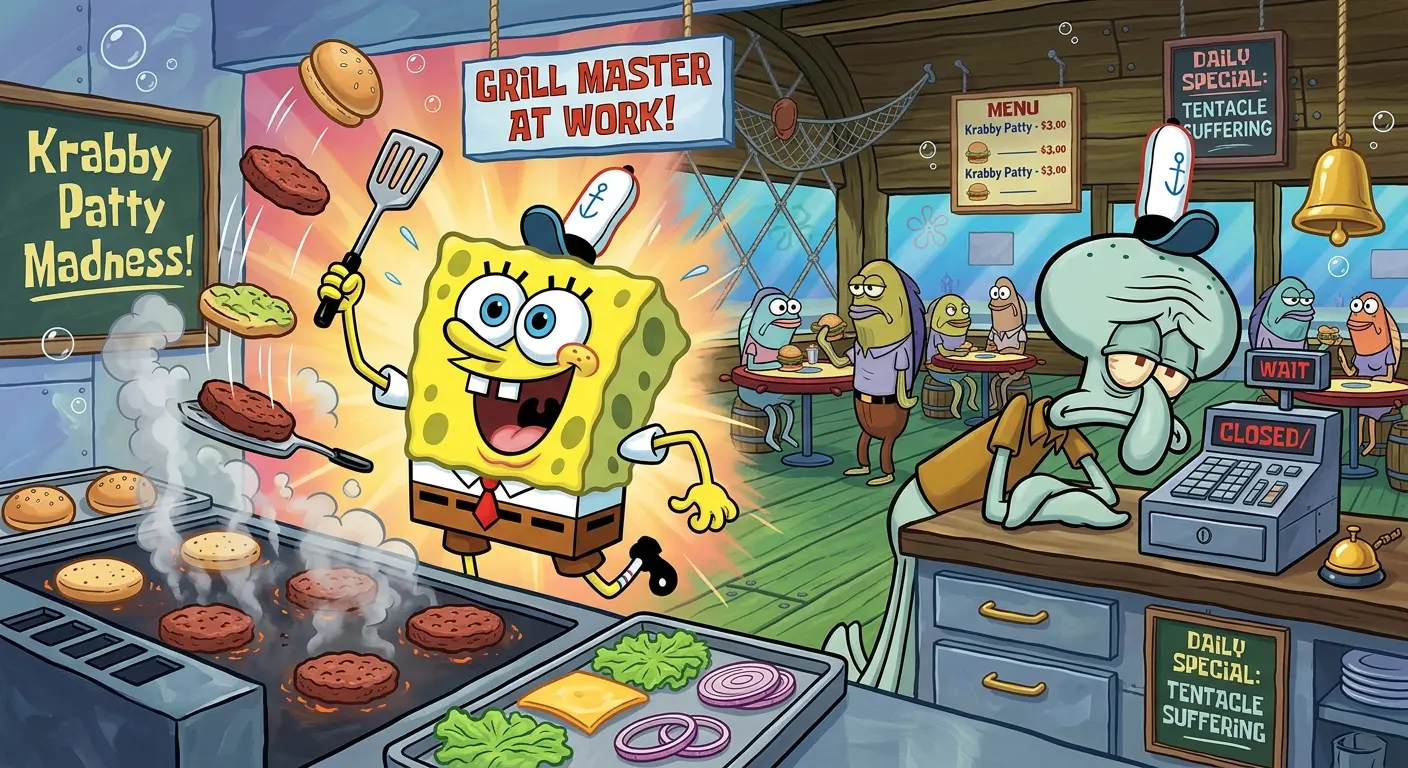
SpongeBob works as a fry cook at the Krusty Krab, a greasy-spoon fast-food joint owned by Eugene Krabs. SpongeBob loves flipping burgers with a terrifying degree of passion—a trait his boss eagerly exploits by handing him extra shifts with zero extra pay. Yet, somehow, SpongeBob still manages to find time to feed his pet snail, Gary (who meows like a cat), and run around outside screaming with his best pal Patrick.
Squidward is his exact polar opposite. He complains, sighs, and counts down the milliseconds until his shift ends. You should see how fast this guy sprints out the door when it's time to clock off—it's like he's breaking Olympic world records just to escape customer service. But to give credit where credit is due, Squidward actually possesses a creative soul. He plays the clarinet (badly, but still), paints self-portraits, and practices modern dance.
Mr. Krabs is greedy. Not just "saves coupons" greedy, but "would trade his soul for 62 cents" greedy. He hates spending money, underpays his staff, and aggressively monetizes everything. I’m sure we’ve all met a manager like him in real life. However, Mr. Krabs does have one soft spot: his daughter Pearl, whom he willingly spoils silly.
Then we have Plankton, the local criminal mastermind who runs the Chum Bucket alongside Karen, his digital bride. The Chum Bucket is an absolute commercial disaster, selling borderline toxic sludge made from chum. In one episode, Plankton finally got a loyal customer, only for it to turn out that Karen had literally paid an actor to pretend the food was edible. The poor actor was getting paid handsomely, but even a fat paycheck couldn't get him past a few bites without gagging. Yeah, the food is that horrific.
Then there's Patrick. Bless his heart, Patrick is dumb. His defining trait is an absence of complex thought. Yet, he's SpongeBob’s ride-or-die best friend, usually supplying the absurdly terrible ideas that get them into chaos.
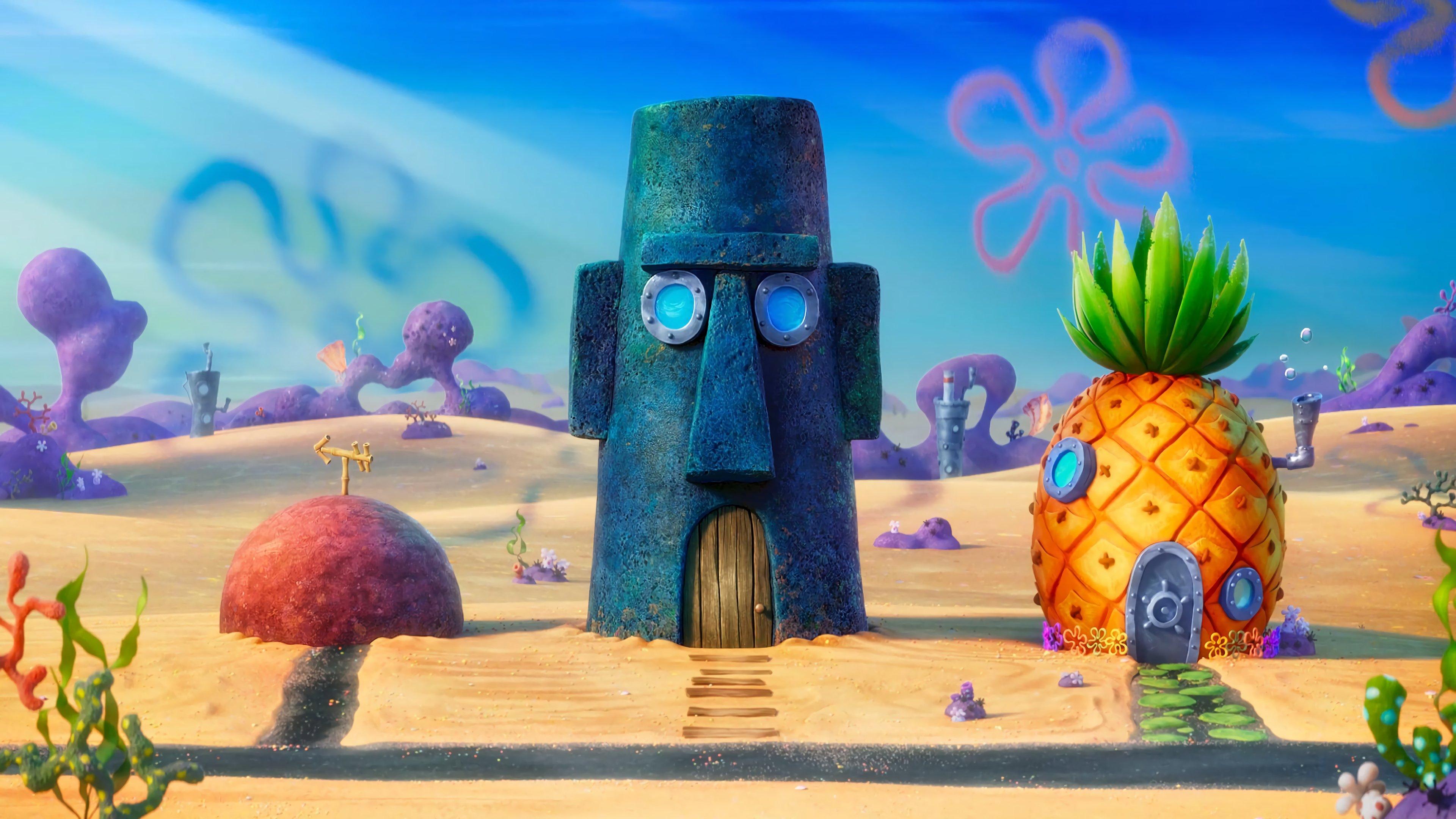
They both live right next to Squidward.
Patrick lives under an actual rock, Squidward lives in an Easter Island head in the middle, and SpongeBob occupies the giant pineapple on the right. Squidward absolutely detests his neighbors interrupting his clarinet practice, painting sessions, or afternoon nap time. To quote Squidward himself: they are terrible neighbors.
Finally, Sandy Cheeks brings the brainpower. She’s an elite scientist who conducts wild experiments and practices extreme karate in her downtime. And yes, SpongeBob knows karate too—though his moves mostly consist of slapping the air wearing giant red foam gloves.
The Actual Point (Why This Show Is Low-Key Brilliant)
Alright, up to this point, I’ve probably just been recapping facts you already knew from childhood sick days. Let’s pivot to the real payload.
If you examine these characters closely, you’ll notice that every single one has distinct strengths and massive, glaring weaknesses. There are flawed traits we wish they didn't have, but without those exact imperfections, we wouldn't root for them. The right blend of "good" and "bad" personality quirks is the golden rule of great storytelling.
Unlike most kids' television shows, which tend to be painfully preachy and feel like an after-school lecture, SpongeBob SquarePants never talks down to its audience. Most children's entertainment explicitly pauses the plot to broadcast a moral lesson directly into the viewer's brain. Great storytelling teaches deep life principles subtly, without shoving them down anybody’s throat. (Whoops, came out a little aggressive there, didn't I? My apologies.)
This isn't a psychology textbook, but here’s a fundamental truth I’ve picked up: nobody likes being told what to do. My brief experience in sales taught me that people hate being sold, but they love to buy. When we come to a realization on our own, we internalize it.
Look at how hygiene and routine are framed when SpongeBob takes a bath, scrubs his pores, and dresses sharp before heading out the door. Or look at his work ethic: he holds down a job, pays his bills, cares deeply for his pet, and even buys groceries for Patrick when Patrick is broke.
SpongeBob’s infectious optimism is genuinely inspiring. He doesn't spend his days dreading his work; he approaches flipping patties like it's a sacred calling. His work-life balance is surprisingly healthy.
On the flip side, Squidward’s cynicism offers a realistic counterweight to SpongeBob’s sunshine. Nobody has to spell it out for us—we instantly observe both attitudes and recognize which mindset leads to a happier life. Yet, at the same time, Squidward’s devotion to his arts reminds us not to lose our personal passions to a daytime job.
Mr. Krabs demonstrates undeniable entrepreneurial drive, but his unchecked greed constantly causes him to lose money or alienate people in the end.
Plankton possesses incredible scientific genius, yet he lacks basic business acumen. Instead of using his brilliant mind to innovate a better menu, he spends all his energy trying to steal someone else's secret formula. If he just focused on building his own brand, he’d probably be a millionaire. But hey, where’s the narrative fun in a story about a guy filing a proper business tax return?
It’s these subtle, hidden layers of character design and comedy that keep adults coming back. The writing operates on two levels simultaneously: goofy slapstick for kids, and sharp character satire for adults.
So, if you happen to catch an episode on TV while channel surfing, don't change it right away. Look past the goofy yellow sponge and pay attention to the writing. You might just find a few golden nuggets of wisdom buried right under the ocean floor.